
Climate Resilient Coffee Varietals Farming Practices
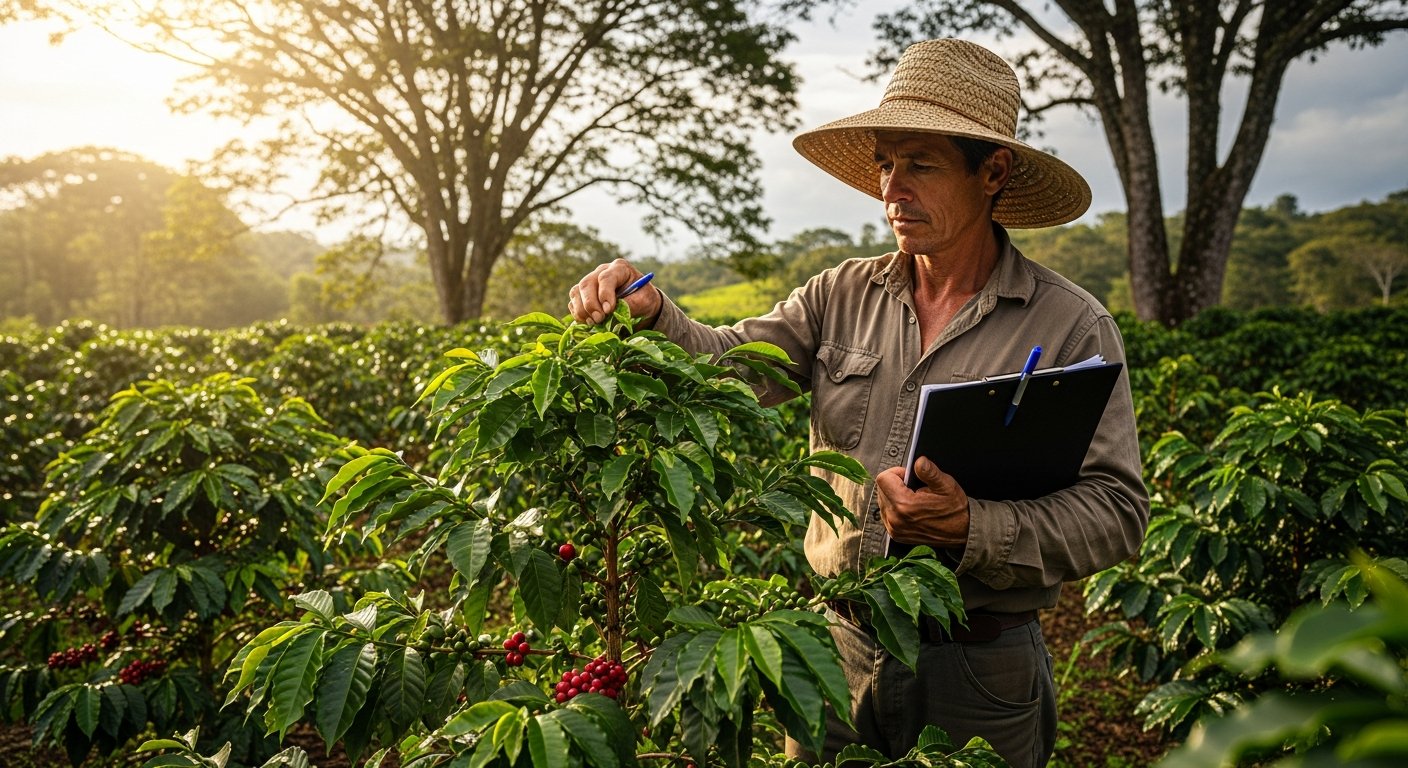
The global coffee industry faces an existential threat from rising temperatures, erratic rainfall, and shifting pest patterns. For farmers in origin countries, these changes are not abstract predictions but daily realities that undermine yields and livelihoods. However, a growing body of research and on-farm experimentation points to a powerful solution: adopting climate resilient coffee varietals farming practices. These practices combine genetic innovation with adaptive agronomic techniques to secure coffee production in a warming world. This article explores the science behind resilient varietals, the practical steps for implementation, and the economic and environmental benefits for growers at every scale.
Why Traditional Coffee Varietals Are Vulnerable
Coffee arabica, which accounts for roughly 60 percent of global production, evolved in the cool, shaded highlands of Ethiopia and Sudan. It thrives in a narrow temperature range of 18 to 22 degrees Celsius (64 to 72 degrees Fahrenheit). Even a small increase of 1 to 2 degrees can reduce bean quality, accelerate ripening, and increase susceptibility to diseases like coffee leaf rust (Hemileia vastatrix) and berry borer. Robusta, while more heat-tolerant, still suffers under prolonged drought or excessive heat.
Traditional varieties like Typica and Bourbon, which form the genetic backbone of many specialty coffee farms, lack the resilience to withstand these new stresses. Farmers who rely solely on these cultivars face declining yields, higher input costs for fungicides and irrigation, and greater income volatility. Climate models predict that by 2050, up to 50 percent of current coffee-growing land could become unsuitable for arabica cultivation. This stark reality demands a shift toward more robust genetic material and smarter farming systems.
What Makes a Coffee Varietal Climate Resilient?
Climate resilience in coffee varietals is not a single trait but a combination of characteristics that help plants survive and produce under adverse conditions. Breeders and researchers prioritize several key attributes when developing or selecting resilient varieties.
Heat tolerance is the most obvious requirement. Varietals that can maintain photosynthetic efficiency and fruit development at higher temperatures are critical. Drought resistance is equally important, as many coffee regions face longer dry seasons. This includes deeper root systems, better water-use efficiency, and the ability to recover after stress. Disease resistance, particularly to coffee leaf rust and nematodes, reduces the need for chemical inputs and improves plant longevity. Finally, yield stability under variable conditions ensures that farmers can count on a harvest even in a bad year.
Some of the most promising climate resilient varietals include:
- Castillo (Colombia): Developed by Cenicafé, this variety offers strong rust resistance and good cup quality, widely adopted after the rust epidemic of 2008-2011.
- Parainema (Honduras): Bred for resistance to rust and nematodes, it performs well in low-altitude, warmer zones.
- Starmaya (Central America): A F1 hybrid that combines high yield, rust resistance, and excellent cup score, with the added benefit of being seed-propagated (not requiring costly cloning).
- IHCAFE 90 (Honduras): A robusta-arabica hybrid with heat tolerance and resistance to multiple diseases.
- Chandragiri (India): Developed for leaf rust resistance and suited to warmer, humid conditions in South India.
Each of these varietals has specific management requirements, but they all share the ability to buffer against climatic shocks while maintaining economic viability for farmers.
Integrating Resilient Varietals with Adaptive Farming Practices
Planting a resistant variety alone is not enough. To fully realize the benefits, farmers must pair genetic solutions with adaptive management. The following practices form the backbone of a holistic climate resilient system.
Agroforestry and Shade Management
Shade trees are a natural thermostat for coffee. They lower ambient temperatures by 2 to 4 degrees Celsius, retain soil moisture, and create microclimates that buffer extreme weather. For heat-sensitive arabica, a well-managed agroforestry system can mean the difference between a viable harvest and crop failure. Farmers using resilient varietals like Castillo or Starmaya can optimize shade levels to balance temperature reduction with light penetration for photosynthesis. A typical recommendation is 30 to 50 percent shade cover, using species like Inga, Grevillea, or fruit trees that also provide additional income.
Shade also supports beneficial insects and reduces pest pressure. In trials across Central America, farms combining rust-resistant varietals with shade trees showed 20 percent higher yields over five years compared to unshaded monocultures. The key is to tailor shade density to the specific varietal, local climate, and altitude.
Soil Health and Water Management
Healthy soil acts as a sponge, capturing rainfall and releasing it slowly during dry periods. Practices like contour planting, cover cropping, and composting build organic matter and improve water infiltration. For drought-resistant varietals like Parainema, good soil structure allows roots to access deeper moisture, enhancing the plant’s natural tolerance.
Farmers should also consider mulching with coffee pulp or other organic materials to reduce evaporation. In regions with pronounced dry seasons, simple rainwater harvesting systems (such as collection ponds or roof runoff) can provide supplemental irrigation during critical flowering and fruit-set periods. The combination of resilient genetics and improved water management reduces the risk of total crop loss during drought events.
Integrated Pest and Disease Management (IPDM)
Resilient varietals reduce but do not eliminate the need for pest control. Coffee leaf rust, for example, can still infect resistant varieties under high pressure if conditions are favorable. An IPDM approach combines resistant genetics with cultural practices like pruning, proper spacing, and timely harvesting to reduce inoculum. Biological controls, such as fungal antagonists (e.g., Trichoderma) and beneficial insects, further suppress pests without synthetic chemicals.
Regular scouting is essential. Farmers should monitor for early signs of rust or borer and respond with targeted, low-toxicity treatments when thresholds are exceeded. This reduces costs and preserves the beneficial insect populations that support natural pest regulation. The synergy between resistant varietals and IPDM can cut fungicide use by 40 to 60 percent while maintaining yield and quality.
Economic Realities for Farmers Adopting Resilient Varietals
Transitioning to climate resilient varietals involves upfront costs. New seedlings, often priced higher than traditional varieties, require investment. Additionally, some F1 hybrids need more intensive management in the first two years, including careful irrigation and fertilization. However, the long-term return on investment is compelling.
Case studies from Colombia and Central America show that farmers who switched to Castillo or Starmaya saw yield increases of 30 to 50 percent over the first three harvests, with lower input costs for disease control. In Honduras, smallholder cooperatives that adopted Parainema reported net income gains of 25 percent after five years, even accounting for the higher initial cost of plants. These economic benefits are amplified when combined with certification premiums for sustainable practices, such as Rainforest Alliance or organic certification, which often favor resilient systems.
Access to credit and technical assistance remains a barrier. Many smallholders lack the capital to replant a whole farm at once. A practical approach is phased adoption: replace the least productive 20 percent of the farm with resilient varietals each year, using income from the remaining area to fund the transition. Cooperatives and government programs in countries like Rwanda and Ethiopia are now offering subsidized seedlings and training to accelerate this shift.
Challenges and Limitations to Adoption
Despite the clear benefits, widespread adoption of climate resilient varietals faces obstacles. Cup quality is a primary concern for specialty coffee buyers. Some resistant varieties, particularly those with robusta ancestry, have historically scored lower on cupping tests. However, modern breeding programs have made significant strides. Starmaya, for instance, consistently scores above 84 points (specialty grade), and Castillo can produce excellent cups when grown at altitude and processed carefully.
Another challenge is the loss of genetic diversity. Relying on a handful of bred varieties could narrow the gene pool, making the global coffee crop vulnerable to new pests or diseases. Conservation of wild arabica populations in Ethiopia and gene banks maintained by organizations like World Coffee Research are critical safeguards. Farmers should also maintain some traditional varieties on their farms to preserve options for future breeding.
Finally, there is the issue of knowledge transfer. Climate resilient farming practices require training in new pruning techniques, shade management, and pest monitoring. Extension services in many coffee-producing countries are underfunded. Digital tools, mobile apps for pest identification, and farmer-to-farmer networks are helping to fill this gap, but progress is uneven.
A Practical Roadmap for Farmers and Cooperatives
For those ready to adopt climate resilient coffee varietals farming practices, the following steps provide a structured path forward. This framework is designed for both individual farmers and cooperative groups.
- Assess your farm’s climate risk profile. Use historical weather data, altitude, and recent pest/disease incidence to identify your primary vulnerabilities (heat, drought, rust). This will guide varietal selection.
- Select appropriate resilient varietals. Consult with local extension agents or research stations (e.g., Cenicafé in Colombia, IHCAFE in Honduras). Choose varieties that match your altitude, rainfall pattern, and market target (specialty vs. commodity).
- Prepare the land. Establish shade trees at least one year before planting. Improve soil health with compost and cover crops. Install water harvesting infrastructure if needed.
- Plant and manage intensively for the first two years. Follow recommended spacing (typically 2×1 meters for high-density systems). Provide adequate irrigation during dry spells. Mulch heavily to retain moisture.
- Implement IPDM from day one. Scout weekly for pests. Prune to maintain airflow. Use biological controls proactively. Keep detailed records.
- Monitor and adapt. After the first harvest, evaluate yield, cup quality, and input costs. Adjust shade levels, fertilization, or varietal mix for subsequent plantings.
Cooperatives can amplify these efforts by pooling resources for bulk seedling purchases, sharing processing equipment, and negotiating better prices for climate-resilient lots. Some roasters and importers now offer guaranteed purchase agreements for farms that adopt certified resilient practices, providing a market incentive that reduces farmer risk.
The transition to climate resilient systems is not a one-time event but an ongoing process of learning and adaptation. As new varieties are developed and climate patterns shift, farmers must remain flexible. Investing in resilience today is the most reliable way to protect coffee production for the next generation.
Climate resilient coffee varietals farming practices represent a pragmatic, science-based response to the most pressing challenge facing the coffee world. By combining robust genetics with intelligent farm management, growers can maintain productivity, protect income, and continue producing the high-quality beans that consumers love. The journey requires commitment and investment, but the reward is a future where coffee not only survives but thrives in a changing climate.