
How Climate Change Impact on Coffee Origins Drives Farmer Adaptation
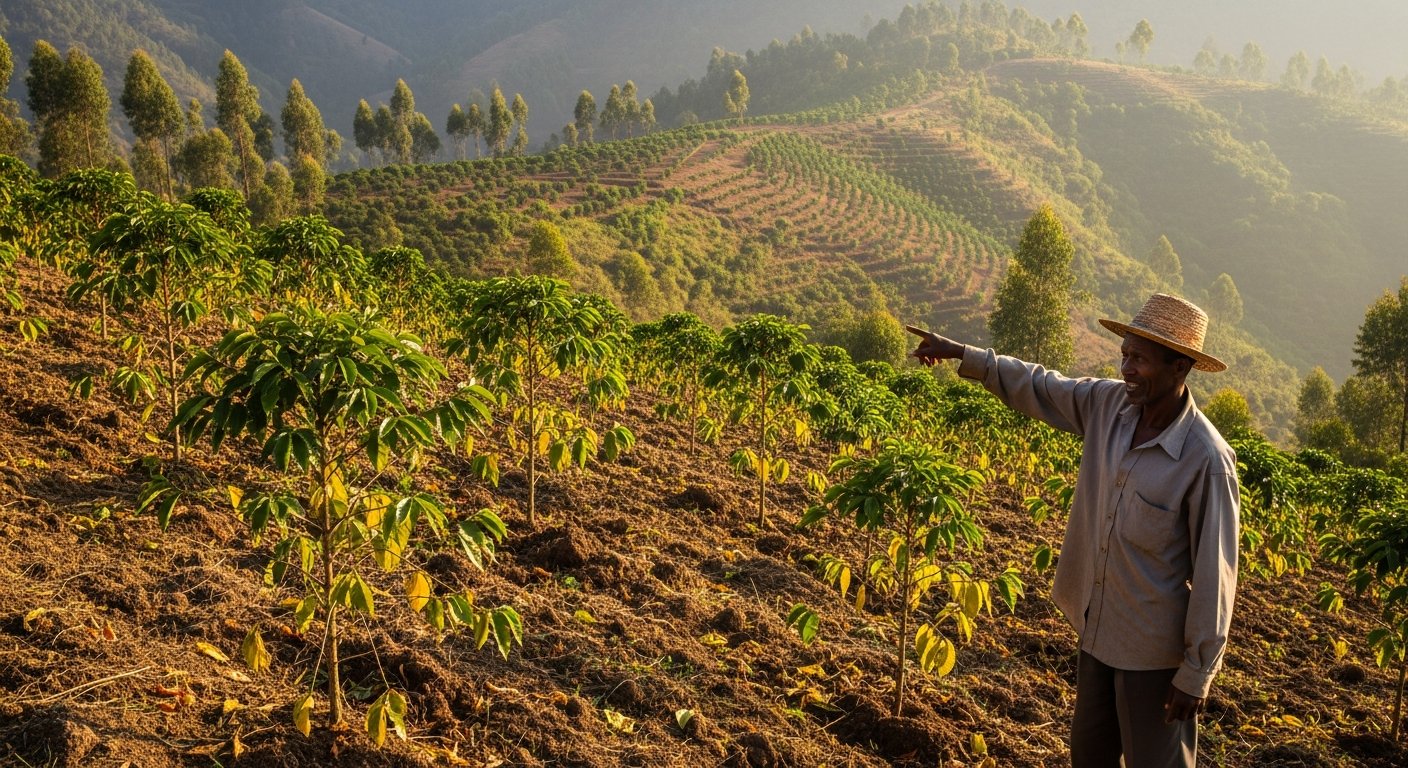
The morning cup of coffee that millions rely on for a gentle start faces an uncertain future. Rising temperatures, erratic rainfall, and shifting pest patterns are transforming the landscapes where coffee has been cultivated for generations. For farmers in Ethiopia, Colombia, Vietnam, and beyond, these changes are not abstract predictions. They are daily realities that threaten livelihoods and the global supply of specialty coffee. Understanding the climate change impact on coffee origins farmer adaptation is essential for anyone who values the future of this beloved crop.
Arabica coffee, which accounts for the majority of high-quality coffee, is particularly sensitive to temperature fluctuations. Optimal growing conditions require a narrow range of 18 to 22 degrees Celsius. Even a one-degree increase can reduce yield and quality. In regions like Ethiopia’s Yirgacheffe, where coffee grows at high altitudes, farmers are already moving their plantations upslope to find cooler microclimates. However, this strategy has limits. Mountain tops are finite, and the land available for shifting cultivation shrinks with each degree of warming.
The Changing Face of Coffee Origins
Traditional coffee origins are experiencing profound transformations. In Central America, coffee leaf rust (a fungal disease exacerbated by warmer, wetter conditions) has devastated crops in Honduras, Guatemala, and Nicaragua. Farmers who once grew prized Bourbon and Typica varieties now face difficult decisions: replant with resistant hybrids, diversify into other crops, or abandon coffee altogether. The climate change impact on coffee origins farmer adaptation is evident in these regions, where cooperative leaders report that older farmers are retiring early while younger generations hesitate to enter a volatile industry.
In East Africa, the situation is equally challenging. Tanzania’s Kilimanjaro region has seen a 50 percent decline in coffee production since the 1960s, partly due to rising temperatures. Farmers in Kenya’s Nyeri County now harvest cherries weeks earlier than their parents did, disrupting traditional processing schedules and altering flavor profiles. The shift in harvest timing creates logistical problems for washing stations and exporters, who must adapt their operations to maintain quality. These changes underscore the urgency of finding sustainable solutions.
Pest and Disease Pressures
Warmer temperatures allow pests like the coffee berry borer to thrive at higher altitudes. This tiny beetle, which bores into coffee cherries and ruins the beans, was once confined to lowland farms. Now it appears in regions previously considered safe, such as Colombia’s Huila department. Farmers must invest in integrated pest management strategies, including biological controls and shade management, to protect their crops. The climate change impact on coffee origins farmer adaptation includes learning to monitor pest populations more closely and applying targeted treatments rather than broad-spectrum pesticides.
Disease pressure has also increased. Coffee leaf rust, which causes defoliation and reduced yields, has become more aggressive in many origins. In Sri Lanka, a rust epidemic in the 19th century wiped out the coffee industry entirely, forcing a shift to tea. While modern fungicides and resistant varieties offer some protection, smallholder farmers often lack the capital to purchase these inputs. This economic vulnerability is a central theme in the adaptation story.
Adaptation Strategies on the Ground
Farmers are not passive victims of climate change. Across the coffee belt, innovative adaptation strategies are emerging. One of the most promising is the adoption of climate-resilient coffee varietals. Organizations like World Coffee Research have developed hybrids that combine the flavor quality of Arabica with the hardiness of Robusta or wild Ethiopian landraces. In our guide on Climate Resilient Coffee Varietals Farming Practices, we explore how these new cultivars are being tested in fields from Nicaragua to Uganda.
Agroforestry is another powerful tool. By planting shade trees alongside coffee, farmers can reduce ambient temperatures by 2 to 4 degrees Celsius, improve soil moisture retention, and create habitat for beneficial insects. In Peru’s Cajamarca region, cooperatives are training members to integrate Inga trees into their plots. The trees fix nitrogen in the soil, provide organic mulch from fallen leaves, and produce timber that can be harvested for additional income. This diversified approach buffers farmers against crop failure and price volatility.
Water management is critical in regions facing prolonged dry spells. Rainwater harvesting systems, drip irrigation, and mulching techniques help coffee plants survive drought conditions. In Brazil’s Minas Gerais, where severe droughts have become more frequent, large estates have invested in reservoir construction and precision irrigation. Smallholders, however, often rely on simpler methods like terracing and contour planting to capture rainfall. The climate change impact on coffee origins farmer adaptation is visible in these incremental but essential changes.
Economic and Social Dimensions
Adaptation requires capital, and many coffee farmers operate on thin margins. The average smallholder in Ethiopia earns less than $500 per year from coffee sales. Investing in new trees, irrigation systems, or processing equipment is often out of reach without external support. Certification programs like Fair Trade and Rainforest Alliance provide some financial incentives, but the premiums are rarely enough to cover the full cost of adaptation. This economic pressure is driving consolidation in some origins, with smaller farms selling to larger neighbors who can afford to modernize.
Social structures are also shifting. In coffee-growing communities, women often bear the brunt of climate impacts. They are responsible for weeding, harvesting, and processing, tasks that become more labor-intensive as conditions worsen. Adaptation programs that target women farmers, such as those run by the International Women’s Coffee Alliance, provide training in drought-resistant farming techniques and access to microcredit. These initiatives recognize that gender equity is not separate from climate resilience. It is a prerequisite for it.
Technology and Innovation
Digital tools are playing an increasingly important role in farmer adaptation. Mobile apps that provide weather forecasts, pest alerts, and market prices help farmers make informed decisions. In Colombia, the National Federation of Coffee Growers has developed a platform called Cafetero that delivers real-time data to over 500,000 farmers. Users receive notifications about optimal planting times, fertilizer recommendations, and disease outbreaks. This information reduces risk and improves yields, even in challenging conditions.
Blockchain technology is being tested for traceability and carbon credit trading. By recording every step of the coffee supply chain on a tamper-proof ledger, companies can verify that beans were produced sustainably. Some roasters now offer carbon-neutral coffee, with credits generated by farmers who adopt agroforestry or renewable energy. The climate change impact on coffee origins farmer adaptation is thus creating new revenue streams, though the benefits are not yet evenly distributed. Early adopters in Costa Rica and Rwanda have seen modest returns, but scaling these programs to millions of smallholders remains a challenge.
Policy and Market Responses
Governments and international organizations are beginning to recognize the urgency of supporting farmer adaptation. The Colombian government has allocated funds for replanting coffee farms with resistant varieties after the leaf rust epidemic. The Ethiopian Coffee and Tea Authority is working with research institutions to map climate-smart growing zones. At the global level, the International Coffee Organization has launched a Climate Change Adaptation Fund that provides grants for pilot projects in vulnerable origins.
Market forces are also driving change. Specialty coffee roasters, responding to consumer demand for sustainability, are forming direct relationships with producer cooperatives. These partnerships often include multi-year contracts, price guarantees, and technical assistance. For example, the roaster Counter Culture Coffee has a program called Direct Trade Certified that requires buyers to visit farms, assess adaptation needs, and pay premiums for quality and sustainability. This model creates financial stability that allows farmers to invest in long-term improvements.
However, the coffee industry faces a chicken-and-egg problem. To fund adaptation at scale, roasters and retailers need to charge higher prices. But consumers are often resistant to paying more for coffee, especially in a competitive market. Education campaigns that highlight the climate change impact on coffee origins farmer adaptation can shift consumer behavior. When buyers understand that their morning brew is at risk, they may be willing to pay a premium for beans grown with climate-smart practices.
The path forward requires collaboration across the entire supply chain. Farmers need access to capital, training, and resilient planting material. Roasters need to commit to long-term sourcing relationships. Governments need to invest in agricultural research and infrastructure. And consumers need to recognize that the price of coffee reflects not just the cost of production but the cost of adaptation. The climate change impact on coffee origins farmer adaptation is a shared challenge, one that demands collective action.
In the coming decades, the geography of coffee will continue to shift. Some origins may disappear altogether, while new ones emerge at higher latitudes or altitudes. The farmers who survive and thrive will be those who embrace change: planting new varieties, diversifying their incomes, and adopting sustainable practices. Their resilience is a testament to human ingenuity and the deep connection between people and the land. The next time you sip a cup of specialty coffee, consider the journey it took to reach your mug. It is a story of adaptation, perseverance, and hope.