
How Coffee Terroir and Microclimate Shape Flavor
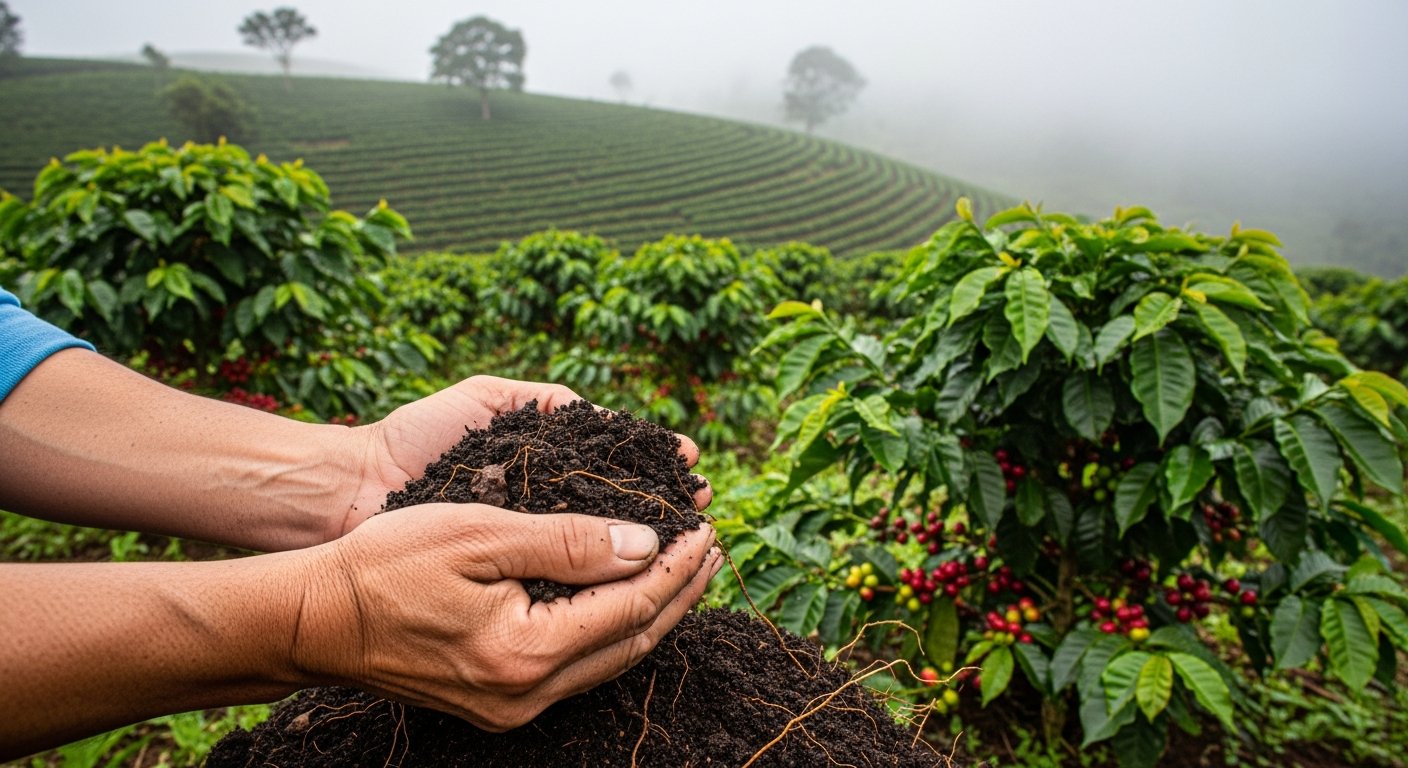
Every coffee lover has experienced the moment of surprise when a single-origin brew tastes completely different from what they expected. One Ethiopian coffee bursts with blueberry and jasmine, while another from the same country tastes like dark chocolate and dried stone fruit. These differences are not accidents of processing or roasting alone. They originate in the soil, the altitude, the rainfall, and the specific weather patterns that surround the coffee plant. Understanding how coffee terroir microclimate flavor influence works gives you a deeper appreciation for each cup and helps you choose beans that match your taste preferences.
Terroir is a French term that originally described how wine grapes express the environment where they grow. For coffee, terroir includes the mineral composition of the soil, the pH balance, the amount of organic matter, and the drainage characteristics. Microclimate adds another layer of complexity: the precise temperature range, humidity levels, wind patterns, and sun exposure that occur in a specific location, sometimes varying dramatically within a single farm or even a single hillside. Together, these factors determine which chemical compounds develop in the coffee cherry and how those compounds translate into flavor in the cup.
The coffee plant is remarkably sensitive to its surroundings. When conditions change even slightly, the plant responds by altering its metabolism, producing different acids, sugars, and aromatic precursors. This is why two coffee trees of the same variety, planted only a few hundred meters apart, can yield beans with distinctly different flavor profiles. For roasters and baristas, understanding this relationship is essential for sourcing, roasting, and brewing coffee that expresses its origin authentically.
The Four Pillars of Coffee Terroir
To grasp how coffee terroir microclimate flavor influence works, you need to break terroir down into four primary components. Each component plays a distinct role in shaping the final flavor, and they interact with one another in complex ways.
1. Soil Composition and Mineral Content. Coffee plants absorb nutrients and minerals from the soil through their root systems. Volcanic soils, which are rich in potassium, phosphorus, and trace minerals, tend to produce coffee with bright acidity and complex floral notes. Sandy or clay soils, by contrast, often yield heavier body and lower acidity. The soil’s drainage capacity also matters: well-drained soil prevents root rot and allows the plant to develop deep roots that access a wider range of nutrients.
2. Altitude and Temperature. Higher altitudes generally mean cooler temperatures, which slow the coffee cherry’s maturation process. Slower ripening allows more time for sugars and acids to develop, resulting in denser beans with more concentrated flavor. Coffees grown at 1,500 meters or above often exhibit bright acidity, fruity notes, and complex aromatics. Lower-altitude coffees tend to mature faster, producing softer acidity and more earthy or chocolatey flavors.
3. Rainfall and Water Availability. Coffee requires a specific amount of rainfall, typically between 1,200 and 2,000 millimeters per year, with a distinct dry period for flowering. Too much rain can cause cherries to swell and dilute flavor compounds, while drought stress can concentrate flavors but also reduce yield. The timing of rainfall relative to the flowering and cherry development stages is critical for flavor quality.
4. Sun Exposure and Shade Management. Coffee plants evolved as understory plants in forest environments. When grown in full sun, they produce higher yields but often with simpler flavor profiles. Shade-grown coffee, especially when intercropped with diverse trees, matures more slowly and develops greater complexity. The type of shade trees also influences flavor: nitrogen-fixing trees like inga can improve soil fertility, while fruit trees can contribute subtle aromatic compounds to the surrounding coffee plants.
How Microclimate Creates Distinct Flavor Signatures
While terroir provides the broad environmental framework, microclimate is where the most dramatic flavor variations emerge. Microclimate refers to the localized atmospheric conditions that differ from the surrounding region. On a single coffee farm, you might find multiple microclimates based on slope orientation, elevation changes, wind corridors, and proximity to bodies of water.
Consider two neighboring farms in the Antigua region of Guatemala. One sits on a south-facing slope that receives intense afternoon sun, while the other is on a north-facing slope with morning sun only. The south-facing farm may produce coffee with higher sugar content and more pronounced sweetness, while the north-facing farm yields beans with brighter acidity and more delicate floral notes. Both farms have the same soil type and variety, but the microclimate creates distinct flavor outcomes.
Wind also plays a significant role in microclimate. Strong, consistent winds can stress coffee plants, causing them to produce more defensive compounds that alter flavor. Sheltered valleys often produce coffee with softer, more rounded flavors, while exposed ridges yield more structured and acidic profiles. Fog and mist, common in high-altitude regions like Colombia’s Huila or Kenya’s Nyeri, provide additional moisture that can extend the ripening period and enhance flavor complexity.
Case Study: The Microlot Revolution
Specialty coffee roasters now actively seek microlots, which are small batches of coffee from a specific section of a single farm. These microlots highlight how even minor microclimate variations produce dramatically different flavors. For example, a producer in Costa Rica’s Tarrazu region might divide a farm into 10 microlots based on altitude and sun exposure. One microlot from the highest, most shaded section might taste like green apple and honey, while another from a lower, sunnier section tastes like milk chocolate and almond. The price difference between these microlots can be substantial, with the more complex flavors commanding premiums of 20 to 40 percent.
This microlot approach has transformed the coffee industry by rewarding producers who pay attention to microclimate. Instead of blending all the coffee from a farm into a single lot, producers now separate harvests by location and elevation. Roasters then purchase these distinct lots to offer customers a direct taste of place. For the consumer, this means you can explore the same farm’s different microclimates side by side, deepening your understanding of how environment shapes flavor.
Processing and Its Interaction with Terroir
No discussion of coffee terroir microclimate flavor influence is complete without addressing post-harvest processing. Processing methods either preserve or transform the chemical potential established during the growing season. A coffee grown in a terroir that produces high sugar content will express those sugars differently depending on whether it is washed, natural, or honey processed.
Washed processing removes the fruit before drying, which tends to highlight the coffee’s intrinsic acidity and clarity. This method is ideal for showcasing the bright, fruity, and floral notes that come from high-altitude volcanic terroirs. Natural processing, where the cherry is dried intact, allows the fruit sugars to ferment and infuse the bean with additional sweetness and body. This method works well for coffees from lower-altitude terroirs that may lack natural acidity, as the fermentation adds complexity. Honey processing, which removes some but not all of the mucilage, occupies a middle ground, producing coffees with medium body and enhanced sweetness.
The interaction between terroir and processing is why the same farm can produce multiple distinct flavor profiles by varying only the processing method. A washed coffee from a farm in Ethiopia’s Yirgacheffe region might taste like lemon and jasmine, while the natural processed version of the same coffee tastes like blueberry and chocolate. Both are expressions of the same terroir, but processing amplifies different aspects of the bean’s chemical makeup.
Roasting as a Terroir Translator
Roasting is the final variable that determines how much of the terroir and microclimate influence survives into your cup. A light roast preserves more of the bean’s origin character, allowing the subtle flavors imparted by soil, altitude, and microclimate to shine. A dark roast, by contrast, introduces roast flavors that can mask or overwhelm origin characteristics.
Specialty roasters often develop specific roast profiles for different terroirs. A coffee from a high-altitude, volcanic terroir with bright acidity might be roasted to a light city or full city profile to preserve those acidic and fruity notes. A coffee from a lower-altitude, sandy soil terroir with chocolate and nut notes might be roasted slightly darker to develop body and sweetness. The goal is to find the roast level that best expresses the potential created by the terroir and microclimate.
For home roasters, understanding this relationship is even more critical. If you roast a single-origin coffee too dark, you lose the distinctive flavors that make it unique. If you roast it too light, you may not develop enough sweetness or body. Experimenting with roast profiles for the same green coffee can reveal how much of the flavor comes from the bean itself versus how much comes from the roast.
Practical Tips for Choosing Coffee Based on Terroir
When you shop for specialty coffee, you can use terroir and microclimate information to guide your choices. Here are key factors to consider before making a purchase:
- Look for the specific region or farm name on the bag, not just the country. A coffee labeled “Colombia” is less informative than one labeled “Colombia, Huila, Finca El Ocaso” which tells you the altitude, soil type, and microclimate.
- Check the altitude information. Coffees grown above 1,500 meters tend to have brighter acidity and more complex flavors. Coffees below 1,200 meters often have softer acidity and heavier body.
- Research the processing method. Washed coffees highlight terroir characteristics, while naturals add fermentation complexity. Choose based on whether you want to taste the place or the process.
- Consider the variety. Bourbon, Typica, and Geisha each express terroir differently. Geisha, for example, is highly sensitive to microclimate and produces its signature floral and tea-like notes only under specific growing conditions.
- Ask your roaster about the microlot or lot number. Roasters who provide this detail are confident in their sourcing and can often share cupping notes that describe how the terroir shows up in the cup.
Applying these tips will help you select coffees that match your flavor preferences. If you enjoy bright, fruity, and floral coffees, seek out high-altitude washed coffees from volcanic soils in Ethiopia, Kenya, or Colombia. If you prefer chocolatey, nutty, and full-bodied coffees, look for lower-altitude natural or honey processed coffees from Brazil, Costa Rica, or Sumatra.
The Future of Terroir-Driven Coffee
As climate change alters growing conditions worldwide, the concept of terroir is becoming both more fragile and more valuable. Rising temperatures are pushing coffee production to higher altitudes, changing the microclimates that have defined certain regions for decades. Farmers are adapting by planting more heat-tolerant varieties, introducing shade trees, and shifting to different processing methods.
At the same time, consumers are increasingly interested in traceability and transparency. They want to know not just where their coffee comes from, but how the specific environment shaped its flavor. This demand is driving innovation in mapping technology, soil analysis, and microclimate monitoring. Some producers now use sensors to track temperature, humidity, and soil moisture in real time, allowing them to make data-driven decisions about harvesting and processing.
For coffee lovers, the growing emphasis on terroir and microclimate means more opportunities to explore and appreciate the diversity of flavors that coffee can offer. Each cup becomes a direct connection to a specific place, a specific season, and a specific moment in the life of a coffee plant. By understanding how coffee terroir microclimate flavor influence works, you can move beyond generic coffee descriptions and start tasting the landscape itself.
In our guide on Coffee Brewing Methods Comparison: Flavor, Body, Acidity, we explain how to adjust your brewing technique to highlight the unique characteristics of different terroirs. The same coffee can taste dramatically different when brewed as a pour-over versus an espresso, and understanding these effects helps you get the most from every bean.
The relationship between coffee terroir microclimate flavor influence is not an abstract concept. It is a practical framework that improves your ability to choose, roast, brew, and enjoy coffee. Next time you open a bag of single-origin coffee, take a moment to consider the environment that created it. The soil, the altitude, the wind, and the rain are all present in your cup, waiting for you to taste them.