
Japanese Iced Coffee vs Cold Brew Organic: Key Differences
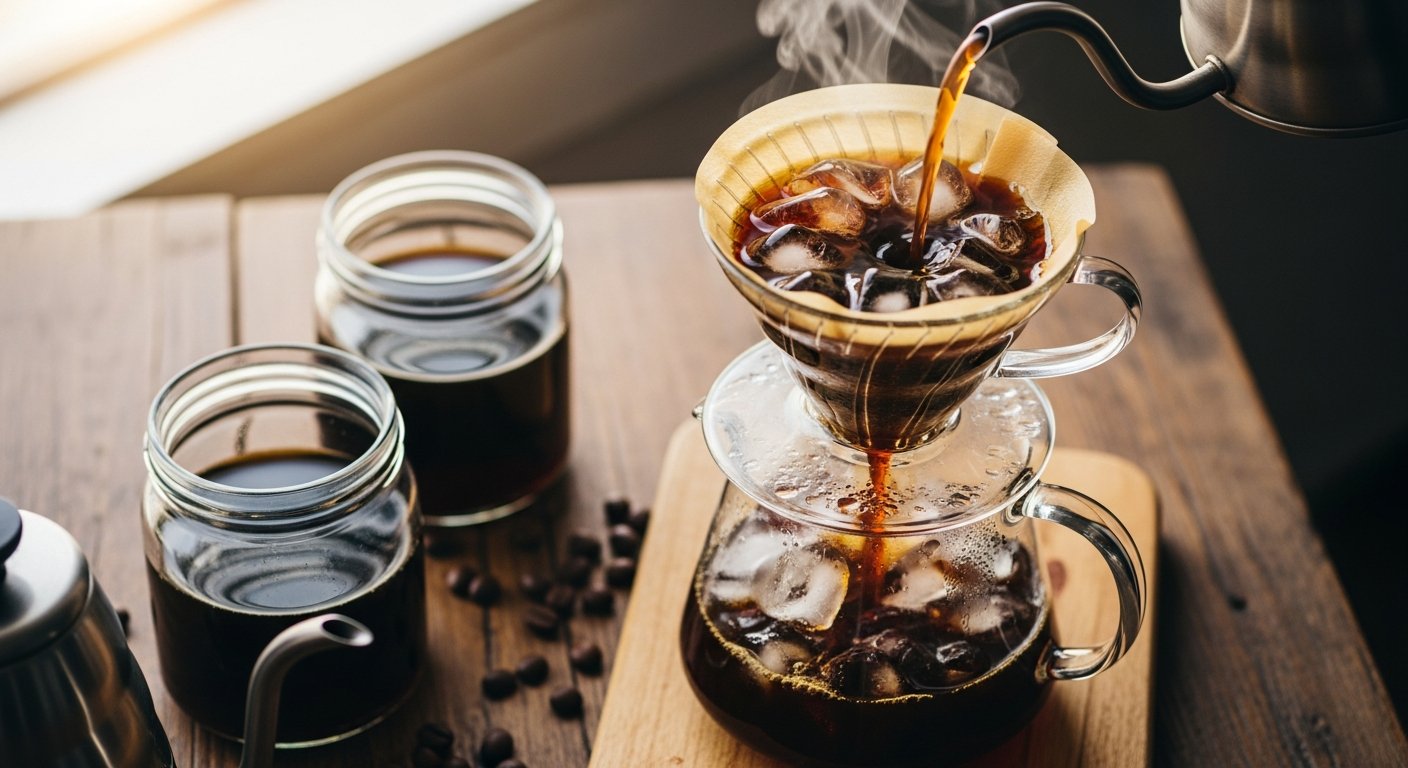
When summer heat arrives, coffee lovers face a critical choice between two distinct brewing methods. The Japanese iced coffee method vs cold brew organic debate centers on flavor profile, acidity, and brewing time. Each technique produces a refreshing cold coffee, but the results differ dramatically in taste and body. Understanding these differences helps you choose the best method for your preferences and equipment.
What Defines the Japanese Iced Coffee Method
The Japanese iced coffee method, also known as flash brewing, involves brewing hot coffee directly onto ice. This technique rapidly chills the coffee while preserving volatile aromatic compounds that often degrade during slow cooling. The process requires a pour-over setup, a kettle, and a carafe filled with ice. You brew a double-strength coffee concentrate that melts the ice and dilutes to the perfect strength.
This method delivers a bright, complex cup with pronounced floral and fruity notes. The quick cooling locks in delicate flavors that would otherwise fade. Many professional baristas prefer this approach for single-origin coffees because it highlights their unique characteristics. The Japanese iced coffee method requires about 4 to 5 minutes of active brewing time, making it ideal for those who want a fresh cup without waiting hours.
Brewing Steps for Japanese Iced Coffee
To prepare Japanese iced coffee, start by placing 100 grams of ice in a carafe or server. Use a medium-fine grind setting similar to table salt. Heat water to 200 degrees Fahrenheit. Place a paper filter in your pour-over cone and rinse it with hot water to remove paper taste and warm the brewer. Add 20 grams of coffee grounds to the filter.
Pour 50 grams of hot water in a circular motion to bloom the grounds for 30 seconds. Continue pouring the remaining 250 grams of water in slow, concentric circles. The hot coffee drips directly onto the ice, melting it and cooling the brew instantly. The final yield should be approximately 300 grams of cold coffee. Serve immediately over fresh ice for the best experience.
Understanding Cold Brew Organic Coffee
Cold brew organic coffee relies on time rather than heat to extract flavor. Coarse-ground organic coffee steeps in cold or room-temperature water for 12 to 24 hours. The long extraction pulls out soluble compounds slowly, resulting in a smooth, low-acid concentrate. Organic beans ensure no synthetic pesticides or fertilizers affect the final taste or your health.
The cold brew process produces a heavy-bodied, chocolatey, and mellow cup. Because heat never touches the grounds, certain acids and bitter compounds remain undissolved. This makes cold brew gentler on the stomach and less acidic than hot-brewed coffee. Many coffee drinkers who experience acid reflux or tooth sensitivity prefer cold brew for this reason. In our guide on Organic Coffee Antioxidants and Wellness Benefits, we explain how organic beans enhance these health advantages.
How to Make Cold Brew Organic at Home
Making cold brew organic coffee requires minimal equipment. You need a large jar or pitcher, a fine-mesh strainer or cheesecloth, and coarse-ground organic coffee. Use a ratio of 1 part coffee to 4 parts water by weight for a concentrate. Combine the grounds and water in the jar, stir gently to saturate, and cover the container.
Let the mixture steep at room temperature for 12 to 18 hours. Refrigerate if you prefer a cleaner taste, though room temperature extraction yields more body. After steeping, strain the liquid through a fine-mesh sieve lined with cheesecloth or a paper filter. Store the concentrate in the refrigerator for up to two weeks. Serve diluted with water or milk at a 1:1 ratio, or adjust to taste.
Japanese Iced Coffee Method vs Cold Brew Organic: Flavor Profile
The most significant difference between these two methods appears on the palate. Japanese iced coffee delivers a bright, acidic, and complex cup. You can taste distinct notes of citrus, berry, jasmine, or stone fruit depending on the bean origin. The clarity of flavor makes it excellent for light to medium roasts.
Cold brew organic coffee offers a completely opposite experience. It is smooth, rich, and low in acidity. The flavor leans toward chocolate, caramel, and nutty tones. Organic beans tend to have a cleaner taste without chemical residues, which enhances these natural sweetness notes. Cold brew often tastes sweeter than hot coffee because the long extraction breaks down more complex sugars.
Caffeine Content and Extraction Differences
Cold brew organic coffee typically has a higher caffeine concentration per ounce than Japanese iced coffee. The long steeping time extracts more caffeine from the grounds. However, because cold brew is served as a concentrate diluted with water or milk, the final cup may have similar or slightly lower caffeine than a standard hot brew. A 12-ounce serving of cold brew made from concentrate contains roughly 150 to 200 milligrams of caffeine.
Japanese iced coffee contains less caffeine because hot water extracts caffeine quickly but the ice dilutes the final volume. A 12-ounce cup of Japanese iced coffee has approximately 120 to 180 milligrams of caffeine. If you want a stronger caffeine kick, cold brew concentrate offers more flexibility. You can drink it undiluted for a potent boost, though this is not recommended for caffeine-sensitive individuals.
Acidity and Digestibility
Acidity is a major deciding factor in the Japanese iced coffee method vs cold brew organic comparison. Japanese iced coffee retains the bright acidity of hot-brewed coffee because the hot water extracts chlorogenic acids. These acids contribute to the vibrant, tangy flavor that many coffee enthusiasts love. However, for people with sensitive stomachs, this acidity can cause discomfort.
Cold brew organic coffee is significantly lower in acidity. The cold water extraction prevents the release of certain acidic compounds. Studies show that cold brew can have up to 67 percent less acidity than hot coffee. For this reason, cold brew is often recommended for individuals with acid reflux, GERD, or dental sensitivity. Organic beans add the benefit of being grown without harsh chemicals that might further irritate digestion.
Time and Equipment Requirements
Your schedule and equipment will influence your choice between these two methods. Japanese iced coffee requires:
- A pour-over dripper (Hario V60, Chemex, or Kalita Wave)
- Paper filters specifically sized for your dripper
- A gooseneck kettle for controlled pouring
- A digital scale for precise measurements
- Fresh ice cubes
This setup costs between 30 and 80 dollars for entry-level gear. The brewing process takes only 4 to 5 minutes, making it suitable for busy mornings. Cleanup involves discarding the filter and rinsing the carafe.
Cold brew organic requires simpler equipment: a large jar or pitcher, a strainer or cheesecloth, and a refrigerator. The initial cost is under 20 dollars. However, the steep time demands planning ahead. You must start the brew 12 to 24 hours before you want to drink it. This is ideal for those who prep meals or beverages in advance. The cleanup is more involved because the wet coffee grounds can clog drains, so dispose of them in the trash.
Which Method Suits Different Coffee Beans
Bean origin and roast level matter when choosing between Japanese iced coffee and cold brew. Light roasted single-origin beans from Ethiopia, Kenya, or Colombia shine with the Japanese method. The bright acidity and fruity notes become the star of the cup. Medium roasts also perform well, offering balanced sweetness and acidity.
Cold brew organic coffee works best with medium to dark roasts. The long steeping smooths out the bitterness of dark roasts and highlights chocolate and caramel flavors. Organic beans from Brazil, Sumatra, or Guatemala produce excellent cold brew because their natural low acidity and full body align with the method. Avoid using very light roasts for cold brew, as they can taste grassy or underdeveloped.
Environmental and Cost Considerations
Both methods have different environmental footprints. Japanese iced coffee uses paper filters, which are compostable but require production and shipping. The energy needed to boil water is modest. Cold brew organic uses no heat, so it has a lower energy footprint. However, the longer steep time uses more coffee grounds per serving if you make a concentrate that you dilute later.
Cost per cup varies. Japanese iced coffee uses roughly 20 grams of coffee for a 12-ounce serving, costing about 50 cents with premium beans. Cold brew concentrate uses 100 grams of coffee to make one liter of concentrate, which yields eight to ten servings. This brings the cost to approximately 40 to 50 cents per serving. Organic beans cost 10 to 20 percent more than conventional, but the flavor and health benefits justify the price for many drinkers.
Practical Tips for Choosing Your Method
Consider your daily routine and flavor preferences. If you crave a bright, aromatic coffee in under five minutes, the Japanese iced coffee method is your best option. It works well for those who enjoy the ritual of pour-over brewing and want to taste every nuance of their beans.
If you prefer a smooth, low-acid coffee that you can prepare in bulk and enjoy all week, cold brew organic is the superior choice. It requires patience but rewards you with a versatile concentrate that works iced, hot, or in cocktails. Many coffee lovers keep both methods in their rotation: Japanese iced coffee for weekend mornings and cold brew for busy workdays.
Ultimately, the Japanese iced coffee method vs cold brew organic decision comes down to your priorities. Do you value complexity and brightness, or smoothness and convenience? Both methods produce excellent cold coffee, but they cater to different tastes and lifestyles. Experiment with both using high-quality organic beans to discover which one aligns with your palate. Your perfect summer brew awaits with either technique.