
Water Quality for Coffee Brewing Mineral Content Guide
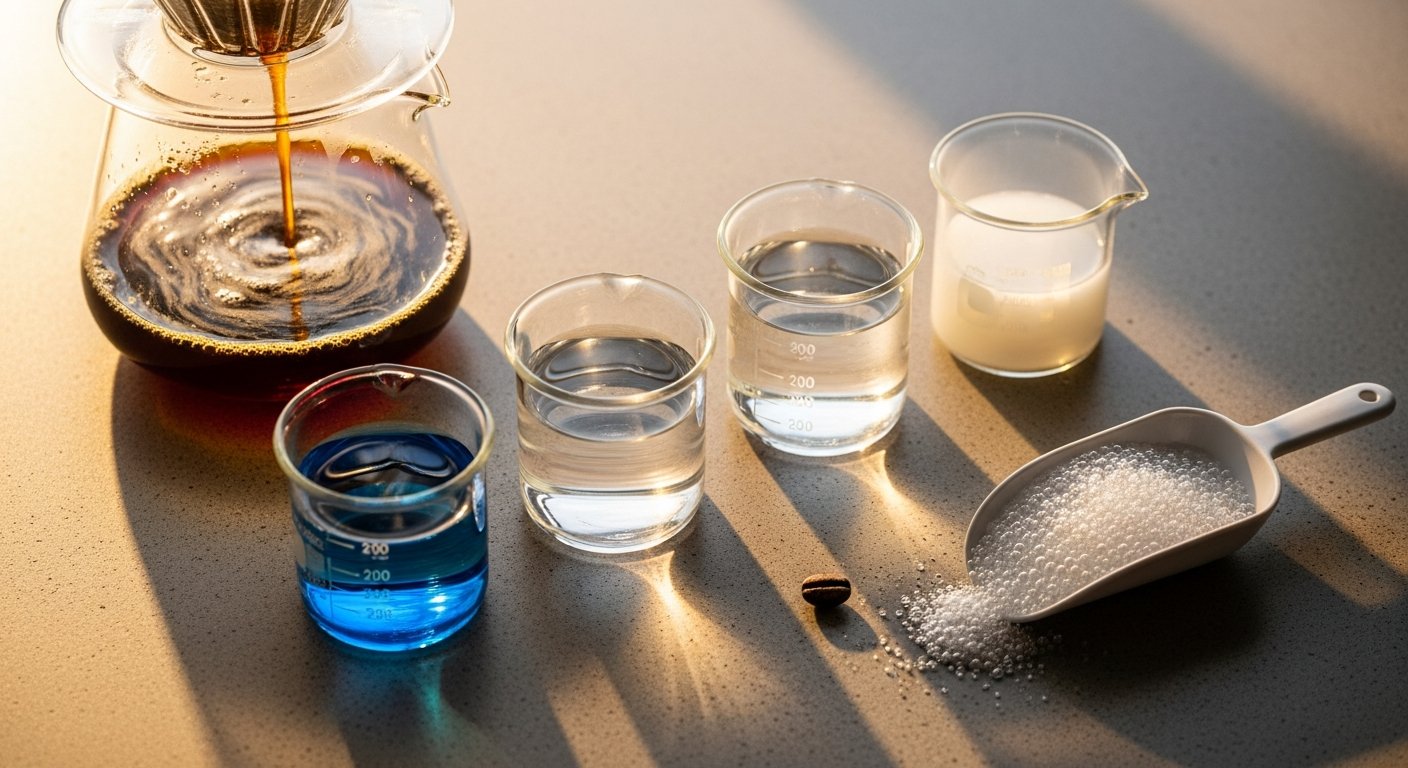
Your coffee beans might be single-origin, freshly roasted, and ground to perfection, but if your water is off, your brew will never reach its potential. Water makes up over 98 percent of a cup of coffee, yet most home baristas spend far more time obsessing over grind size and brew ratio than they do over what comes out of the tap. The truth is that water quality for coffee brewing mineral content guide principles show that the right balance of calcium, magnesium, and bicarbonate can transform a flat cup into a vibrant, sweet, and complex one. Understanding this chemistry is the key to unlocking flavors you did not know your beans possessed.
Water is not just a solvent; it is an active ingredient. The minerals dissolved in it extract flavor compounds from coffee grounds at different rates and in different ways. Hard water with high mineral content can over-extract and produce bitterness, while soft water with almost no minerals can under-extract and leave your coffee tasting sour or hollow. The specialty coffee industry has spent years researching the ideal mineral profile, and the findings are clear: you need a specific range of minerals to achieve a balanced, delicious extraction. This guide walks you through exactly what those minerals are, how they affect your brew, and how to adjust your water to get the best results every time.
The Role of Minerals in Coffee Extraction
Coffee contains hundreds of flavor compounds, including acids, oils, sugars, and aromatic molecules. Water acts as a solvent, pulling these compounds out of the ground coffee and into your cup. But not all compounds dissolve equally. Acids and sugars dissolve quickly, while bitter compounds and certain oils take longer. The minerals in your water influence how fast and how completely each group of compounds is extracted.
Calcium and magnesium are the two most important minerals for extraction. Both are positively charged ions that bind to negatively charged flavor compounds in coffee, helping to pull them into solution. Magnesium is particularly effective at extracting fruity and acidic flavors, which is why water with moderate magnesium levels often produces brighter, more vibrant cups. Calcium, on the other hand, is better at extracting body and sweetness. A balanced ratio of these two minerals is essential for a well-rounded brew.
Sodium and potassium can also play a role, though they are less critical. Sodium can enhance perceived sweetness at low levels, but too much can make coffee taste salty or flat. Bicarbonate is another key player; it acts as a buffer that neutralizes acidity. While some buffering is necessary to prevent your coffee from tasting overly sharp, too much bicarbonate will flatten the acidity and make the brew taste dull. The Specialty Coffee Association (SCA) has published a water quality standard that recommends a total hardness of 50 to 175 ppm (parts per million) and alkalinity of 40 to 75 ppm for optimal extraction.
Understanding Hardness, Alkalinity, and pH
To master water quality for coffee brewing mineral content guide concepts, you need to understand three key measurements: hardness, alkalinity, and pH. These terms are often confused, but each describes a different aspect of your water chemistry.
Hardness refers to the concentration of calcium and magnesium ions in your water. It is measured in parts per million (ppm) or grains per gallon (gpg). Hard water has high mineral content, which can lead to over-extraction and scaling on your equipment. Soft water has low mineral content and can under-extract coffee, leaving it weak and sour. For coffee brewing, the ideal hardness range is 50 to 175 ppm, with 100 to 150 ppm being a sweet spot for most beans.
Alkalinity is different from hardness. It measures the water’s ability to resist changes in pH, which is largely determined by the concentration of bicarbonate and carbonate ions. High alkalinity means your water can neutralize acids, which can make your coffee taste flat or chalky. Low alkalinity means your water has little buffering capacity, which can result in a sharp, overly acidic brew. The SCA recommends alkalinity between 40 and 75 ppm. pH is a measure of how acidic or basic your water is, with 7.0 being neutral. Coffee is naturally acidic, so a slightly acidic water (pH 6.5 to 7.0) can complement the brew, but water that is too acidic can corrode your equipment.
Common Water Problems and How to Fix Them
Most tap water falls outside the ideal range for coffee brewing. Here are the most common issues and how to address them:
- Hard water with high calcium: This causes scaling on kettles and espresso machines and can lead to over-extraction. Use a water softener or a reverse osmosis system to reduce hardness, then add back minerals with a remineralization filter or a mineral concentrate.
- Soft water with low minerals: This under-extracts coffee, leaving it sour and thin. Add a small amount of a mineral concentrate containing calcium and magnesium to your brewing water. You can also use a dedicated coffee water recipe like Third Wave Water or a DIY mix of Epsom salt and baking soda.
- High alkalinity: This neutralizes coffee acids and makes the brew taste flat. Dilute your water with distilled or reverse osmosis water to lower alkalinity, or use an acid-based treatment to reduce bicarbonate levels.
- Chlorine or chloramine: These disinfectants can impart off-flavors to your coffee. Use a carbon filter to remove them before brewing. A simple pitcher filter or an inline filter on your faucet works well for most home setups.
If you are unsure about your water quality, you can order a water test kit from a specialty coffee supplier or use a TDS (total dissolved solids) meter to get a baseline reading. A TDS meter measures the total concentration of dissolved minerals, but it does not distinguish between hardness and alkalinity. For a full picture, you need a water test that reports both.
DIY Coffee Water Recipes
Many serious home baristas choose to build their own brewing water from scratch using distilled or reverse osmosis water as a base. This gives you complete control over the mineral content and eliminates variables from your tap water. Here are two simple recipes that follow the SCA guidelines:
Recipe 1: Balanced Brew Water
Start with 1 liter of distilled water. Add 0.5 grams of Epsom salt (magnesium sulfate) and 0.5 grams of baking soda (sodium bicarbonate). Stir until fully dissolved. This creates water with approximately 100 ppm hardness and 50 ppm alkalinity, which works well for most medium to light roast coffees.
Recipe 2: Bright and Fruity Brew Water
For light roasts or naturally processed beans where you want to accentuate fruity acidity, use 1 liter of distilled water with 0.7 grams of Epsom salt and 0.3 grams of baking soda. This increases magnesium for better acid extraction while keeping alkalinity low. The result is around 140 ppm hardness and 30 ppm alkalinity.
When using these recipes, always use a precise scale to measure the minerals. Too much or too little can throw off your extraction. Store the water in a sealed glass container and use it within a week for best results. You can also purchase pre-made mineral packets from companies like Third Wave Water or Lotus Water, which offer pre-measured mixes for different coffee profiles.
Water Filtration Options for Coffee Brewers
If DIY recipes sound too fussy, there are several filtration solutions that can improve your tap water without requiring you to measure minerals. The best option depends on your starting water quality and your budget.
Carbon filters are the most common and affordable solution. They remove chlorine, chloramine, and some organic compounds that cause off-flavors. A simple Brita or Pur pitcher filter is a good starting point, but it will not significantly change hardness or alkalinity. For more control, consider a two-stage under-sink filter that combines a carbon block with a catalytic carbon stage for chloramine removal.
Reverse osmosis (RO) systems are the most effective at removing nearly all minerals and contaminants. RO water is essentially a blank slate, which allows you to add back exactly the minerals you want. The downside is that RO systems are more expensive and produce wastewater. If you choose RO, you will need to remineralize the water using a mineral cartridge or a recipe like the ones above.
For espresso machines, scale buildup is a major concern. Hard water can quickly clog the boiler and group head, leading to expensive repairs. Many espresso machine manufacturers recommend using softened water or a blend of RO and tap water to prevent scaling while still providing enough minerals for good extraction. In our guide on water chemistry for coffee brewing mineral content guide, we explain how to balance mineral content with equipment protection.
How to Test and Adjust Your Water at Home
Testing your water does not require a chemistry degree. Start with a TDS meter, which costs around 10 to 20 dollars and gives you a quick reading of total dissolved solids. For coffee brewing, you want a TDS between 100 and 200 ppm. If your TDS is below 50 ppm, your water is too soft. If it is above 250 ppm, it is likely too hard.
For a more detailed analysis, use a water test kit that measures hardness, alkalinity, and pH. Many coffee supply companies sell kits specifically designed for brewers. Test your tap water, then compare the results to the SCA targets. If your hardness is high but alkalinity is low, you may need to dilute with distilled water. If both are high, a blend of RO and tap water can bring them into range.
Adjusting your water is a gradual process. Start by making small changes and taste the results. For example, if your coffee tastes sour, it may be under-extracted due to low mineral content. Add a small amount of Epsom salt to your water (0.1 grams per liter) and brew again. If the coffee tastes bitter, your water may be too hard; dilute with distilled water by 10 percent and test again. Keep a log of your adjustments and tasting notes so you can replicate successful recipes.
The Impact of Water on Different Brewing Methods
Different brewing methods interact with water minerals in unique ways. Espresso, for example, uses high pressure and a fine grind, which extracts flavors quickly. Hard water can lead to over-extraction and bitterness in espresso, so many baristas prefer a slightly softer water with moderate alkalinity to preserve brightness and sweetness. Pour-over methods like V60 or Chemex are more forgiving, but water quality still matters. Light roasts benefit from higher magnesium levels to bring out fruity notes, while dark roasts need more calcium for body and a smoother finish.
Cold brew is a special case because it extracts over a long period (12 to 24 hours) at low temperatures. The extraction is slower and less efficient, so water with higher mineral content can help pull more flavor from the grounds. However, cold brew is typically served over ice or diluted, so starting with water that has balanced minerals ensures the concentrate does not taste flat once it is diluted.
French press and immersion brewers are more forgiving of water quality because the longer contact time allows for more complete extraction even with softer water. That said, using water that is too soft can still result in a thin, under-extracted cup. The same principles apply: aim for 100 to 150 ppm hardness and 40 to 60 ppm alkalinity for the best results across all methods.
Water quality for coffee brewing mineral content guide principles are not just for professionals. With a few simple tools and a willingness to experiment, any home barista can dial in their water and dramatically improve their coffee. The payoff is a cleaner, sweeter, more flavorful cup that shows off the true character of the beans. Start by testing your water, identify the biggest issue, and make one adjustment at a time. Your taste buds will thank you.