
Roasting by Altitude: Coffee Bean Density Profile Guide
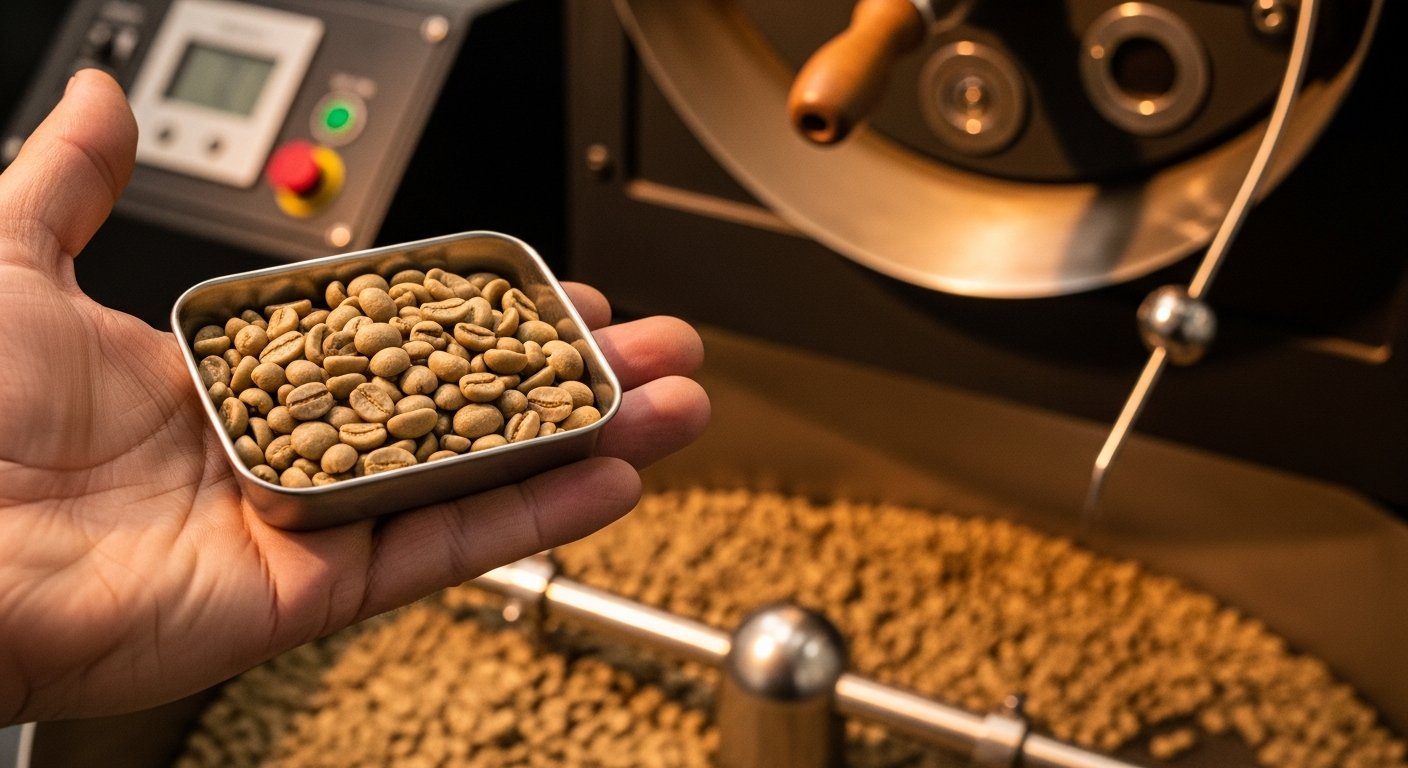
When you pour a dense, high-altitude coffee bean into the roaster, you are handling a seed that grew slowly under stress. That slow development packs sugars and acids tightly inside a hard cellular structure. The roasting machine sees this bean differently than it sees a soft, low-altitude bean. Understanding how altitude shapes bean density and how to adjust your roasting profile accordingly is the difference between a flat, baked cup and a vibrant, complex brew. This article walks you through the science of density, the practical adjustments to your roast curve, and the specific profile strategies that unlock the best flavor from high-density beans.
Why Altitude Determines Bean Density
Coffee grows across a wide altitude range, from sea level to over 2,500 meters. As elevation increases, the air gets thinner, temperatures drop, and the growing season lengthens. The coffee plant responds by producing fewer cherries per branch, and each cherry develops more slowly. This slower development allows the bean to accumulate higher concentrations of sugars, organic acids, and aromatic precursors. At the same time, the bean’s internal structure becomes denser and harder because the cell walls thicken to protect the seed from harsher conditions.
Density matters because it dictates how heat moves through the bean during roasting. A dense bean resists heat penetration. It takes longer for the core to reach the same temperature as the surface. If you apply the same roasting profile you use for a soft, low-altitude bean, the dense bean will likely end up underdeveloped in the center while the exterior shows color changes that suggest it is done. This mismatch produces grassy, sour, or astringent flavors. In our guide on the Newco LCD machine, we explain how consistent roast batches depend on understanding bean density and heat transfer. You can read more about that here: What Kind of Coffee Do I Need for My Newco LCD Machine.
Low-altitude beans, typically grown below 1,000 meters, are softer and less dense. They absorb heat quickly, so they need a gentler, shorter roast to avoid burning the sugars before they develop. High-altitude beans, above 1,200 meters, require more aggressive heat application early in the roast to push energy into the dense core. The challenge is to deliver enough heat to develop the center without scorching the surface. This balancing act is the core of crafting an effective coffee bean density altitude roasting profile.
How Density Changes Roast Behavior
Every bean has a specific heat capacity and thermal conductivity. Dense beans have higher thermal mass, meaning they require more energy to raise their internal temperature by one degree. During the drying phase (from charge to around 160 degrees Celsius), a dense bean may lag behind a soft bean by 30 to 60 seconds in reaching the same moisture evaporation point. This delay is not a problem if you account for it in your profile. But if you rush the drying phase, moisture may remain trapped inside, causing uneven expansion and potential tipping or scorching later.
The Maillard reaction phase (roughly 160 to 200 degrees Celsius) also behaves differently with dense beans. Because the core is still relatively cool, the chemical reactions that create browning and flavor compounds happen more slowly. You need to manage your Rate of Rise (RoR) carefully. A common mistake is to let the RoR drop too early, which stalls development and produces a baked flavor. Dense beans prefer a steady or slightly declining RoR that maintains momentum through the first crack.
First crack itself often occurs at a slightly higher temperature with dense beans due to the internal pressure buildup required to rupture the tougher cell walls. You may hear first crack start at 198 degrees Celsius instead of 195 degrees. This is normal. Do not panic and drop the heat too aggressively. Let the bean tell you when it is ready. The goal is to extend the development time after first crack by 20 to 30 percent compared to a soft bean, allowing the complex acids to break down into smoother, sweeter flavors.
Building a Density-Based Roasting Profile
To create a reliable coffee bean density altitude roasting profile, start by measuring the bean density using a simple water test or a density meter. Beans that sink in water are dense; beans that float are typically low-density or defective. Once you know your starting density, follow these steps to shape your profile.
First, set your charge temperature higher than you would for a soft bean. For a dense bean (above 700 grams per liter), charge at 200 to 210 degrees Celsius. For medium-density beans (650 to 700 grams per liter), charge at 195 to 200 degrees Celsius. The higher charge temperature delivers an initial thermal shock that drives moisture out of the bean quickly and initiates endothermic reactions. However, you must reduce the heat input immediately after charge to avoid surface scorching. A typical approach is to apply full gas for 30 to 60 seconds, then drop to 50 to 60 percent power until the bean temperature reaches 140 degrees Celsius.
Second, manage the drying phase with a target of 5 to 6 minutes for dense beans. This is longer than the 3 to 4 minutes typical for soft beans. Monitor the exhaust temperature and the bean color. If the beans are still pale and feel moist at the 5-minute mark, extend drying slightly. Do not rush this stage. Under-dried beans will lead to uneven development later.
Third, transition into the Maillard phase with a gradual increase in heat application. Aim for a slightly rising RoR of 10 to 12 degrees per minute at the start of Maillard, then allow it to decline smoothly to 6 to 8 degrees per minute by the time first crack begins. This gradual decline prevents the bean from stalling while still allowing enough energy to reach the core. If you use data logging software, compare your RoR curve against a reference profile for soft beans; you should see a slower but more sustained heat input.
Key Adjustments for Altitude-Specific Beans
Not all dense beans are the same. A bean from 1,500 meters in Ethiopia behaves differently than a bean from 2,000 meters in Colombia. The latter is typically denser and may require an additional 30 to 60 seconds in the development phase. Here is a quick reference for adjusting your profile based on altitude range:
- 1,200 to 1,500 meters: Charge at 195 to 200 degrees Celsius. Drying phase of 4.5 to 5.5 minutes. Development time (after first crack) of 90 to 110 seconds.
- 1,500 to 1,800 meters: Charge at 200 to 205 degrees Celsius. Drying phase of 5 to 6 minutes. Development time of 110 to 130 seconds.
- Above 1,800 meters: Charge at 205 to 210 degrees Celsius. Drying phase of 5.5 to 6.5 minutes. Development time of 130 to 150 seconds.
These ranges are starting points. You should adjust based on the specific bean origin, processing method, and your roaster’s thermal characteristics. A drum roaster holds more heat than a fluid-bed roaster, so you may need to lower charge temperatures slightly for a drum machine to avoid overshooting the drop in temperature after charge.
How to Measure Success in the Cup
The ultimate test of your coffee bean density altitude roasting profile is the cupping score. Dense beans roasted correctly will show bright acidity, a clean sweetness, and a lingering aftertaste. Underdeveloped dense beans taste sour or vegetal. Overdeveloped dense beans lose their origin character and taste flat or ashy. Look for these signs during cupping:
- Acidity: Should be crisp and wine-like, not sharp or vinegar-like.
- Sweetness: Should be caramel, honey, or fruit-toned, not raw sugar or absent.
- Mouthfeel: Should be syrupy or creamy, not thin or watery.
- Finish: Should be clean and pleasant, not bitter or astringent.
If you taste sourness, your development time was likely too short or your charge temperature was too low. If you taste bitterness or charcoal, your charge temperature was too high or you extended development too long. Use a refractometer to measure extraction yield. Dense beans often extract at a lower percentage (18 to 20 percent) compared to soft beans (20 to 22 percent) for the same grind setting. That is normal. Adjust your brew recipe accordingly by grinding finer or increasing water temperature.
Common Pitfalls and How to Avoid Them
One of the most frequent mistakes roasters make with dense beans is applying too much heat during the first crack phase. The bean surface temperature rises quickly, but the core lags. If you add heat to push through first crack, you may scorch the outer layers. Instead, let the residual heat in the drum carry the bean through first crack. Reduce gas or air flow slightly at the onset of first crack to prevent a runaway RoR.
Another pitfall is ignoring the environmental humidity. Dense beans stored in high-humidity conditions absorb moisture differently than dry-stored beans. If your beans feel sticky or clump together, they may have higher moisture content. In that case, extend the drying phase by an additional 30 seconds and lower your charge temperature by 2 to 3 degrees to avoid tipping.
Finally, do not treat every dense bean the same. A washed Ethiopian bean from 1,800 meters is dense but has a different chemical composition than a natural-processed Brazilian bean from the same altitude. The natural bean has more sugar and less acid, so it may benefit from a slightly shorter development time to preserve fruitiness. Always cup test and adjust your profile based on the specific lot, not just the altitude number.
The Role of Roasting Equipment
Your roasting machine influences how effectively you can execute a density-based profile. Drum roasters with heavy thermal mass work well for dense beans because they store heat and release it slowly. Fluid-bed roasters require more aggressive heat adjustments because they transfer heat faster. If you use a fluid-bed machine, consider a slightly lower charge temperature and a shorter drying phase to avoid over-drying the bean surface.
Data logging is essential for consistency. Track your charge temperature, turning point temperature, time to first crack, and development time ratio (DTR). For dense beans, aim for a DTR of 20 to 25 percent (development time divided by total roast time). For softer beans, 15 to 20 percent is typical. Compare your logs across batches to identify patterns. If you consistently see a lower cupping score with a specific altitude bean, review your RoR curve and adjust accordingly.
We see this every day in our roasting facility. When customers order a dense high-altitude single origin, we pull our profile for that specific altitude range and tweak it based on the latest cupping notes. The result is a roast that highlights the bean’s natural complexity without masking it with roast defects. That is the power of understanding coffee bean density altitude roasting profile.
Whether you are a home roaster or a commercial professional, the principles remain the same. Measure your bean density. Set your charge temperature and drying phase accordingly. Manage your RoR through Maillard and first crack with a steady hand. And always cup the result to validate your choices. Over time, you will develop an intuition for how each bean wants to be roasted. That intuition, backed by data, is what separates good roasters from great ones.