
Washed vs Natural vs Honey Coffee Processing Explained
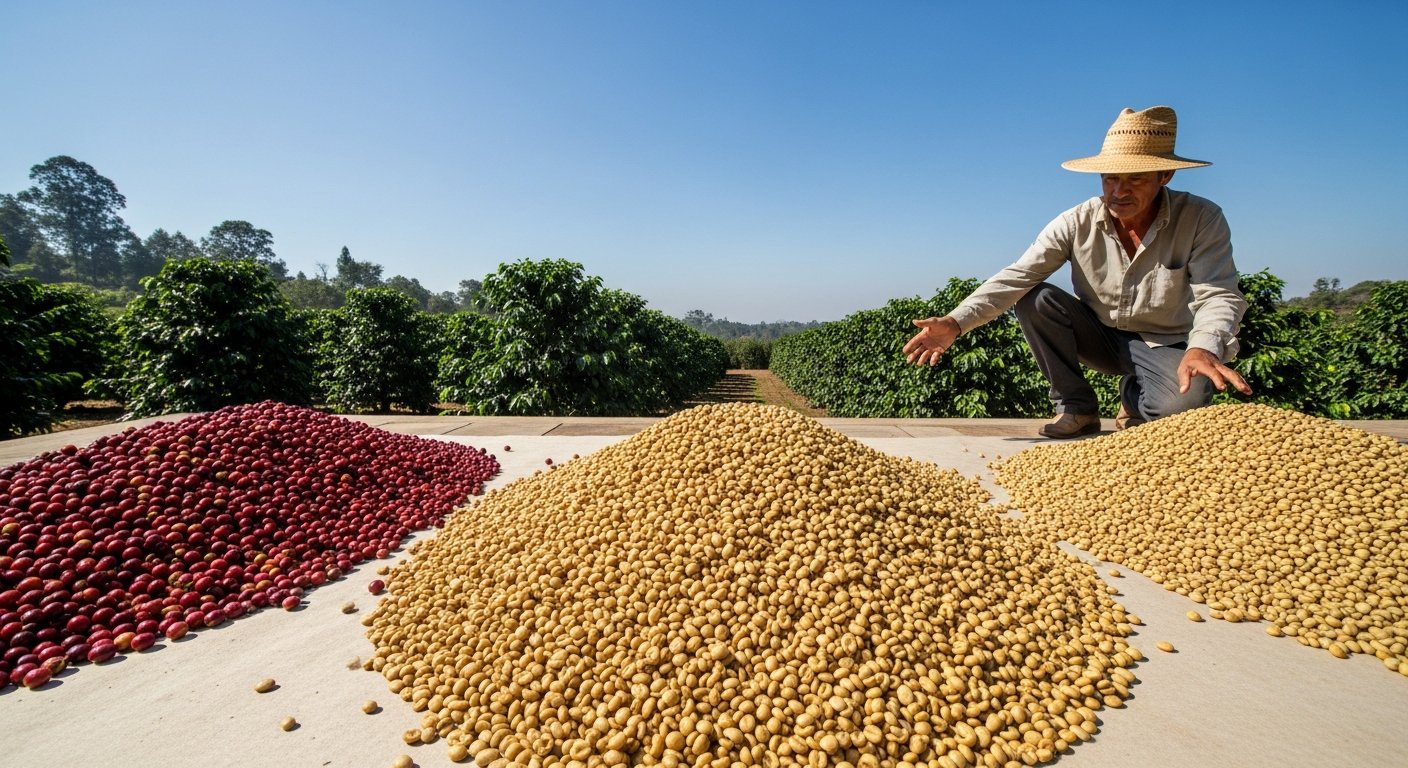
Every coffee lover has tasted the difference between a bright, clean cup and a heavy, fruity one. That distinction comes down to one critical factor: how the coffee cherry becomes a green bean. The three dominant methods (washed, natural, and honey processing) create dramatically different flavor profiles. Understanding these coffee processing methods (washed, natural, honey flavor) transforms how you choose and appreciate your daily brew.
When you buy fresh roast coffee, you are not just buying a bean variety or a roast level. You are buying the result of a specific post-harvest journey. The processing method determines sweetness, acidity, body, and complexity. At our roastery, we roast coffee to order, and we carefully select beans based on their processing because we know it matters to your cup. Let us break down each method so you can confidently select your next bag.
What Is Coffee Processing and Why Does It Matter?
Coffee processing is the set of steps used to remove the fruit layers from the coffee seed (the bean) before roasting. The goal is to extract the bean cleanly while developing desirable flavors. The method chosen affects everything from moisture content to chemical compounds in the green bean.
Three primary methods dominate specialty coffee: washed (or wet) processing, natural (or dry) processing, and honey (or pulped natural) processing. Each method alters fermentation time, sugar exposure, and drying conditions. These variables create a wide spectrum of flavors, from crisp and floral to syrupy and wine-like.
For home baristas and commercial buyers alike, understanding these methods helps you predict how a coffee will taste before you brew. It also informs how you should grind and extract the coffee for best results. Our customers often ask us which processing style works best for espresso versus pour-over. The answer depends on your flavor preference, but the knowledge starts here.
Washed Coffee Processing: Clean, Bright, and Consistent
The Steps of Washed Processing
Washed processing, also known as wet processing, begins with depulping the coffee cherry to remove the skin and most of the fruit pulp. The beans (still covered in sticky mucilage) are then placed in fermentation tanks filled with water. Over 12 to 48 hours, natural enzymes break down the mucilage. After fermentation, the beans are washed vigorously with clean water to remove all remaining fruit material. Finally, the beans are dried on patios, raised beds, or mechanical dryers until they reach the ideal moisture content (around 10-12%).
The key characteristic of washed processing is that the bean has almost no contact with fruit sugars during drying. This produces a clean cup where the bean’s inherent qualities (terroir, variety, altitude) shine through without fruity interference. Acidity is usually higher, and the flavor profile is more tea-like, floral, or citrusy.
Washed coffees are popular among roasters because they are predictable and easier to roast evenly. They also tend to have a longer shelf life compared to natural-processed beans. For commercial coffee supply, washed beans offer consistency that large buyers value.
Flavor Profile of Washed Coffees
Expect bright acidity, clean finish, and delicate notes. Common descriptors include lemon, bergamot, jasmine, green apple, and honey (but without the heavy sweetness of honey-processed coffee). Body is typically light to medium. This style works exceptionally well for filter brewing and light roasts.
If you enjoy Ethiopian Yirgacheffe with its floral and citrus notes, you are likely drinking a washed coffee. Many high-altitude Central American coffees (like Guatemalan or Costa Rican) are also washed, showcasing bright acidity and nutty undertones.
Natural Coffee Processing: Fruity, Bold, and Complex
The Steps of Natural Processing
Natural processing (also called dry processing) is the oldest method. Whole coffee cherries are spread on raised beds or patios to dry in the sun for several weeks. During this time, the entire fruit remains intact around the bean. The cherries are turned regularly to prevent mold and ensure even drying. Once the moisture content drops sufficiently, the dried husk (parchment and dried fruit) is mechanically removed to reveal the green bean.
Because the bean sits inside the fermenting fruit for weeks, it absorbs sugars, acids, and fermentation byproducts. This results in intense fruit flavors, heavy body, and sometimes wine-like or boozy notes. The risk of defects (like over-fermentation or mold) is higher, which is why natural processing demands careful monitoring and skilled producers.
Natural-processed coffees often have lower acidity and a syrupy mouthfeel. They can be polarizing: some coffee lovers adore the wild fruit bomb, while others find them too funky. For adventurous drinkers, natural coffees offer an unforgettable experience.
Flavor Profile of Natural Coffees
Expect bold fruit notes: strawberry, blueberry, mango, dried cherry, or even fermented fruit like wine. Body is full and creamy. Acidity is often muted. These coffees shine as espresso or in milk-based drinks where the fruitiness cuts through the milk. They also work well for medium roasts that balance sweetness and acidity.
Brazilian and Ethiopian natural coffees are famous examples. A natural Ethiopian from the Harrar region can taste like blueberry jam. A natural Brazilian often has chocolate-covered raisin notes.
Honey Coffee Processing: The Best of Both Worlds
The Steps of Honey Processing
Honey processing (also called pulped natural or semi-washed) begins like washed processing: the cherry is depulped to remove the skin. However, the mucilage (the sticky, honey-like layer) is left partially or fully intact on the bean. The beans are then dried without washing off the mucilage. The color of the honey (yellow, red, or black) indicates how much mucilage remains and how much sun exposure the beans receive during drying.
During drying, the mucilage oxidizes and caramelizes, infusing the bean with sweetness and body. The result is a coffee that has more body and sweetness than a washed coffee but more clarity and acidity than a natural coffee. Honey-processed coffees are less risky than naturals because the mucilage is thinner than whole fruit, but they still require careful monitoring to prevent over-fermentation.
Honey processing originated in Costa Rica and has spread to other origins like El Salvador, Colombia, and Nicaragua. It allows producers to create unique flavor profiles that appeal to specialty buyers.
Flavor Profile of Honey Coffees
Expect pronounced sweetness (think honey, caramel, brown sugar), medium to full body, and moderate acidity. Fruit notes are present but more subtle than naturals: stone fruit, apricot, peach, or tropical fruit. The mouthfeel is creamy and smooth.
Honey coffees are versatile: they work well for both filter and espresso. They are forgiving to roast and brew, making them a favorite among home baristas. A yellow honey coffee might taste like honeydew and brown sugar, while a black honey coffee (more mucilage, longer drying) can approach the intensity of a natural coffee.
Comparing the Three Methods Side by Side
To help you decide which processing method suits your taste, here is a quick breakdown of key characteristics:
- Acidity: Washed has the highest acidity. Natural has the lowest. Honey sits in the middle with moderate, balanced acidity.
- Body: Natural is heaviest. Honey is medium to full. Washed is lightest.
- Sweetness: Honey is sweetest. Natural is also sweet but can be fermented. Washed has subtle sweetness from the bean itself.
- Flavor clarity: Washed offers the clearest expression of origin. Natural can mask origin with fruit. Honey provides a blend of clarity and fruit.
- Consistency: Washed is most consistent. Natural is most variable. Honey falls in between.
When selecting coffee for your home or cafe, consider your brewing method. Washed coffees excel in pour-over and drip brewers where clarity is valued. Natural coffees make stunning espresso and cold brew. Honey coffees are the all-rounders, performing well across all methods.
How Processing Affects Roasting and Brewing
As a roaster who roasts coffee to order, I adjust my roast profile based on the processing method. Washed coffees tolerate lighter roasts because they have high acidity and clean sugars. Natural coffees need careful development to avoid baking the delicate fruit flavors. Honey coffees are forgiving but benefit from a medium roast that preserves sweetness.
For brewing, grind size and water temperature should match the processing style. Washed coffees often need a finer grind and hotter water to extract fully. Natural coffees can be forgiving with a coarser grind to avoid bitterness. Honey coffees work well with a medium grind and standard brewing parameters.
At our commercial coffee and barista supplies division, we recommend customers experiment with different processing methods to find their preference. We stock green beans from all three categories and provide brewing guidelines for each.
Choosing the Right Coffee Processing Method for You
If you are new to specialty coffee, start with a washed coffee from a well-known origin like Colombia or Ethiopia. This will give you a baseline for what the bean itself tastes like. Next, try a honey coffee from Costa Rica to experience increased sweetness and body. Finally, explore a natural coffee from Brazil or Ethiopia for a fruit-forward adventure.
For commercial buyers, consider your menu. Washed coffees work well as single-origin filter options. Natural coffees make excellent espresso blends because they add body and fruit complexity. Honey coffees can serve as a bridge coffee that appeals to both traditional and adventurous drinkers.
Our team can help you select the right processing method for your needs, whether you are a home barista or a cafe owner. We roast coffee to order, so you always receive fresh beans that highlight the best qualities of each processing style.
Understanding coffee processing methods (washed, natural, honey flavor) is not just trivia. It is the key to unlocking a world of flavor diversity. The next time you buy coffee, check the label for processing information. If it is missing, ask your roaster. Knowing how your coffee was processed empowers you to make informed choices and enjoy every cup to its fullest.
Whether you prefer the crisp clarity of washed, the bold fruit of natural, or the balanced sweetness of honey, there is a perfect coffee waiting for you. Explore, taste, and savor the difference that processing makes.