
Espresso Extraction Time Grind Size Pressure Guide
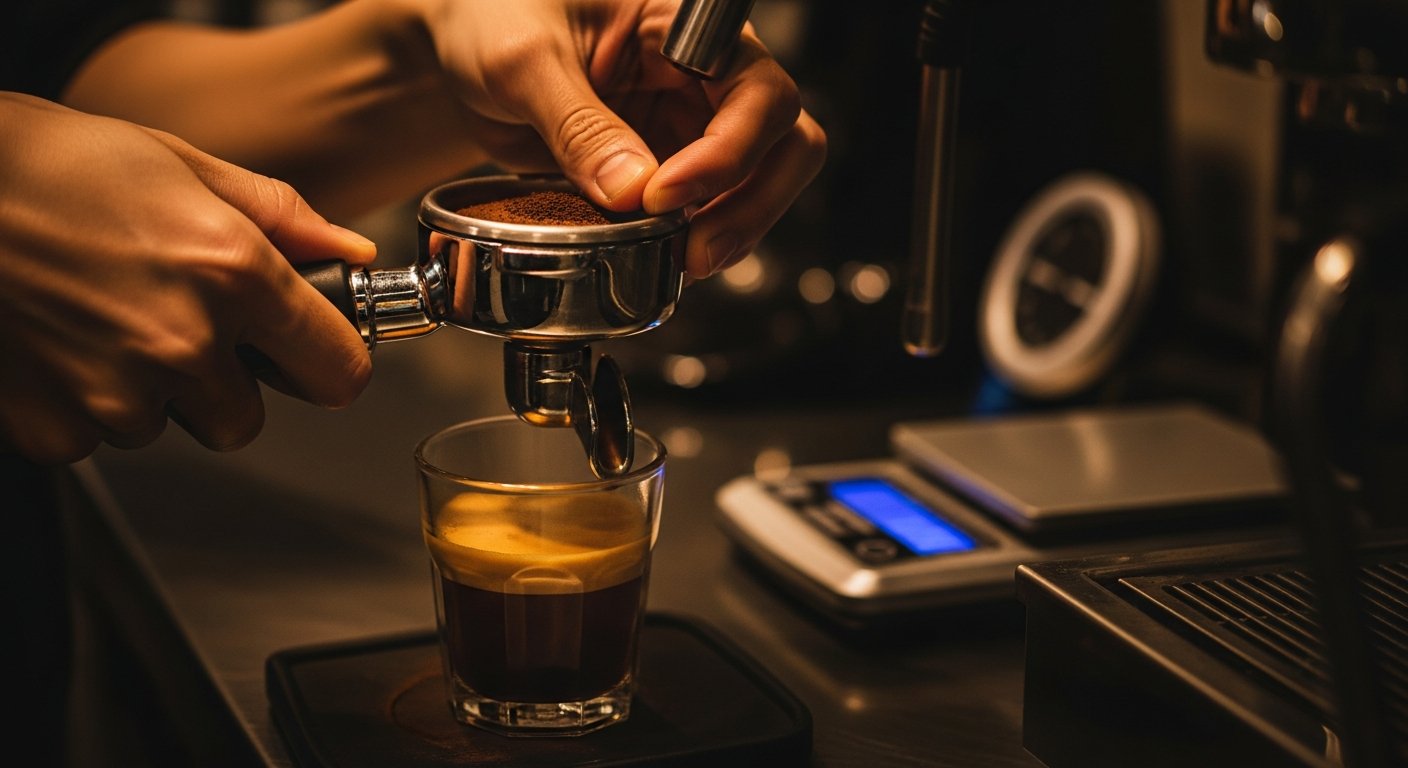
Every home barista has faced the same frustration: a shot that runs too fast, tastes sour, and leaves you wondering what went wrong. Or worse, a shot that barely drips, over-extracts, and hits your palate with bitter ash. At the heart of these problems lies the delicate dance between three variables: espresso extraction time, grind size, and pressure. Master these, and you unlock consistent, delicious espresso from your machine. This guide will walk you through how these factors interact, how to troubleshoot using them, and how to dial in your perfect shot.
The Golden Triangle: Extraction Time, Grind Size, and Pressure
Think of espresso extraction as a three-legged stool. If one leg is off, the whole thing wobbles. Extraction time is the duration that hot water contacts the coffee puck. Grind size determines how quickly water can pass through that puck. Pressure (typically 9 bars from your machine) forces water through the coffee. Together, they determine how much flavor, body, and crema you extract.
A typical target extraction time for a double shot (18-20 grams of coffee, yielding 36-40 grams of liquid) is 25-30 seconds from the moment you engage the pump. If your shot finishes in 15 seconds, you are under-extracting. If it takes 45 seconds, you are over-extracting. Grind size is the primary lever to adjust time: finer grinds slow flow, coarser grinds speed it up. Pressure, while usually fixed on most home machines, can be adjusted on prosumer models and is a secondary but powerful tool.
How Grind Size Directly Controls Extraction Time
Grind size is the most accessible variable for home baristas. When you grind finer, you create more surface area and smaller channels between particles. Water struggles to push through, extending contact time. When you grind coarser, water flows freely, shortening contact time. This is why your first step in dialing in should always be grind adjustment.
Imagine you pull a shot with a grind setting that yields a 20-second extraction. The espresso tastes sour and thin. By making the grind slightly finer (say, one or two clicks on your grinder), you increase resistance. The next shot might run 28 seconds, producing a balanced, sweet, and creamy result. If you go too fine, you hit 40 seconds plus, and bitterness emerges. The relationship is linear and predictable, making grind size the most reliable knob for hitting your target time.
Practical Steps for Adjusting Grind Size
To avoid wasting coffee, follow this systematic approach:
- Start with a known reference dose (e.g., 18 grams) and a consistent tamp (about 30 pounds of pressure).
- Pull a shot and note the time to reach your target yield. If it is under 25 seconds, grind finer.
- If the shot exceeds 35 seconds, grind coarser.
- Change grind size by only one or two steps on your grinder between shots. Large jumps can overshoot the sweet spot.
- Keep all other variables (dose, yield, temperature) constant while adjusting grind.
After each adjustment, taste the espresso. Look for a balance of acidity, sweetness, and bitterness. The goal is not just a number on a timer but a flavor profile that pleases your palate. Remember that different beans (light roasts vs. dark roasts) may require different grind settings even for the same extraction time.
Pressure: The Force Behind the Flow
Most modern espresso machines are calibrated to deliver 9 bars of pressure at the group head. This standard was popularized by commercial machines and is widely considered optimal for extracting espresso. However, pressure is not always constant during a shot. As the puck degrades, pressure can fluctuate. Some machines have a pressure gauge that lets you monitor this in real time.
If your machine allows pressure adjustment (common on higher-end models like the Decent DE1 or La Marzocco GS3), you can use it to fine-tune extraction. Lowering pressure to 6-7 bars can reduce channeling and improve sweetness for light roasts. Increasing pressure to 10-11 bars can boost extraction from dense pucks but risks bitterness. For most home baristas, however, the machine’s fixed 9-bar setting is sufficient when combined with proper grind size.
Pressure Profiling and Its Effect on Time
Pressure profiling involves varying the pressure during the shot. A common profile is a slow ramp-up to 9 bars, a hold, then a gradual decline. This can extend contact time without over-extracting because the lower pressure at the end reduces bitter compound pull. If you use pressure profiling, your extraction time may shift from the standard 25-30 seconds to 30-40 seconds, depending on the profile. Always adjust your grind size to match the profile’s flow rate.
For baristas without pressure profiling capabilities, focus on ensuring your machine maintains stable pressure. A machine that fluctuates wildly will produce inconsistent shots. Descale regularly and check your pump’s health. Consistent pressure is the foundation that makes espresso extraction time and grind size adjustments predictable.
Troubleshooting Common Extraction Problems
When your espresso tastes off, use this framework to diagnose the issue. The table below maps symptoms to likely causes involving espresso extraction time, grind size, and pressure. Use it as your quick reference.
If your shot runs fast (under 20 seconds) and tastes sour, the grind is likely too coarse. Water rushed through, extracting only acids and leaving behind sugars and oils. Grind finer to slow the flow and increase contact time. If the shot runs slow (over 40 seconds) and tastes bitter, the grind is too fine. Water struggled to pass, over-extracting bitter compounds. Grind coarser to speed up the flow.
If your shot runs at a normal time (25-30 seconds) but still tastes unbalanced, check your dose and tamp. An uneven tamp can cause channeling, where water finds a path through the puck, over-extracting some areas and under-extracting others. This leads to mixed flavors of sour and bitter. Use a level tamper and apply even pressure. Also, verify your machine’s pressure is stable. A pressure drop mid-shot can cause under-extraction even with a fine grind.
Case Study: The 15-Second Gusher
Imagine you are pulling a shot with freshly roasted beans. You dose 18 grams, tamp firmly, and hit the brew button. The espresso streams out in 15 seconds, pale and thin. The taste is sharp and sour. Your grind is too coarse. Adjust your grinder one step finer, purge a small amount of coffee (to clear old grounds), and pull another shot. This time, it runs 27 seconds. The crema is thick and hazel. The flavor is balanced with chocolate notes. Success.
Now imagine you grind two steps finer instead of one. The next shot takes 50 seconds, drips slowly, and tastes ashy and dry. You have overshot the sweet spot. Grind coarser by one step and try again. The lesson: small, incremental changes prevent waste and frustration. Keep a log of your settings for each bean you use.
Advanced Techniques: Pre-Infusion and Flow Control
Pre-infusion is a low-pressure phase at the start of the shot (typically 2-3 bars for 3-5 seconds) that wets the puck evenly before full pressure hits. This can reduce channeling and improve extraction uniformity. Many machines offer automatic pre-infusion; some let you control it manually. Pre-infusion effectively extends your total extraction time without increasing pressure, giving you more room to balance grind size.
Flow control devices (like the E61 flow control kit) let you adjust water flow rate during the shot. This is a more precise tool than pressure adjustment because it directly manages the volume of water contacting the coffee. By reducing flow at the start, you can mimic a long pre-infusion. By increasing flow later, you can push extraction. Flow control is an advanced technique best explored after you have mastered basic grind size and pressure adjustments. It allows you to fine-tune espresso extraction time independently of grind size, offering even greater control.
Dialing In: A Step-by-Step Workflow
Follow this numbered workflow to dial in any new coffee. It assumes you have a good grinder and a machine with stable pressure. If your machine has adjustable pressure, set it to 9 bars before starting.
- Weigh your dose. Start with 18 grams for a double basket. Adjust dose only if necessary after testing.
- Set your grinder to a medium-fine setting. Pull a test shot and measure the time to reach a 1:2 ratio (36 grams of liquid).
- If time is under 25 seconds, grind finer. If over 35 seconds, grind coarser. Make one step adjustments.
- Pull another shot. Repeat step 3 until you hit 25-30 seconds.
- Taste the espresso. If it is sour despite correct time, the grind may still be too coarse (try one step finer). If bitter, try one step coarser.
- Once flavor is balanced, lock in your grind setting. Note it for future use with the same bean.
- If you change beans or roast level, start over from step 1. Light roasts often need a finer grind than dark roasts.
This workflow minimizes waste and builds muscle memory. Over time, you will learn how your specific grinder and machine respond to changes. You will also develop a palate for identifying extraction issues by taste alone, making you a more confident barista.
Common Myths About Extraction Time and Pressure
One persistent myth is that a longer extraction always means more flavor. Not true. Beyond 30-35 seconds, you start pulling bitter, astringent compounds that ruin balance. Another myth is that higher pressure always yields better crema. While pressure helps form crema, excessively high pressure (over 11 bars) can cause channeling and uneven extraction. The 9-bar standard exists for good reason.
Some baristas believe that grind size alone fixes all problems. While grind size is the primary tool, ignoring dose and tamp can sabotage your efforts. A consistent 30-pound tamp and accurate dose are prerequisites for making sensible grind adjustments. Finally, do not assume that all beans behave the same. A coffee’s density, moisture content, and roast level all affect how it responds to grind size and pressure. Freshly roasted beans (within 5-14 days of roasting) are more forgiving and produce better results.
Understanding the interplay of espresso extraction time, grind size, and pressure transforms espresso making from guesswork into a precise craft. Whether you are using a basic machine or a prosumer setup, these principles apply. Start with your grind size to hit the right time, use pressure as a refinement tool, and always taste to confirm. With practice, you will consistently pull shots that rival your favorite cafe.
Your espresso journey does not end here. Experiment with different beans, keep a brewing journal, and revisit your technique regularly. The pursuit of the perfect shot is part of the joy. And when you find that sweet spot where time, grind, and pressure align, the reward is a small cup of pure liquid satisfaction.