
Carbonic Maceration Coffee Processing: A Complete Guide
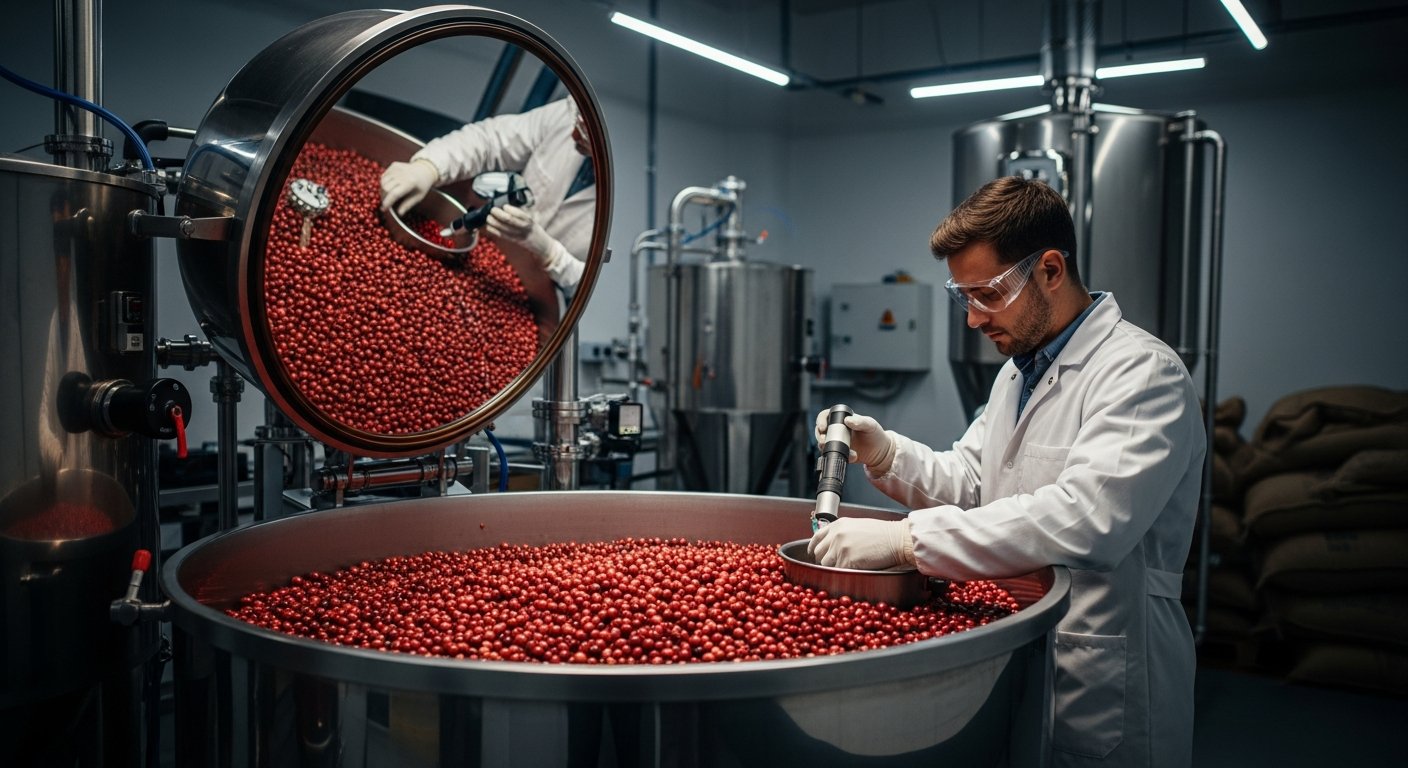
Imagine a coffee that tastes like grape soda, bubblegum, or tropical fruit punch, all without any added flavoring. This is the promise of carbonic maceration, a processing method borrowed from the wine world that is now reshaping specialty coffee. Unlike traditional washed or natural processes, carbonic maceration places whole coffee cherries in a sealed, oxygen-free environment, allowing fermentation to occur in a controlled, anaerobic setting. The result is a cup profile that is clean, intensely fruity, and often shocking to first-time tasters. For roasters and home brewers alike, understanding this method is essential for appreciating the future of coffee flavor innovation.
This carbonic maceration coffee processing method guide will walk you through the science, the step-by-step process, the equipment needed, and how to brew these unique coffees at home. Whether you are a curious enthusiast or a professional seeking to expand your knowledge, this guide provides the depth and clarity needed to master this cutting-edge technique.
What Is Carbonic Maceration in Coffee?
Carbonic maceration is a fermentation technique where whole coffee cherries are sealed in a stainless steel tank or specialized vessel, and the air is replaced with carbon dioxide (CO2). This creates an anaerobic environment, meaning no oxygen is present. Inside this environment, the cherries undergo intracellular fermentation, where enzymes within each cherry break down sugars and acids without the need for external yeasts or bacteria. This process is fundamentally different from aerobic fermentation, where oxygen is present and microbes play a dominant role.
The term originates from winemaking, specifically the method used to produce Beaujolais Nouveau. In coffee, carbonic maceration was pioneered by producers in Costa Rica and Colombia around 2015, and it has since spread to origin countries worldwide. The key distinction from other anaerobic processes is that the cherries remain intact and whole. This prevents the pulp from coming into direct contact with oxygen, which preserves delicate aromatic compounds and produces a remarkably clean, fruit-forward cup.
The flavor profile of carbonic maceration coffee is often described as having intense notes of red berries, stone fruits, and floral undertones, with a pronounced sweetness and a syrupy body. Acidity is typically bright but smooth, lacking the sharpness found in some washed coffees. For a deeper look at how environmental factors shape these results, see our guide on how altitude affects coffee processing methods.
The Science Behind Carbonic Maceration
Anaerobic Fermentation and Intracellular Metabolisms
To appreciate carbonic maceration, you must understand the role of oxygen. In standard natural or honey processing, oxygen is present, and aerobic bacteria and yeasts drive fermentation. These microbes consume sugars and produce acids and alcohols, which contribute to flavor complexity but can also introduce unwanted funky or sour notes if not carefully managed. In carbonic maceration, the absence of oxygen shifts the fermentation pathway entirely.
Inside the sealed CO2-rich environment, the coffee cherry itself becomes the primary driver of fermentation. The fruit cells switch to anaerobic respiration, breaking down stored sugars via glycolysis and producing ethanol, lactic acid, and various esters. This intracellular metabolism creates a different set of flavor precursors. Because external microbes are suppressed, the resulting profile is cleaner and more predictable, though still dependent on factors like cherry ripeness, temperature, and duration.
Temperature control is critical. Most carbonic maceration fermentations occur between 15 and 25 degrees Celsius (59 to 77 degrees Fahrenheit). Lower temperatures slow the process, promoting more delicate floral and tea-like notes. Higher temperatures accelerate fermentation, yielding bolder, more jammy fruit flavors. Producers often monitor pH, brix (sugar content), and gas composition to fine-tune the outcome.
Comparison to Other Processing Methods
Carbonic maceration occupies a unique space between washed and natural processes. Washed coffees remove the cherry skin and pulp before fermentation, resulting in a clean, bright cup with high acidity but often less body. Natural coffees dry the whole cherry, allowing prolonged aerobic fermentation that can produce heavy, winey, or even fermented flavors. Carbonic maceration offers a middle path: the fruit character of a natural with the clarity and cleanliness of a washed coffee.
Honey processing, where some mucilage remains on the bean, produces a range of profiles depending on the amount of mucilage left. However, honey processes are still aerobic and thus more susceptible to microbial variation. Carbonic maceration, being anaerobic, provides greater control and consistency. This makes it particularly attractive for specialty producers aiming for repeatable, high-scoring lots.
Step-by-Step Guide to Carbonic Maceration Processing
Implementing carbonic maceration at a coffee farm or experimental lab requires careful attention to detail. Below is a step-by-step breakdown of the process, from cherry selection to drying. Each stage directly influences final cup quality.
1. Cherry Selection and Sorting
Only fully ripe, defect-free cherries should be used. Under-ripe cherries contain higher levels of chlorogenic acid and lower sugar content, leading to harsh, astringent flavors. Over-ripe or damaged cherries can introduce off-flavors or unwanted microbial activity. Producers typically float the cherries in water to remove low-density fruit, then hand-sort to ensure uniformity. The sugar content (brix) of the cherries should be measured; a minimum of 18-20 brix is recommended for optimal fermentation.
2. Sealing and Gas Flushing
The sorted cherries are placed into a stainless steel tank, food-grade plastic drum, or specialized fermentation vessel. The tank is then sealed, and carbon dioxide is injected to displace any oxygen. This step is crucial: residual oxygen can lead to mold growth or aerobic fermentation, ruining the batch. Some producers use a one-way valve to allow gas escape while preventing oxygen entry. The tank is often equipped with a pressure gauge and temperature probe.
3. Fermentation Duration and Monitoring
Fermentation typically lasts between 36 and 72 hours, though some producers extend it to 120 hours for more intense flavors. During this period, the tank is monitored for temperature, pressure, and pH. A pH drop from around 5.5 to 4.0 is normal as lactic acid and other acids form. The ideal ending pH is typically between 3.8 and 4.2. If the temperature rises above 30 degrees Celsius, the fermentation may become too aggressive, producing undesirable solvent-like flavors.
Producers often sample the cherries daily, tasting the juice for sweetness and acidity. Once the desired profile is achieved, the fermentation is stopped by opening the tank and removing the cherries.
4. Depulping and Washing
After fermentation, the cherries are depulped to remove the skin and some mucilage. The beans, still covered in sticky mucilage, are then washed in clean water to remove excess sugars and acids. This step prevents further fermentation and halts the process at the optimal point. Some producers skip washing entirely for a more intense fruit character, but this increases the risk of over-fermentation during drying.
5. Drying and Milling
The washed beans are spread on raised beds or patios to dry. Drying must be slow and even, typically over 10-15 days, until the moisture content reaches 10-12%. Rapid drying can cause the beans to crack, while uneven drying leads to inconsistent flavor. During drying, the beans are turned frequently to prevent mold. Once dry, they are milled to remove the parchment layer, then graded and sorted for export.
Equipment and Cost Considerations
Adopting carbonic maceration requires investment in specialized equipment. Here is a breakdown of essential items and their approximate costs:
- Fermentation tank: Stainless steel tanks with airtight seals range from $500 for small 20-liter units to $5,000 or more for 200-liter models. Plastic drums are cheaper but less durable.
- CO2 cylinder and regulator: A 20-pound CO2 tank with regulator costs around $150-300. Refills are about $30-50 per tank.
- pH meter and brix refractometer: Accurate measurement tools are critical. A good pH meter costs $100-200, and a refractometer is $50-150.
- Temperature control system: For consistent results, a cooling or heating system may be needed, especially in warm climates. Costs vary widely from $200 to $2,000.
For small-scale producers or home enthusiasts, a simpler setup using a food-grade bucket with a one-way valve and a CO2 cartridge can work for small batches. However, achieving repeatable results at scale requires the full equipment suite.
Brewing Carbonic Maceration Coffee at Home
Once you have sourced a carbonic maceration coffee, brewing it properly is essential to showcase its unique profile. These coffees are often more delicate and fruit-forward than standard coffees, so a few adjustments to your usual brewing method can make a significant difference.
Grind Size and Ratio
Start with a medium-fine grind, similar to what you would use for a pour-over. Because these coffees tend to be denser and have a higher sugar content, they extract more slowly. A slightly coarser grind can prevent over-extraction and bitterness. Use a 1:16 coffee-to-water ratio (e.g., 15 grams of coffee to 240 grams of water) as a starting point, then adjust to taste.
Water Temperature
Lower water temperature is often recommended. Aim for 90-92 degrees Celsius (194-198 degrees Fahrenheit) instead of the typical 96 degrees. This helps preserve the delicate fruit esters and prevents extracting harsh tannins from the bean. If you find the cup too acidic, raise the temperature slightly; if it tastes flat or bitter, lower it.
Brewing Methods
Pour-over methods like the V60 or Chemex work exceptionally well, as they highlight clarity and brightness. The Aeropress also produces a clean, sweet cup. For espresso, carbonic maceration coffees can produce extraordinary shots with intense fruit flavors, but they require careful dialing-in due to their high solubility. Start with a standard 1:2 ratio (18 grams in, 36 grams out) and adjust grind size for a 25-30 second extraction.
Common Challenges and Troubleshooting
Carbonic maceration is not without risks. Even experienced producers encounter issues. Here are common problems and their solutions:
- Over-fermentation: If the coffee smells like vinegar or has a sour, unpleasant taste, fermentation went too long. Reduce fermentation time or lower the temperature.
- Under-fermentation: A flat, grassy flavor indicates insufficient fermentation. Extend the time or increase the temperature slightly.
- Mold growth: This indicates oxygen entered the tank. Ensure the seal is airtight and flush with CO2 properly before sealing.
- Inconsistent results between batches: Variations in cherry ripeness or temperature fluctuations are common culprits. Standardize sorting and use a temperature-controlled environment.
For home brewers, the most common issue is difficulty extracting the full flavor potential. If your cup tastes muted or hollow, try extending the brew time or using a finer grind. If it tastes overly acidic, lower the water temperature or use a higher ratio (e.g., 1:17).
The Future of Carbonic Maceration in Specialty Coffee
Carbonic maceration is more than a trend; it represents a shift toward scientific precision in coffee processing. As producers gain access to better equipment and data, we can expect even more refined and diverse flavor profiles. Some are experimenting with extended carbonic maceration lasting up to 10 days, or combining it with other anaerobic techniques. Others are exploring the use of specific yeast strains inoculated into the tank to direct flavor development.
However, the method also raises questions about sustainability and accessibility. The equipment and energy costs are higher than traditional methods, which may limit adoption among smallholder farmers. Collaborative initiatives and shared fermentation facilities could help bridge this gap. For consumers, the growing availability of carbonic maceration coffees offers an exciting opportunity to explore the outer limits of coffee flavor.
This carbonic maceration coffee processing method guide has covered the essential concepts, from the science of anaerobic fermentation to practical brewing tips. The key takeaway is that this method is a tool for expression, not a guarantee of quality. When executed with care and attention, it can produce some of the most memorable and delicious coffees you will ever taste.
As you explore these coffees, remember that each batch tells a story of the producer’s choices: the cherry ripeness, the fermentation duration, the drying conditions. The best way to understand carbonic maceration is to experience it firsthand. Seek out a bag from a reputable roaster, brew it with intention, and let the flavors speak for themselves.