Direct Trade vs Fair Trade: Which Coffee Model Wins?
When you buy a bag of specialty coffee, the label often tells a story of ethics and sustainability. Two terms dominate that story: Fair Trade and Direct Trade. Both claim to support farmers and protect the environment, but they operate in fundamentally different ways. For coffee lovers who want their morning cup to reflect their values, understanding the distinction between direct trade coffee partnerships vs fair trade benefits is essential. This article breaks down the real-world impact of each model, from farmer pay to cup quality, so you can make an informed choice.
What Is Fair Trade Coffee?
Fair Trade is a certification system designed to ensure that coffee farmers receive a minimum price for their beans, regardless of market fluctuations. This price floor acts as a safety net, protecting producers from volatile commodity markets. To earn the Fair Trade label, cooperatives must meet social, environmental, and economic standards set by organizations like Fairtrade International or Fair Trade USA.
Key requirements include democratic decision-making within cooperatives, prohibitions on child labor, and investments in community projects such as schools or healthcare. Farmers are also paid a premium on top of the minimum price, which is earmarked for community development. For example, a cooperative in Honduras might use the premium to build a clean water system for its members.
However, Fair Trade has faced criticism. The certification process is costly and bureaucratic, often excluding smaller, independent farms that cannot afford the fees. Critics also argue that the minimum price is too low to truly lift farmers out of poverty, and that the system prioritizes volume over quality. A farmer producing exceptional beans gets the same base price as one producing average beans, which can disincentivize quality improvements.
What Is Direct Trade Coffee?
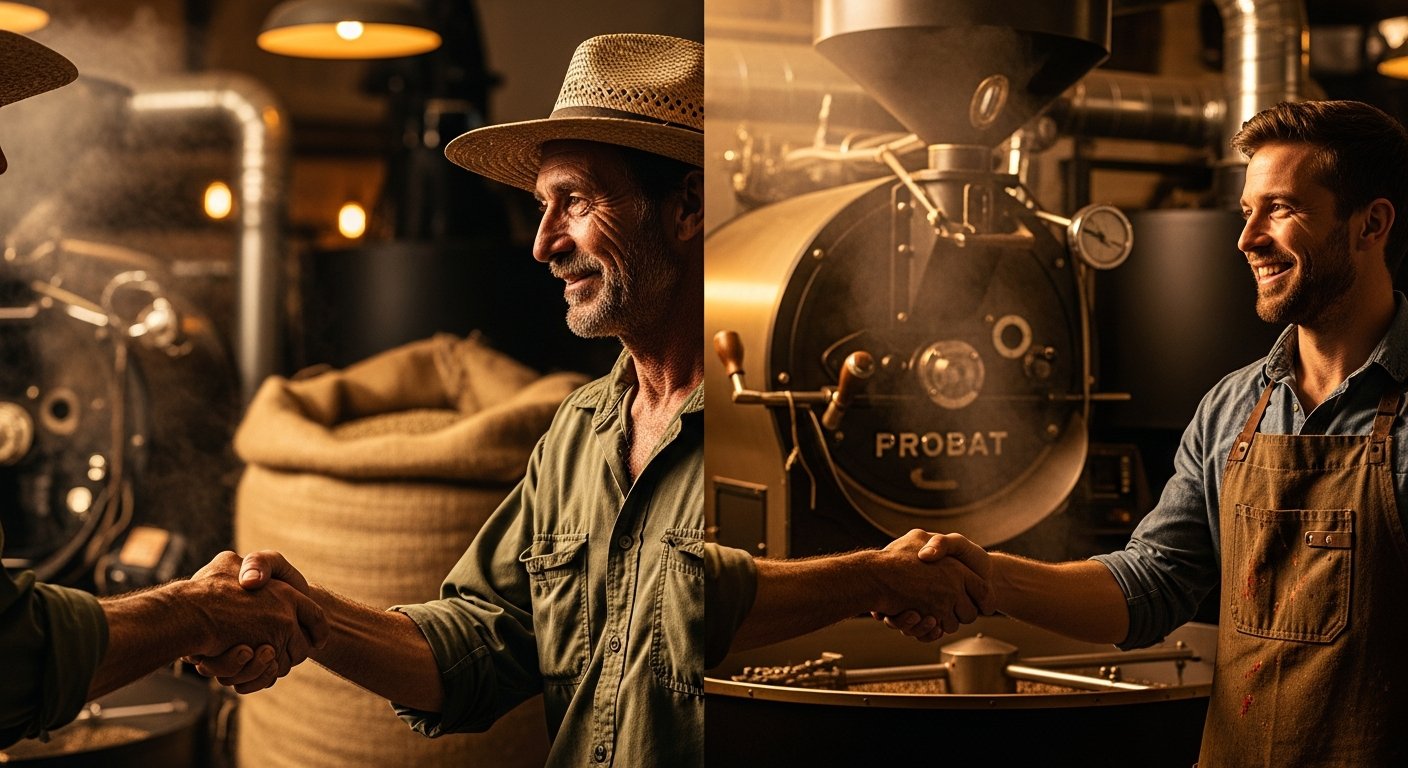
Direct Trade is not a formal certification but a sourcing philosophy where roasters buy directly from coffee producers, cutting out middlemen. This model emphasizes relationship building, transparency, and quality. Roasters visit farms, cup samples, and negotiate prices based on the quality of the beans rather than a preset minimum.
In a Direct Trade arrangement, the roaster and farmer agree on terms that often include a significantly higher price than Fair Trade minimums. For instance, a roaster in Portland might pay $4.00 per pound for a microlot from a Guatemalan farm, compared to the Fair Trade minimum of around $1.90 per pound. The farmer receives more money, and the roaster gets access to exceptional beans that can be marketed as traceable and premium.
Transparency is a hallmark of Direct Trade. Roasters often publish the prices they pay and the names of the farms they work with. This openness allows consumers to see exactly where their coffee comes from and how much the farmer earned. However, Direct Trade lacks a uniform standard. One roaster’s definition of “direct” might involve a single visit to a farm, while another may require years of collaboration and price guarantees. This inconsistency can confuse consumers and make it difficult to compare claims across brands.
Direct Trade Coffee Partnerships vs Fair Trade Benefits: A Side-by-Side Comparison
To understand which model serves farmers and drinkers best, we need to examine the core differences. The table below summarizes the key contrasts, but the real story lies in the details.
- Price Mechanism: Fair Trade sets a minimum price plus a premium. Direct Trade negotiates prices based on quality, often exceeding Fair Trade levels.
- Farmer Autonomy: Fair Trade requires cooperative membership. Direct Trade can work with individual farms or small groups, giving farmers more control.
- Quality Focus: Fair Trade prioritizes volume and certification. Direct Trade prioritizes cup score and traceability.
- Transparency: Fair Trade offers third-party audits. Direct Trade relies on roaster transparency and direct relationships.
- Scalability: Fair Trade is designed for large-scale impact. Direct Trade is best suited for small, high-quality batches.
The choice between these models often comes down to a trade-off between scale and depth. Fair Trade can help thousands of farmers at once, but its impact per farmer may be shallow. Direct Trade can transform a single community, but it cannot reach the volume needed to shift the entire coffee industry. For a deeper look at how these approaches affect global supply chains, read our guide on Direct Trade vs Fair Trade: Sustainable Coffee Sourcing.
Financial Impact on Farmers
Money is the most tangible benefit of any ethical sourcing model. Fair Trade guarantees a minimum price, which was set at $1.90 per pound for conventional coffee and $2.20 per pound for organic coffee as of 2025. The premium adds an extra $0.20 to $0.30 per pound for community projects. For a farmer in Ethiopia, this might mean an additional $300 per ton, which can fund a local clinic.
Direct Trade payments vary widely but often exceed Fair Trade levels. A roaster might pay $3.00 to $6.00 per pound for a top-scoring microlot. However, these prices are not guaranteed. If a farmer’s crop suffers from disease or poor weather, the roaster may not buy it, or may offer a lower price. This risk is substantial for farmers who lack savings or access to credit.
Another critical factor is timing. Fair Trade payments are processed through cooperatives, which can take weeks or months to disburse funds. Direct Trade payments are often made directly and quickly, sometimes even before the harvest, providing farmers with working capital. For a smallholder in Colombia, receiving payment within days rather than months can mean the difference between buying seeds for the next season or going into debt.
Quality and Cup Profile Differences
For coffee drinkers, the most noticeable difference between Fair Trade and Direct Trade is taste. Fair Trade coffee is often sourced from large cooperatives that blend beans from many farms. This blending can dilute unique flavor characteristics, resulting in a consistent but unremarkable cup. The system rewards volume over nuance, so farmers have little incentive to invest in specialized processing methods.
Direct Trade, by contrast, is built around quality. Roasters seek out farms that produce exceptional beans, often with unique flavor notes like jasmine, cocoa, or stone fruit. These farmers are paid a premium that reflects the quality of their work, which encourages them to experiment with fermentation, drying, and varietals. A Direct Trade coffee from a single farm in Kenya might score 88 points on the Specialty Coffee Association cupping scale, while a Fair Trade blend might score 82 points.
This quality focus creates a virtuous cycle. Higher prices allow farmers to invest in better equipment and training, which leads to even higher quality beans, which command even higher prices. For the consumer, this means a more complex and satisfying cup. But it also means paying more: Direct Trade coffee often costs $20 to $30 per pound retail, compared to $12 to $18 for Fair Trade coffee.
Environmental and Social Sustainability
Both models claim to support sustainability, but they approach it differently. Fair Trade requires environmental standards as part of its certification, including prohibitions on certain pesticides and mandates for waste management. However, these requirements are often minimal and rarely enforced rigorously. A 2023 study found that many Fair Trade certified farms still used agrochemicals heavily, and that the certification had little measurable impact on deforestation rates.
Direct Trade lacks a formal environmental checklist, but the close relationship between roaster and farmer can foster deeper sustainability practices. Roasters who visit farms regularly can observe and encourage organic methods, shade growing, and water conservation. For example, a roaster in Sweden might work with a Nicaraguan farm to implement composting systems and reduce water use during processing. These practices are not mandated but are born from mutual trust and shared values.
Socially, Fair Trade’s cooperative structure can empower women and marginalized groups by ensuring they have a voice in decision-making. Direct Trade can also be socially progressive, but the impact depends entirely on the individual roaster. Some Direct Trade programs include bonuses for schools, healthcare, or technical training. Others are purely transactional, with no community investment. Consumers must research individual brands to understand the social impact of their purchase.
Which Model Should You Choose?
There is no single right answer. Your choice depends on your priorities as a consumer and your budget. If you want to support large-scale change and ensure that even commodity-grade coffee provides a safety net for farmers, Fair Trade is a solid choice. It is accessible, certified, and widely available. You can buy Fair Trade coffee at most grocery stores and trust that it meets baseline ethical standards.
If you are a specialty coffee enthusiast who values exceptional flavor and wants to support individual farmers directly, Direct Trade is the better option. You will pay more, but you will get a higher quality cup and a deeper connection to the source. Look for roasters that publish their pricing and farm partnerships. Ask questions about how they define “direct” and what additional benefits they provide to producers.
Many roasters now use a hybrid approach, combining elements of both models. They may pay Fair Trade minimums as a baseline and add Direct Trade bonuses for high-quality lots. This approach offers the safety net of certification with the quality incentives of direct relationships. As the coffee industry evolves, expect to see more nuanced models that blend the best of both worlds.
Ultimately, the most important step is to choose a coffee that aligns with your values and to buy from roasters who are transparent about their sourcing. Whether you pick Fair Trade, Direct Trade, or a combination, your purchase sends a signal to the market. With every cup, you are voting for the kind of coffee world you want to see.