
Green Coffee Importing: Farm to Roastery Logistics
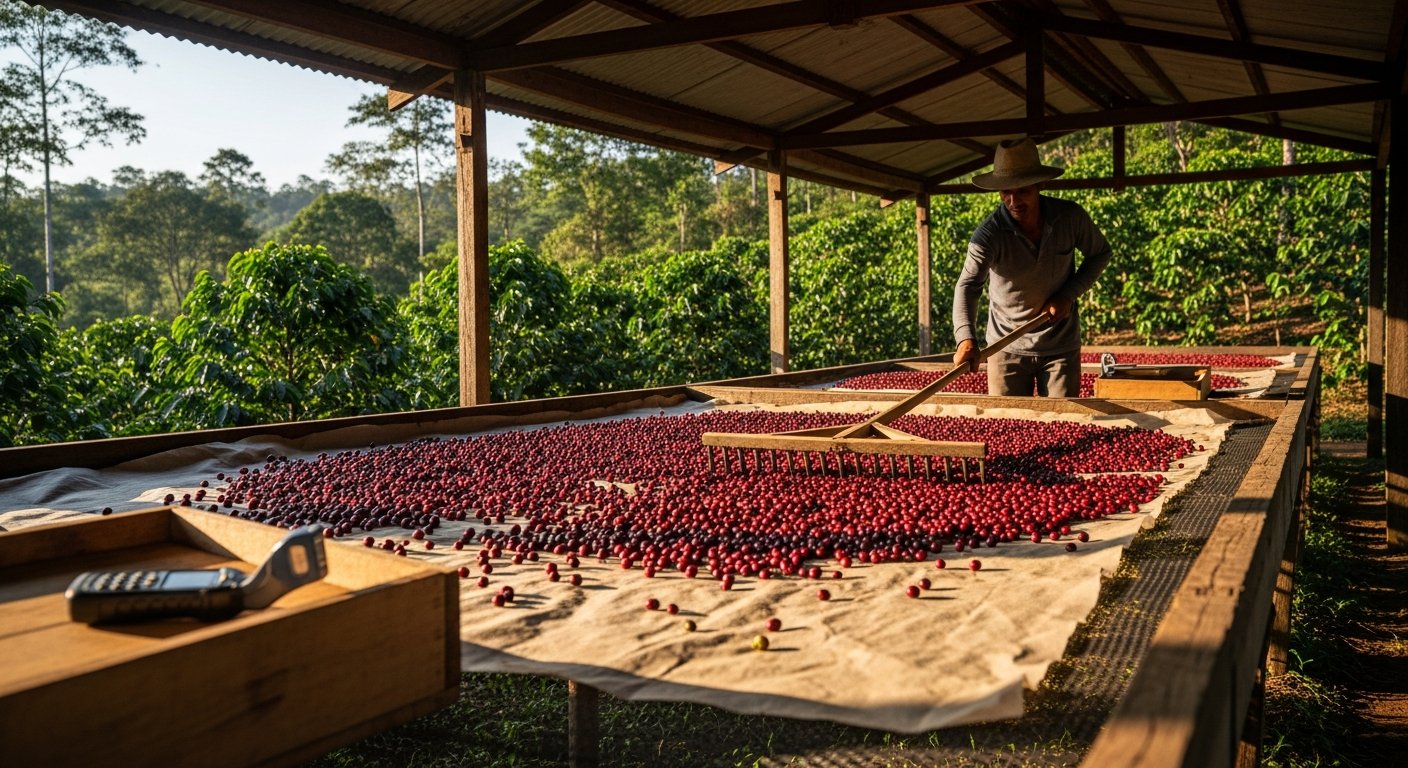
The journey of green coffee from a remote farm to your roastery is a complex, multi-stage process that directly impacts quality, cost, and sustainability. Every step, from harvest to warehouse, introduces variables that can make or break a roast. Understanding this supply chain is not just for importers; it is essential for roasters who want to control their product, build transparent relationships, and deliver a consistent cup. This article breaks down the green coffee importing journey, focusing on the logistics that connect origin farms to your roasting drum.
The Starting Point: Harvest and Primary Processing
The journey begins at the farm, where cherry ripeness determines potential quality. After hand-picking or mechanical harvesting, the cherries must be processed within hours to prevent spoilage. The three main methods (washed, natural, and honey) each require specific equipment and water resources. For washed coffees, a depulper removes the skin, and fermentation tanks break down mucilage before washing and drying on raised beds or patios. Naturals skip the depulper and dry the whole cherry, requiring careful raking and moisture monitoring to avoid mold.
Drying is the most critical farm-stage step. Green coffee must reach a moisture content of 10-12% for stable storage. Wet parchment or beans invite fungal growth, producing off-flavors like mustiness or potato defects. Farmers use moisture meters and sun exposure management, but inconsistent weather can force mechanical drying, which risks scorching if temperature is not controlled. At this stage, the coffee is called parchment coffee (if washed) or dry cherry (if natural).
After drying, the coffee rests in a controlled environment for one to three months. This resting period stabilizes the bean structure, reduces internal moisture gradients, and improves cup quality. Exporters often skip this step to accelerate cash flow, but roasters who work with importers that enforce resting see fewer brittle beans and more consistent roasts.
Milling, Grading, and Quality Control
Once rested, parchment coffee moves to a dry mill. Here, hulling removes the parchment layer (for washed coffees) or the dried cherry skin (for naturals). The mill then grades beans by size using screen sizes (e.g., screen 15, screen 18) and density via gravity tables or air classifiers. Defective beans (sours, blacks, insect-damaged) are removed by hand sorters or electronic color sorters. Specialty-grade coffee requires zero primary defects and no more than five full defects per 350-gram sample.
Quality control at this stage includes a cupping protocol. Licensed Q-graders evaluate fragrance, aroma, flavor, acidity, body, and aftertaste. A score of 80 or above qualifies as specialty grade. Importers often send pre-shipment samples to roasters for approval. This is the roaster’s first chance to assess potential, though cup quality can shift during transit due to humidity and temperature changes.
Key factors verified during milling and grading:
- Moisture content (10-12% ideal)
- Bean size and uniformity (screen distribution report)
- Defect count (physical and visual inspection)
- Cupping score (minimum 80 for specialty)
- Crop year and altitude verification
Roasters should request these reports before finalizing a purchase. A gap between sample score and shipment score often indicates poor handling during containerization or transport.
Export Logistics: Documentation and Containerization
After milling, the green coffee is bagged in GrainPro or Ecotact liners inside jute bags, or packed in vacuum-sealed boxes. The choice affects moisture protection and cost. Vacuum sealing reduces volume by 30% but requires specialized equipment at origin. Most specialty coffee is shipped in 60-kg or 70-kg jute bags with inner liners.
Documentation is the hidden bottleneck in green coffee importing. A single shipment requires:
- Bill of lading (ocean or air waybill)
- Certificate of origin (often required for tariff preferences)
- Phytosanitary certificate (proving no pests or diseases)
- Fumigation certificate (if required by destination country)
- Commercial invoice and packing list
Errors in any document can delay customs clearance by days or weeks, incurring demurrage fees. Many roasters hire a customs broker or freight forwarder to manage this paperwork. The cost of a broker is typically $150-400 per shipment, which is often offset by avoiding storage penalties.
Container loading requires strategic stacking. Bags should be staggered to allow airflow and prevent crushing. Some importers use container liners (large plastic bags that line the entire container) to create a climate-controlled micro-environment. Temperature and humidity loggers placed inside the container provide data on whether the coffee experienced extreme conditions during the ocean voyage.
Ocean Freight and Route Planning
The ocean leg is the longest and riskiest phase. A container from Mombasa (Kenya) to New York typically takes 25-35 days. Routes from Central America to the U.S. Gulf Coast take 7-14 days. During this time, the container experiences temperature swings from near-freezing in high latitudes to 50+C (122+F) at the equator in summer. Condensation forms inside the container when warm, humid air meets cooler container walls, dripping onto the bags. This moisture can raise bean moisture content above 13%, triggering mold growth.
To mitigate this, experienced importers use container vents (opening the top vents) or specify ventilated containers. Some use remote temperature and humidity sensors that transmit data via satellite. Roasters should ask importers about their container management protocol, including whether they use desiccants or climate-controlled containers (reefers) for premium lots.
In our guide on Climate Resilient Coffee Varietals Farming Practices, we explore how origin-level changes in varietal selection and farm management affect bean density and moisture retention, which in turn influences how a bean withstands long transit. Roasters who source climate-resilient varietals may notice fewer moisture-related defects after shipping.
Port Arrival, Customs Clearance, and Inland Transport
Upon arrival at the destination port, the container is offloaded and placed in a customs-bonded area. The importer or customs broker submits the documentation package for clearance. Duties and tariffs vary by country. For example, green coffee enters the United States duty-free under most trade agreements, but some origins (like Ethiopia) face a small tariff if not covered by a specific trade preference. The broker calculates the duty based on the Harmonized Tariff Schedule (HTS) code for green coffee (0901.11).
After customs release, the container moves to the importer’s warehouse or directly to the roastery. Inland transport can involve a drayage truck (short haul) or a rail/intermodal shipment for long distances. Each transfer increases the risk of damage, especially if the container is opened for inspection and then resealed without proper conditioning. Roasters receiving a container should inspect the bags for water stains, mold, or insect activity before signing the delivery receipt.
Critical documentation for customs clearance:
- Bill of lading (original or telex release)
- Commercial invoice (showing value for duty calculation)
- Packing list (with number of bags and total weight)
- Certificate of origin (may reduce tariffs)
- Phytosanitary certificate (original or electronic)
A single missing document can halt clearance. Smart roasters keep digital copies of all paperwork in a shared folder with their broker and forwarder.
Warehousing and Green Coffee Storage
Once the coffee reaches a warehouse, the environment must be stable. Ideal storage conditions for green coffee are 15-20C (59-68F) and 50-60% relative humidity. Higher humidity causes moisture absorption, leading to mold and loss of acidity. Higher temperature accelerates aging, making the coffee taste flat or woody. The warehouse should be clean, pest-proof, and free of strong odors (paint, chemicals, spices) that green coffee absorbs easily.
Green coffee is a living product. It continues to respire slowly, releasing CO2 and heat. In large stacks, the center of the pile can become several degrees warmer than the perimeter. Rotating inventory (first in, first out) prevents older lots from degrading. Some roasters use temperature probes in their storage bins to monitor conditions.
For roasters who buy full containers, investing in a climate-controlled storage room or using a third-party logistics provider (3PL) with coffee-specific facilities is advisable. The cost of climate control is often less than the value lost from degraded coffee. A 5% loss in cup quality can reduce a lot from 86-point to 82-point, which drops its market value significantly.
Sampling, Cupping, and Roastery Integration
Before roasting a full batch, the roaster should cup the green coffee upon arrival. This confirms that the shipment matches the pre-shipment sample. Differences can occur due to aging, moisture changes, or contamination. If the cupping score drops by more than two points, the roaster may negotiate a credit with the importer.
After approval, the roaster integrates the green coffee into their inventory system. Key data points to log include producer name, harvest date, arrival date, moisture content, density, and cupping score. This data helps the roaster build a historical profile for each origin, informing roast profiles and blend recipes.
Roasters should also test a small roast batch before committing to a large production run. Green coffee from different altitudes or processing methods responds differently to heat. A washed Ethiopian Yirgacheffe, for example, requires a gentler charge temperature than a natural Brazilian, due to its lower density. Trial roasts prevent waste and ensure consistency.
Managing Risk and Building Relationships
The green coffee importing journey involves financial risk. Roasters pay for coffee weeks or months before it arrives, often without seeing the final product. To mitigate this, many work with established importers who offer sample approval, quality guarantees, and credit terms. Importers also provide market intelligence on crop forecasts, price trends, and political stability in origin countries.
Building direct relationships with producers or exporter cooperatives can reduce costs and improve traceability, but it requires more logistics management. A roaster importing directly must handle every step from contract negotiation to customs clearance. For small to medium roasters, using a specialty importer is often more practical, as they consolidate volumes, negotiate freight rates, and manage quality control.
Ultimately, the roaster’s ability to deliver a consistent, high-quality product depends on understanding and controlling each stage of this journey. From the farm’s drying practices to the container’s temperature log, every decision affects the final cup. By mastering these logistics, roasters can offer transparency to their customers, reduce waste, and build a reputation for excellence.