
PID Temperature Control for Home Barista Espresso Machines
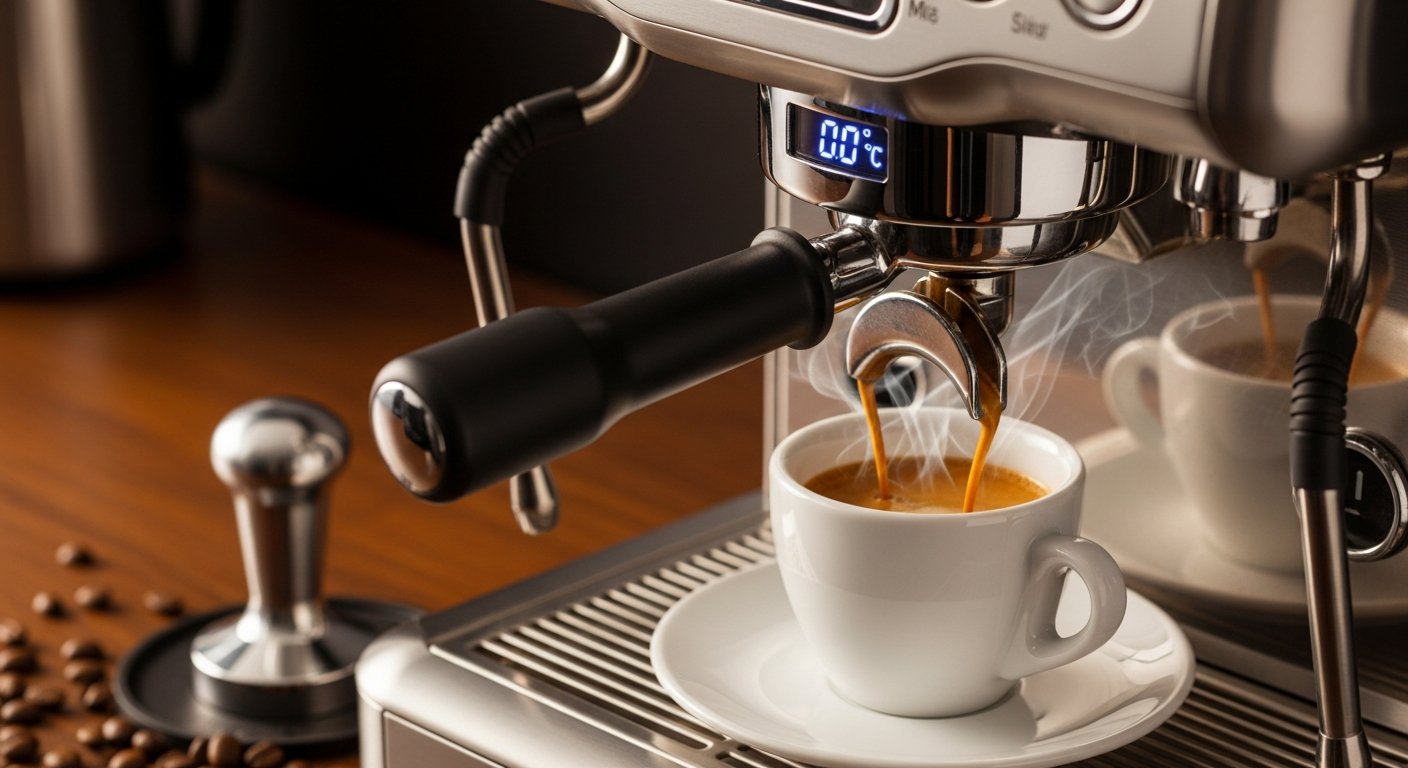
If you have ever pulled a shot of espresso that tasted sour or bitter when the same beans produced a balanced shot yesterday, the culprit is almost certainly temperature instability. For home baristas, achieving consistent extraction is the difference between a caf�-quality latte and a disappointing morning brew. This is where PID temperature control changes everything. A PID controller (proportional-integral-derivative) transforms a standard espresso machine into a precision instrument, holding the water temperature within a fraction of a degree of your target. In this article, we will explore how home barista espresso machine PID temperature control works, why it matters, and how you can use it to elevate every cup.
What Is PID Temperature Control?
A PID controller is an electronic feedback loop that monitors and adjusts the temperature of your espresso machine’s boiler or group head. Unlike traditional thermostats that cycle on and off (allowing temperatures to swing by 5-10 degrees Fahrenheit), a PID system makes tiny, continuous corrections. The controller reads the actual temperature from a sensor, compares it to your set point, and calculates an adjustment to the heating element. This process repeats many times per second, producing rock-steady thermal stability.
For home barista espresso machine PID temperature control, the typical temperature range is 195-205 degrees Fahrenheit (90-96 degrees Celsius). Within this window, even a 2-degree shift can over-extract or under-extract your coffee. A PID eliminates those swings, letting you dial in a specific temperature for each coffee bean. Light roasts often need higher temperatures (around 202-205 degrees F) to extract fully, while dark roasts perform better at cooler settings (195-198 degrees F). Without PID control, you are guessing at your actual brew temperature.
Why PID Control Matters for Home Baristas
Temperature consistency directly affects the chemical extraction of coffee solubles. Sour flavors (under-extraction) occur when water is too cool to dissolve enough sugars and acids. Bitter, astringent flavors (over-extraction) happen when water is too hot and pulls unwanted compounds from the grounds. A PID controller locks in the ideal temperature, so you can troubleshoot other variables like grind size and dose with confidence.
Beyond taste, PID control saves time and frustration. Most home espresso machines without PID require a process called temperature surfing: flushing water through the group head to cool it down or waiting for the boiler to heat up before each shot. This is guesswork and wastes water. With PID, the machine shows the exact temperature on a digital display, and you pull your shot when the reading matches your recipe. For those who brew multiple drinks back to back, PID also recovers temperature faster between shots, maintaining consistency for the second and third pours.
In our guide on what kind of coffee do I need for my Bunn LCA-2 machine, we cover how brew temperature interacts with bean characteristics. The same principles apply here: matching temperature to roast level is key.
PID vs. Traditional Thermostat: A Side-by-Side Comparison
To understand the upgrade, compare how each system works. A traditional thermostat uses a mechanical bi-metallic strip or a simple pressure stat. When the boiler cools below a threshold, the heating element turns on at full power. It stays on until the boiler exceeds the upper threshold, then turns off completely. This creates a sawtooth temperature curve: up and down, up and down. During a 25-second extraction, the water temperature can drift by 8-10 degrees, which is catastrophic for flavor.
PID systems, in contrast, use a solid-state relay that can pulse the heating element at partial power. Instead of full on/full off, the PID calculates exactly how much energy to apply to keep the temperature steady. The result is a flat line on a thermometer, with fluctuations of less than 0.5 degrees Fahrenheit. This precision is why commercial espresso machines have used PID controllers for decades, and why home barista espresso machine PID temperature control is now the gold standard for serious enthusiasts.
How to Use PID Temperature Control Effectively
Owning a machine with PID is only half the battle. You must learn to use the controls to improve your shots. Here is a practical approach:
1. Identify Your Baseline. Start with the manufacturer’s recommended temperature (often 200 degrees F or 93 degrees C). Pull a shot with your usual grind and dose. Taste it and note whether it leans sour or bitter.
2. Adjust in Small Increments. Change the temperature by 2 degrees at a time. If your shot tastes sour (under-extracted), raise the temperature by 2 degrees and try again. If bitter (over-extracted), lower it by 2 degrees. Give each change at least two shots to confirm the result.
3. Keep a Log. Record the temperature, grind setting, dose, yield, and tasting notes for each shot. This data helps you spot patterns and repeat successful recipes. Over time, you will build a temperature profile for each coffee bean you buy.
4. Consider Pre-Infusion Timing. Some PID controllers also let you adjust pre-infusion (low-pressure water applied before full pressure). Lower temperatures with longer pre-infusion can reduce acidity in light roasts, while higher temperatures with short pre-infusion work for dark roasts.
Key benefits of PID control include:
- Eliminates temperature surfing, saving time and water.
- Improves shot-to-shot consistency, especially during back-to-back drinks.
- Allows fine-tuning for different roast levels and bean origins.
- Provides a digital readout for precise recipe replication.
- Extends the life of your machine by reducing thermal stress on the boiler.
Once you master temperature adjustments, you can combine them with other variables. For example, a light roast Ethiopian coffee might taste best at 204 degrees F with a finer grind, while a dark roast Sumatra may shine at 196 degrees F with a coarser grind. PID control gives you the ability to isolate temperature as a variable rather than fighting it.
Retrofitting a PID into an Existing Machine
If you already own an espresso machine without PID, you can often retrofit one. Kits are available for popular models like the Rancilio Silvia, Gaggia Classic, and Breville/Sage machines. The installation involves mounting a temperature sensor (usually a thermocouple or RTD) to the boiler, wiring it to a PID controller box, and connecting a solid-state relay to the heating element. Some kits include a pre-programmed controller with espresso-specific settings, making setup easier.
For the home barista comfortable with basic electrical work, a retrofit costs $80-$150 and takes 1-3 hours. The improvement in shot quality is dramatic. However, if you are not confident with wiring, consider buying a machine with PID pre-installed. Many mid-range and high-end home espresso machines now come with factory PID control, including models from Profitec, ECM, Lelit, and Ascaso. The investment is worth it if you value consistency and plan to develop your espresso skills over time.
Common Mistakes with PID Temperature Settings
Even with PID, baristas can make errors. The most common mistake is confusing boiler temperature with brew temperature. The PID sensor is usually on the boiler, but the water cools slightly as it travels through the group head and coffee puck. Depending on your machine, the actual brew temperature may be 2-4 degrees lower than the PID set point. Use a scace device or a thermofilter to measure the water temperature at the group head, then adjust the PID offset accordingly.
Another mistake is changing temperature too drastically. Moving from 200 to 206 degrees F in one adjustment can shock the coffee and produce unpredictable results. Stick to 2-degree increments and taste carefully. Also, avoid relying on the PID to fix problems that are actually grind or dose issues. If the shot is channeling (uneven extraction), temperature alone will not fix it. Always dial in grind size first, then fine-tune with temperature.
Finally, some home baristas set the temperature too high for dark roasts, thinking hotter water extracts more flavor. In reality, dark roasts are already more soluble, and high temperatures release harsh bitter compounds. For dark roasts, stay at the lower end of the range (195-198 degrees F) to preserve sweetness and body.
Advanced Techniques: Profiling and Data Logging
For those who want to push further, some PID controllers offer programmability. You can create temperature profiles that change during the shot. For example, start with a slightly lower temperature for pre-infusion, then ramp up to full brew temperature for the main extraction. This technique, called temperature profiling, mimics the behavior of high-end commercial machines like the Decent Espresso DE1.
To implement temperature profiling at home, you need a PID controller with a ramp/soak function or a dedicated espresso profiling controller like the Auber Instruments kit. These units let you set up to 6 segments with different target temperatures and durations. While this is advanced, it can unlock new flavors from difficult beans, such as high-altitude single-origin coffees that benefit from a gentle temperature rise.
Data logging is another benefit of PID systems. Many controllers output temperature data via USB or Bluetooth, allowing you to graph your extraction curve on a computer or phone. This feedback loop helps you see exactly when the temperature dipped or spiked, and you can correlate that with taste defects. Combined with a pressure gauge, you have a complete picture of your espresso extraction.
Choosing the Right PID Machine for Your Budget
Entry-level machines with PID start around $600-$800 (e.g., the Lelit Anna PID). Mid-range options like the Profitec Pro 300 or ECM Classika PID range from $1,200-$1,800. High-end dual-boiler machines with PID (such as the Lelit Bianca or ECM Synchronika) cost $2,500-$3,500 and offer separate PID control for brew and steam boilers. The price reflects build quality, thermal stability, and the ability to steam milk while brewing.
When shopping, look for machines with a PID that controls the brew boiler directly. Some machines use PID for the steam boiler only, which does not improve espresso quality. Also, check if the PID displays the set point and actual temperature simultaneously, as this helps you monitor performance. For the home barista serious about espresso, PID temperature control is not a luxury. It is the tool that turns good espresso into great espresso, shot after shot.
In summary, home barista espresso machine PID temperature control is the single most impactful upgrade you can make to your brewing routine. It removes guesswork, saves time, and delivers the consistency needed to explore the full flavor potential of your coffee beans. Whether you retrofit an existing machine or buy one with PID pre-installed, the investment pays for itself in the quality of every cup you pour.