Swiss Water Process Decaf: A Taste Comparison Guide
For many coffee lovers, the phrase “decaf coffee” once conjured images of bland, watery, and lifeless brews. The chemical solvents used in traditional decaffeination methods often stripped beans of their delicate flavor compounds, leaving behind a hollow shadow of the original coffee. However, a cleaner, more refined method has emerged as the gold standard for preserving taste: the Swiss Water Process. This chemical-free technique uses only water, time, and concentration to remove caffeine, and it promises a cup that rivals its caffeinated counterpart. But does it truly deliver? This article provides a detailed coffee decaf Swiss Water Process taste comparison, examining how beans treated with this method stack up against both regular coffee and other decaf types. We will explore the science behind the process, the specific flavor profiles it produces, and how to identify the best beans for your palate.
Understanding the difference in your cup starts with understanding what happens inside the bean. Unlike solvent-based methods that chemically bond with caffeine, the Swiss Water Process relies on osmosis. This gentler approach is designed to protect the fragile oils and solids that define a coffee’s origin character. For the discerning drinker, this means a cup that retains the brightness of a Kenyan, the chocolatey depth of a Colombian, or the floral notes of an Ethiopian, minus the stimulant. In our comprehensive Swiss Water Process decaf taste comparison guide, we break down exactly how this method changes the final brew.
How the Swiss Water Process Works
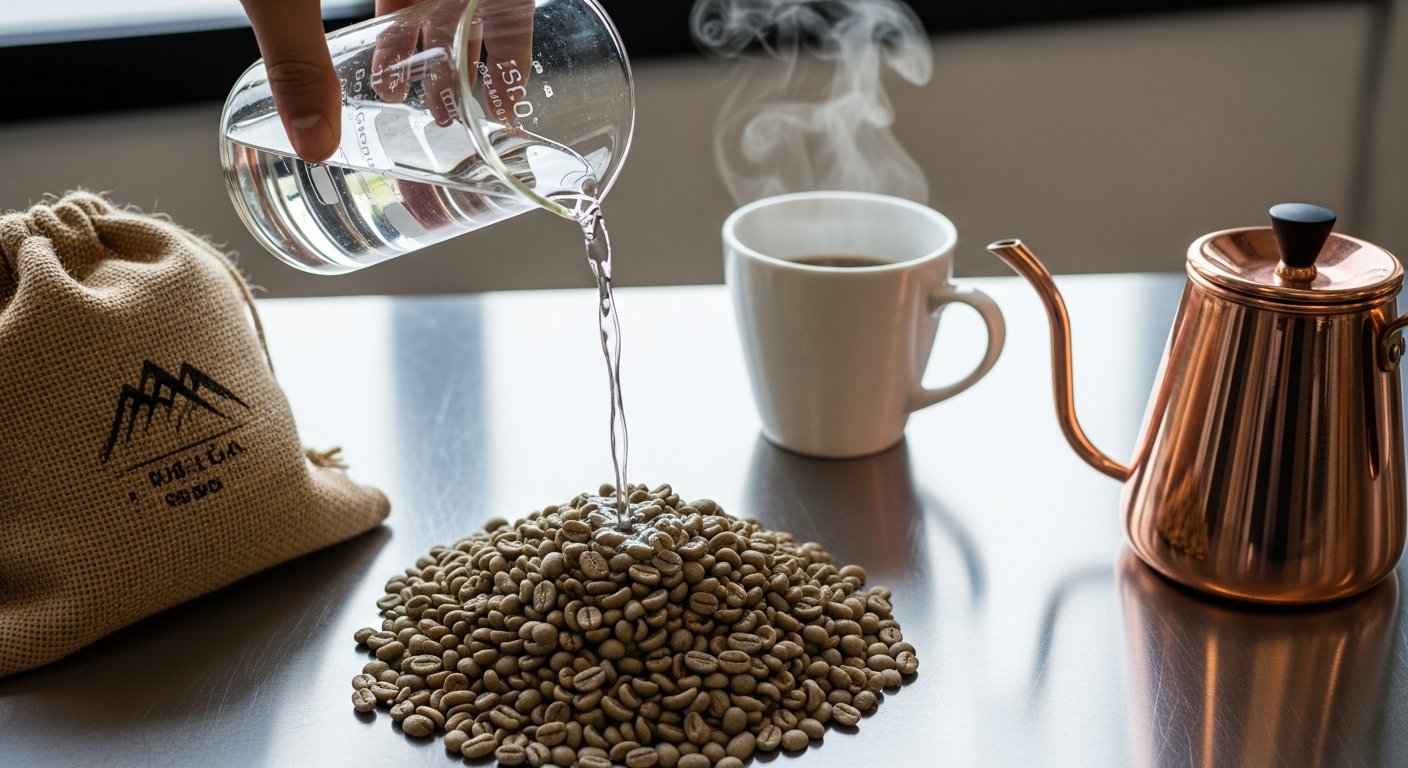
The Swiss Water Process is a marvel of physical chemistry, using no chemicals other than H2O. It begins by soaking a batch of green coffee beans in hot water. This water dissolves both the caffeine and the flavor compounds from the beans. This initial solution, now rich with coffee solids, is then passed through a carbon filter. The filter’s pores are precisely sized to trap caffeine molecules while allowing the larger flavor compounds to pass through. The result is a “Green Coffee Extract” (GCE) that is saturated with flavor but free of caffeine.
A new batch of green coffee beans is then introduced to this GCE. Because the water is already fully saturated with flavor compounds, it cannot pull any more flavor from the new beans. However, it can still absorb caffeine, which moves from the beans into the water until equilibrium is reached. This process is repeated until the beans are 99.9% caffeine-free. The GCE is continuously re-filtered to remove the captured caffeine, making it reusable. This closed-loop system is not only effective but also highly sustainable, as it conserves water and eliminates chemical waste.
Flavor Profile: Swiss Water vs. Regular Coffee
The primary goal of any decaf method is to remove caffeine without removing taste. In a direct coffee decaf Swiss Water Process taste comparison against regular coffee, the Swiss Water beans often come remarkably close. The most noticeable difference is a slight reduction in body. Regular coffee tends to have a heavier, more syrupy mouthfeel, while Swiss Water decaf can feel a bit lighter and cleaner on the palate. This is because the process does remove some soluble solids, even if it protects the volatile aromatics.
However, the aroma and flavor clarity are where Swiss Water excels. In blind tastings, many drinkers struggle to identify the decaf when it is a Swiss Water product. The acidity remains bright and crisp, the sweetness is preserved, and the specific origin notes (like the winey fruitiness of a Yirgacheffe or the nutty sweetness of a Brazil) are clearly identifiable. The biggest giveaway is often the finish. Caffeinated coffee leaves a lingering, complex aftertaste, while Swiss Water decaf has a cleaner, shorter finish. This is not a flaw but a characteristic of the process. For those who drink coffee for the nuanced flavors rather than the caffeine kick, this is a very small trade-off.
Comparing Swiss Water to Other Decaf Methods
To truly understand the value of the Swiss Water Process, it is helpful to compare it to the two other major decaffeination methods: the Direct Solvent Process and the Carbon Dioxide (CO2) Process. Each method leaves a distinct fingerprint on the final cup.
Swiss Water vs. Direct Solvent Process
The Direct Solvent Process uses chemical solvents like methylene chloride or ethyl acetate to bond with and remove caffeine. Beans are steamed to open their pores, then rinsed with the solvent. This method is efficient and cost-effective, but it often leaves a chemical residue and can strip the beans of their natural oils. The resulting taste comparison is stark. Direct solvent decaf often tastes flat, papery, or has a faint chemical aftertaste. It lacks the vibrancy and complexity of the Swiss Water bean. If you value a clean, authentic flavor, the Swiss Water Process is the clear winner.
Swiss Water vs. CO2 Process
The CO2 Process uses pressurized carbon dioxide in a supercritical state to extract caffeine. This method is also chemical-free and very effective at preserving flavor. In fact, many experts consider the CO2 process to be the best for retaining the most delicate aromatic compounds. In a taste comparison, CO2 decaf often has a slightly fuller body and a richer mouthfeel than Swiss Water decaf. However, it can sometimes mute the very bright, acidic notes that make certain origins shine. The Swiss Water Process, on the other hand, tends to preserve that high-toned acidity better. The choice between the two often comes down to personal preference: CO2 for body and richness, Swiss Water for clarity and brightness.
Choosing the Best Beans for Swiss Water Decaf
Not all coffee beans are created equal, and the quality of the green bean is the single most important factor in the final cup. Since the Swiss Water Process is so gentle, it does a fantastic job of showcasing the inherent qualities of the bean. This means that a low-quality bean will still taste flat and lifeless, while a high-quality, single-origin bean will shine. When shopping for Swiss Water decaf, look for beans that are labeled with their specific origin, altitude, and processing method (e.g., washed or natural).
Here are three key factors to consider when selecting beans for a Swiss Water decaf:
- Origin and Variety: Choose beans from regions known for complex flavors. Ethiopian Yirgacheffe offers floral and citrus notes. Colombian beans provide a balanced, caramel sweetness. Kenyan beans deliver bright, winey acidity. These flavors survive the decaf process beautifully.
- Roast Date: Freshness is critical. Buy from roasters who provide a roast date. Swiss Water decaf has a slightly shorter shelf life than regular coffee due to its more porous structure (which allows it to go stale faster). Aim to use it within two to four weeks of roasting.
- Roast Level: Light to medium roasts tend to work best for Swiss Water decaf. Dark roasts can mask the delicate flavors that the process works so hard to preserve. A medium roast strikes the perfect balance, giving you a full flavor without burning off the origin characteristics.
By focusing on these variables, you can dramatically improve your experience. A well-sourced, freshly roasted Swiss Water decaf can be a revelation, proving that decaf does not have to be a compromise.
Brewing Tips for Optimal Flavor
Because Swiss Water decaf beans are slightly more porous than regular beans, they extract a bit faster. This means you need to adjust your brewing parameters to avoid over-extraction, which leads to bitterness. The general rule is to grind slightly coarser than you would for a regular coffee of the same origin. This slows down the water flow and prevents the water from pulling out too many harsh, bitter compounds from the bean’s structure.
Water temperature is another critical factor. Aim for 195-200 degrees Fahrenheit (90-93 degrees Celsius), which is slightly cooler than the standard 200-205 degrees. This cooler water, combined with a coarser grind, will yield a sweeter, cleaner, and more balanced cup. For pour-over methods like the V60 or Chemex, use a gentle, consistent pour and a total brew time of around 3 to 4 minutes. For immersion methods like the French Press, a 4-minute steep is usually sufficient. Taste your brew and adjust from there. The goal is to highlight the preserved acidity and sweetness without introducing astringency.
Finally, consider your water quality. Since Swiss Water decaf has a delicate flavor profile, using filtered water free of chlorine or off-flavors is essential. The water should have a balanced mineral content to help extract the coffee’s full potential. Distilled or overly soft water will produce a flat cup, while hard water can mask the subtle notes. A simple carbon filter is often enough to improve your brew significantly.
The Sustainability Advantage
Beyond taste, the Swiss Water Process offers significant environmental benefits. The system is a closed-loop, meaning the water used is continuously cleaned and reused. No chemicals are released into the environment, and the process generates no harmful byproducts. This is a stark contrast to solvent-based methods, which can produce chemical waste and require the use of fossil fuels for solvent production. For the eco-conscious coffee drinker, choosing Swiss Water decaf is a direct step toward supporting more sustainable coffee production.
Additionally, the Swiss Water facility in Vancouver, Canada, is powered by hydroelectric energy, further reducing its carbon footprint. Many roasters who use this process highlight its sustainability credentials, appealing to customers who care about the entire lifecycle of their coffee. This ethical dimension adds another layer of value to the taste comparison. You are not just getting a better-tasting cup; you are also supporting a cleaner, more responsible industry.
Final Thoughts on the Taste Comparison
After a thorough coffee decaf Swiss Water Process taste comparison, the evidence is clear: this method produces a superior cup of decaf coffee. It retains the origin character, brightness, and complexity that coffee lovers crave, while only sacrificing a small amount of body and finish length. When compared to solvent-based decaf, it is in a completely different league. Against CO2 decaf, it offers a slightly different profile, favoring clarity and acidity over richness and body. The choice ultimately depends on your personal preference, but the Swiss Water Process stands out as a benchmark for quality in the decaf world.
For anyone who has been disappointed by decaf in the past, it is worth giving the Swiss Water Process a try. Pay attention to the bean origin, the roast date, and your brewing technique. With a little care, you can enjoy a delicious, aromatic cup of coffee any time of day or night, without the jitters or the sleeplessness. The Swiss Water Process is a testament to how innovation can solve a common problem without sacrificing the art and experience of drinking great coffee.