Sustainable Coffee Packaging: Eco Friendly Options for Roasters
Imagine this: You have spent months perfecting a single-origin roast from Ethiopia. The flavor notes are spot on. Your customers love it. But every time a bag leaves your roastery, it leaves a permanent mark on the planet. Traditional coffee bags often combine plastic, aluminum foil, and paper in layers that cannot be recycled. For specialty roasters, this creates a painful contradiction. You source beans ethically, roast with care, and then wrap the final product in packaging that will sit in a landfill for centuries. The good news is that the market for sustainable coffee packaging eco friendly options for roasters has matured rapidly. You no longer have to choose between protecting freshness and protecting the environment.
The shift toward circular packaging is not just a trend. It is a response to consumer demand and regulatory pressure. Studies show that over 60 percent of coffee drinkers prefer brands that use environmentally responsible packaging. If you are a roaster looking to reduce your carbon footprint without sacrificing shelf life, this guide will walk you through the viable materials, design strategies, and supplier considerations that define the next generation of coffee packaging.
Why Conventional Coffee Packaging Falls Short
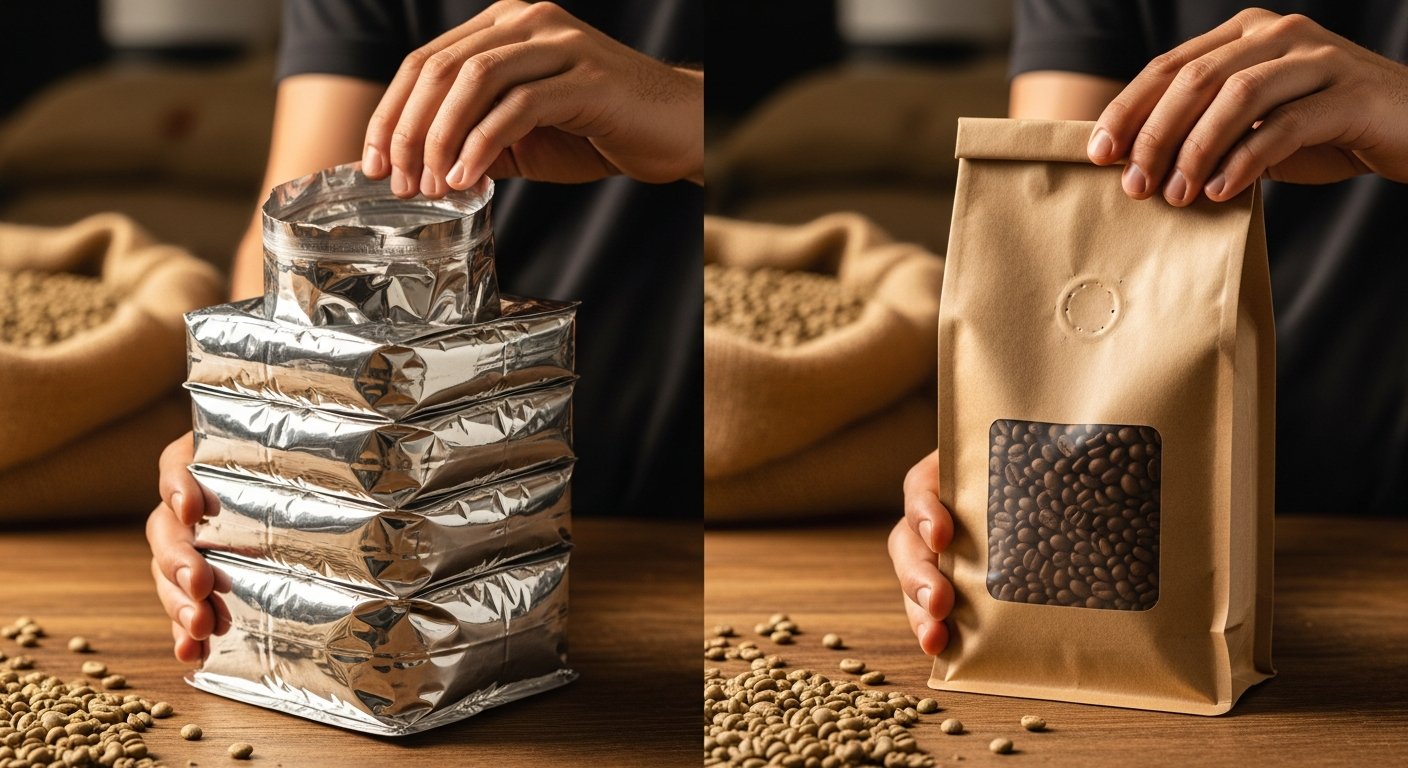
Most coffee bags on the market today use a multi-layer laminate structure. A typical bag includes a polyester outer layer for printability, a middle layer of aluminum foil for oxygen and moisture barrier, and an inner polyethylene sealant layer. This combination works well for preserving freshness. Coffee beans release carbon dioxide after roasting, and the one-way valve on these bags allows gas to escape while keeping oxygen out. However, the laminate construction makes recycling nearly impossible. Separating the layers requires industrial processes that most municipal recycling facilities do not have.
The environmental cost is significant. According to a 2022 study by the Sustainable Packaging Coalition, coffee packaging accounts for an estimated 1.5 million tons of waste annually in the United States alone. Most of that waste ends up in landfills or incinerators. For roasters who market themselves as eco-conscious, this packaging choice undermines the entire brand promise. Customers are becoming more educated about materials. They read labels. They notice when a bag says “compostable” but the one-way valve is made of plastic. This is where the search for truly sustainable coffee packaging eco friendly options for roasters becomes critical.
Defining Sustainable Coffee Packaging: Key Material Options
When evaluating alternatives, you need to balance three factors: barrier performance, end-of-life disposal, and cost. No single material is perfect for every roaster, but several technologies have emerged as industry leaders.
Compostable Bioplastics
Compostable films are made from renewable resources such as corn starch, sugarcane, or cellulose. These materials break down in industrial composting facilities within 90 to 180 days. Brands like BioCaf and Vegware offer bags that meet ASTM D6400 or EN 13432 compostability standards. The barrier properties of modern compostable films have improved dramatically. Some now include a thin layer of metalized compostable material that provides oxygen protection comparable to traditional foil.
However, there is a catch. Compostable bags require specific conditions to break down. Home compost piles rarely reach the temperature needed for full degradation. If a customer throws a compostable bag into their backyard bin, it may not decompose for years. Additionally, the one-way valve remains a challenge. Most compostable valves are made from silicone or plastic. A few suppliers now offer fully compostable valves, but they are more expensive and less widely available.
For roasters who prioritize end-of-life disposal, compostable bags are a strong choice. You should clearly instruct customers to send the bags to an industrial composting facility or use a mail-back program. Some roasters partner with services like Terracycle to collect used bags and ensure proper composting.
Recyclable Mono-Material Bags
Mono-material packaging uses a single polymer type, typically polyethylene or polypropylene, for the entire bag structure. Because there is no mixed laminate, the bag can be recycled in standard plastic film collection streams. Brands like Pacapack and FlexiPack have developed mono-material bags that include a barrier layer made from the same polymer family. These bags can be recycled at store drop-off locations alongside grocery bags and shrink wrap.
The primary advantage of mono-material bags is that they fit into existing recycling infrastructure. Customers do not need special facilities. They simply take the bag to a participating retailer. The barrier performance of mono-material bags is good, though not quite as high as aluminum foil laminates. For roasters who sell coffee that will be consumed within three to four weeks, this level of protection is sufficient. For long-term storage or wholesale accounts that require a six-month shelf life, you may need to add an oxygen absorber or use a nitrogen flush.
One important consideration is that the one-way valve must also be made from the same mono-material or be easily removable. Some suppliers now offer valves that are mechanically attached and can be popped out before recycling. Others use a valve made entirely from polyethylene. When sourcing mono-material bags, ask your supplier for a letter of recyclability from a third-party certifier like How2Recycle.
Paper-Based Packaging with Renewable Coatings
Paper bags have been used for coffee for decades, but traditional paper lacked the barrier needed to keep beans fresh. New technologies apply thin coatings of plant-based wax, polylactic acid (PLA), or water-based dispersions to the inside of paper bags. These coatings provide a moisture barrier while allowing the bag to be recycled in paper streams or composted, depending on the coating material.
Companies like Eco-Products and GreenPack offer paper bags with a PLA lining that is certified compostable. The outer paper layer can be printed with soy-based inks and water-based adhesives. Paper bags have a natural, artisan look that appeals to specialty coffee consumers. They also feel more tactile and premium than plastic films. The downside is that paper bags are less durable. They can tear more easily, and they do not provide as strong an oxygen barrier as plastic or foil. For this reason, paper bags are best suited for roasters who sell in local markets with fast turnover or who offer whole-bean coffee that will be ground and brewed quickly.
If you choose paper bags, consider adding a resealable tin-tie closure instead of a plastic zipper. Tin ties are metal and can be recycled, while plastic zippers complicate the recycling process. You can also use a paper-based one-way valve, though these are still relatively new and can be costlier than plastic valves.
Essential Features for Eco-Friendly Coffee Bags
Beyond the material itself, several design elements determine whether a bag truly qualifies as sustainable. Here are the key features to evaluate when comparing sustainable coffee packaging eco friendly options for roasters:
- One-way valve: Look for valves that are either removable, compostable, or made from the same material as the bag. Avoid silicone valves that must be separated from the film.
- Resealable closure: Tin-tie closures or adhesive tape are preferable to plastic zippers. If you must use a zipper, ensure it is made from the same polymer as the bag.
- Inks and adhesives: Choose water-based or soy-based inks. Solvent-based inks can contaminate the recycling stream. Adhesives should be water-soluble or compostable.
- Window material: If your bag includes a window to show the beans, use cellulose or PLA film instead of PET plastic. These materials are compostable or recyclable with paper.
- Certifications: Look for third-party certifications such as BPI Compostable, OK Compost, How2Recycle, or FSC (for paper sourcing). These labels provide credibility and help customers make informed choices.
Each of these features adds cost. A fully compostable bag with a compostable valve and tin-tie closure can cost 30 to 50 percent more than a conventional laminated bag. However, many roasters find that the premium is justified by customer loyalty and brand differentiation. In a crowded market, a commitment to sustainable packaging can be a powerful marketing message.
Evaluating Suppliers and Certifications
Not all suppliers are created equal. Some companies claim their packaging is “eco-friendly” or “green” without providing verifiable data. This practice, known as greenwashing, can damage your reputation if customers discover the truth. To avoid this, demand transparency from your packaging supplier. Ask for material safety data sheets, test reports for compostability or recyclability, and third-party certification documents.
Several reputable suppliers specialize in sustainable coffee packaging. Companies like Pacific Bag, Eco-Products, and Fresh Pack offer a range of options from compostable to recyclable. When you request samples, test them under real-world conditions. Fill them with freshly roasted coffee, seal them, and store them for two weeks. Then open the bag and smell the coffee. If you detect any off-gassing or staleness, the barrier is insufficient. You can also measure the oxygen level inside the bag using a headspace analyzer.
For roasters who want to go a step further, consider a closed-loop system where customers return empty bags for reuse. This model is still rare in coffee, but brands like Blue Bottle and Counter Culture have experimented with refillable glass jars or returnable fabric bags. The logistics of cleaning and redistributing containers are complex, but for local roasters with a loyal customer base, it can work well. In our guide on Direct Trade vs Fair Trade: Sustainable Coffee Sourcing, we explain how building strong relationships with producers can complement your packaging efforts.
Cost Analysis and ROI of Sustainable Packaging
The upfront cost of sustainable packaging is higher, but the long-term return on investment can be positive. A 2023 survey by McKinsey found that 72 percent of consumers are willing to pay more for products with sustainable packaging. For coffee specifically, premium of 10 to 15 percent per bag is common. If you sell 10,000 bags per year and charge an extra dollar per bag, that is an additional $10,000 in revenue. Your increased packaging cost may be $3,000 to $5,000, leaving a net gain.
There are also operational savings to consider. Mono-material recyclable bags are often lighter than multi-layer laminates, which reduces shipping costs. If you sell through e-commerce, lighter bags mean lower postage fees. Additionally, some municipalities offer tax incentives or grants for businesses that reduce waste. Check with your local economic development office to see if you qualify.
Brand perception is harder to quantify but equally important. A roaster that switches to sustainable packaging can generate press coverage, social media shares, and positive reviews. Customers who align with your values become repeat buyers and brand advocates. Over time, the goodwill translates into higher customer lifetime value.
Practical Steps for Transitioning Your Packaging
Switching to sustainable packaging does not happen overnight. You need to manage inventory, update label designs, and educate your customers. Here is a phased approach that many roasters use:
- Audit your current packaging: List every component of your bag, including the film, valve, zipper, label, and ink. Determine which parts can be replaced with sustainable alternatives.
- Test three to five options: Order sample rolls from different suppliers. Run a side-by-side freshness test with your best-selling roast. Measure oxygen ingress and moisture loss over 30 days.
- Start with one product line: Choose a high-volume SKU or a seasonal offering. Launch the new packaging with a marketing campaign that explains the change and why it matters.
- Gather feedback: Ask customers what they think. Do they understand how to dispose of the bag? Is the closure easy to use? Use their input to refine your approach.
- Scale to all products: Once you have validated the new packaging, roll it out across your entire catalog. Update your website and product labels to highlight the sustainable materials.
Throughout this process, communicate openly with your customers. Share photos of the new packaging on social media. Explain the certifications you have earned. If the bag is compostable, provide clear instructions for disposal. Transparency builds trust and turns your packaging into a conversation starter.
The future of coffee packaging is circular, renewable, and designed with the planet in mind. By choosing sustainable coffee packaging eco friendly options for roasters, you not only reduce waste but also align your business with the values of the modern coffee drinker. The transition requires investment and patience, but the reward is a brand that stands for something more than great taste. Your coffee can be both delicious and responsible. The packaging should reflect that.