
Specialty Coffee SCA Scoring Explained: A Full Guide
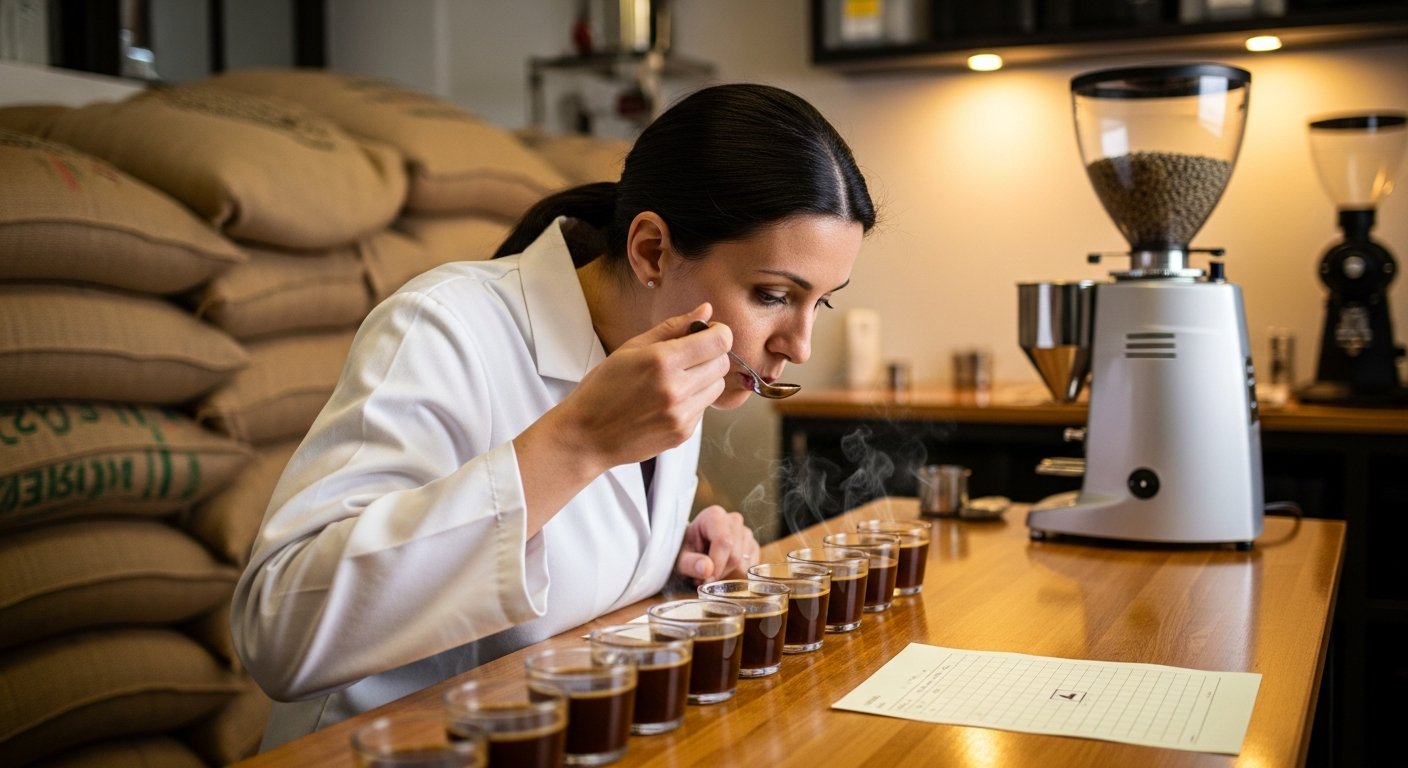
Imagine you are a coffee buyer standing in a cupping room. You smell a washed Ethiopian Yirgacheffe that bursts with jasmine and bergamot. You sip it and taste a silky body with a clean finish. But how do you translate that experience into a number? The Specialty Coffee Association (SCA) created a scoring system to do exactly that. This system turns subjective taste into an objective standard. If you have ever wondered what a score of 84 means or why 90 points is a big deal, you need this guide. In this article, specialty coffee SCA scoring explained in detail will help you understand every category, the cupping protocol, and how scores affect price and quality.
What Is the SCA Cupping Score?
The SCA cupping score is a standardized method for evaluating green coffee beans. It was created to give buyers, roasters, and producers a common language. The system uses a 100-point scale. However, most coffee falls between 70 and 100. Any coffee that scores 80 points or higher is classified as specialty grade. Below 80 points, the coffee is considered commercial grade. This boundary is critical for the entire supply chain. A coffee that scores 84 points can command a higher price than one that scores 78 points. The difference often justifies the investment in better farming and processing methods.
The scoring process happens during a cupping session. Cuppers follow a strict protocol: they grind the coffee, smell the dry aroma, add hot water, break the crust, and then taste the coffee at different temperatures. Each step contributes to the final score. The SCA divides the evaluation into ten categories. Nine of these categories are weighted. The tenth category, uniformity, is a binary check. Together, they create a complete picture of the coffee’s quality.
The Ten Scoring Categories
Every cupping session uses the same ten categories. Each category has a maximum of 10 points. The cupper scores each one from 0 to 10. Then the scores are added together to get a total out of 100. Let us break down each category.
1. Fragrance and Aroma
This category captures the smell of the dry grounds and the wet aroma after adding water. Cuppers evaluate the fragrance before brewing and the aroma after the crust is broken. A coffee with strong floral notes, fruit scents, or chocolate tones scores high. A flat or musty smell scores low. This category accounts for 10% of the total score.
2. Flavor
Flavor is the core experience of the coffee. It includes the overall taste profile, from the first sip to the aftertaste. Cuppers look for complexity, clarity, and intensity. A high-scoring coffee might have notes of ripe berries, caramel, or stone fruit. A low-scoring coffee tastes one-dimensional or has off-flavors like sourness or bitterness.
3. Aftertaste
Aftertaste measures the lasting impression after swallowing. A good aftertaste is pleasant and lingers without being harsh. It might leave a hint of dark chocolate or a clean citrus finish. A short or unpleasant aftertaste reduces the score.
4. Acidity
Acidity is not about pH level. It refers to the brightness and liveliness of the coffee. Think of the crispness of a Granny Smith apple or the tang of lemon. Acidity should be pleasant and integrated. Too much acidity tastes sour. Too little tastes flat. Specialty coffee often has a bright, wine-like acidity.
5. Body
Body describes the weight and texture of the coffee on your tongue. It can be light like tea, medium like milk, or heavy like cream. Body should be balanced and smooth. A coffee with a syrupy or buttery texture scores higher than one that feels watery.
6. Balance
Balance evaluates how well the flavor, acidity, and body work together. A balanced coffee has no single element overpowering the others. For example, a coffee with high acidity but weak body might feel disjointed. A balanced coffee has harmony.
7. Uniformity
Uniformity checks whether all cups in a sample taste the same. Cuppers taste multiple cups from the same batch. If one cup tastes different, the coffee loses points. This category ensures consistency. A score of 10 means all cups are identical.
8. Clean Cup
Clean cup measures the absence of defects. A clean cup has no off-flavors like sourness, fermentation, or chemical tastes. Cuppers deduct points for any defect. A perfect clean cup score is rare but possible with high-quality processing.
9. Sweetness
Sweetness refers to the perception of sugar-like flavors. It can be caramel, honey, or fruit sweetness. Sweetness must be present and pleasant. A bitter or astringent coffee lacks sweetness and scores low.
10. Overall
Overall is a holistic score. The cupper considers all the previous categories and gives a final impression. This category reflects the emotional response to the coffee. A coffee that is memorable and enjoyable scores high.
How the Scoring Process Works
The actual cupping session follows a precise schedule. First, the cupper grinds the coffee and smells the dry fragrance. Then hot water is added. After four minutes, the cupper breaks the crust with a spoon and smells the wet aroma. The cupper then skims the grounds off the top. After the coffee cools to about 160 degrees Fahrenheit, the cupper begins tasting. The cupping continues as the coffee cools to room temperature. Each category is scored during this process.
Cuppers use a scoring sheet that lists the ten categories. They assign a score from 0 to 10 for each category. The scoring scale is not linear. A score of 6 is average, 7 is good, 8 is very good, 9 is excellent, and 10 is extraordinary. Most specialty coffees score between 7 and 9 in each category. The total score is calculated by adding the ten scores. The maximum possible score is 100. However, scores above 90 are rare and indicate an exceptional coffee.
What the Scores Mean in Practice
A score of 80 to 84 is considered good specialty coffee. It has no defects and shows some positive attributes. A score of 85 to 89 is very good. This coffee has distinct flavors and good balance. A score of 90 to 100 is exceptional. These are the coffees that win competitions and command premium prices. For example, a coffee scoring 92 might sell for three times the price of an 84-point coffee.
The score directly influences the coffee’s market value. Buyers use scores to negotiate prices. Producers use scores to improve their farming practices. Roasters use scores to decide which coffees to buy for their menu. A high score signals that the coffee is worth the extra cost. In our guide on washed vs natural vs honey coffee processing explained, we explore how processing methods affect these scores.
Common Myths About SCA Scoring
Many people think that a high score guarantees a great cup of coffee. That is not entirely true. The SCA score is based on green coffee quality. The roast level and brewing method can change the final flavor. A coffee that scores 88 might taste bad if it is over-roasted. Similarly, a coffee that scores 82 might taste excellent if it is roasted and brewed well. The score is a tool, not a guarantee.
Another myth is that SCA scoring is the only way to judge coffee. Some roasters use their own scoring systems. Some buyers prioritize origin or sustainability over score. The SCA system is widely used but not universal. It is best to think of it as a starting point for evaluation.
Why SCA Scoring Matters for Roasters and Buyers
For roasters, the SCA score helps with sourcing decisions. A roaster might buy a 84-point coffee for a daily blend and an 89-point coffee for a single-origin offering. The score provides a baseline for consistency. For buyers, the score simplifies comparison. Instead of tasting hundreds of samples blind, they can use scores to shortlist candidates. The system also helps producers. If a producer knows that a coffee scores 86 due to low sweetness, they can adjust their processing to improve the next harvest.
The SCA score is also used in competitions. The World Barista Championship and the Cup of Excellence rely on similar protocols. Winning a high score can elevate a producer’s reputation and increase demand for their coffee. This creates a positive cycle: better scores lead to higher prices, which incentivize quality improvements.
Limitations of the SCA Scoring System
The SCA system has critics. Some argue that it favors certain flavor profiles. For example, coffees with high acidity and floral notes often score higher than earthy or spicy coffees. This can bias buyers toward certain origins. Others point out that the system is subjective despite its standardization. Different cuppers might give slightly different scores for the same coffee. The SCA addresses this by training and certifying cuppers. However, some variation remains.
Another limitation is that the system does not account for sustainability or ethical practices. A coffee can score 95 but be grown using harmful pesticides. The score only measures cup quality, not environmental or social impact. Buyers must consider other factors alongside the score.
How to Use SCA Scores When Buying Coffee
If you are a home barista or a small roaster, you can use SCA scores as a guide. Look for coffees with scores above 84 for balanced flavor. If you want something exotic, look for scores above 88. Remember that the score is just one piece of information. Also consider the roast date, origin, and processing method. A fresh coffee with a moderate score often tastes better than an old coffee with a high score.
Here are a few tips for interpreting scores:
- 80-84: Good everyday coffee with no defects. Suitable for blends and milk drinks.
- 85-89: Very good coffee with distinct flavors. Great for pour-over or espresso.
- 90-100: Exceptional coffee with complexity and intensity. Best for special occasions or competitions.
The score also helps you understand the coffee’s profile. A coffee with high acidity (8+) will taste bright. A coffee with high body (8+) will feel creamy. Use the individual category scores to predict the cup experience.
The Future of SCA Scoring
The SCA continues to refine its scoring system. In 2023, they updated the cupping protocol to include new evaluation tools. The goal is to make scoring more consistent across different regions and cuppers. Some industry experts are pushing for a digital scoring platform that reduces human error. Others want to add categories for sustainability and traceability. The system will likely evolve as coffee culture grows.
For now, the SCA scoring system remains the gold standard for specialty coffee. It provides a reliable way to communicate quality across the supply chain. Whether you are a producer, roaster, or drinker, understanding the score helps you make better choices. Specialty coffee SCA scoring explained in this article gives you the foundation to appreciate the numbers behind your next cup.
The next time you see a coffee labeled with an SCA score, you will know exactly what it means. You will understand that a score of 87 is not just a number. It represents hours of careful farming, precise processing, and skilled cupping. It is a promise of quality. And it is a tool that helps you find the perfect coffee for your taste.