
Best Coffee Grinder for Single Origin Espresso Pour Over
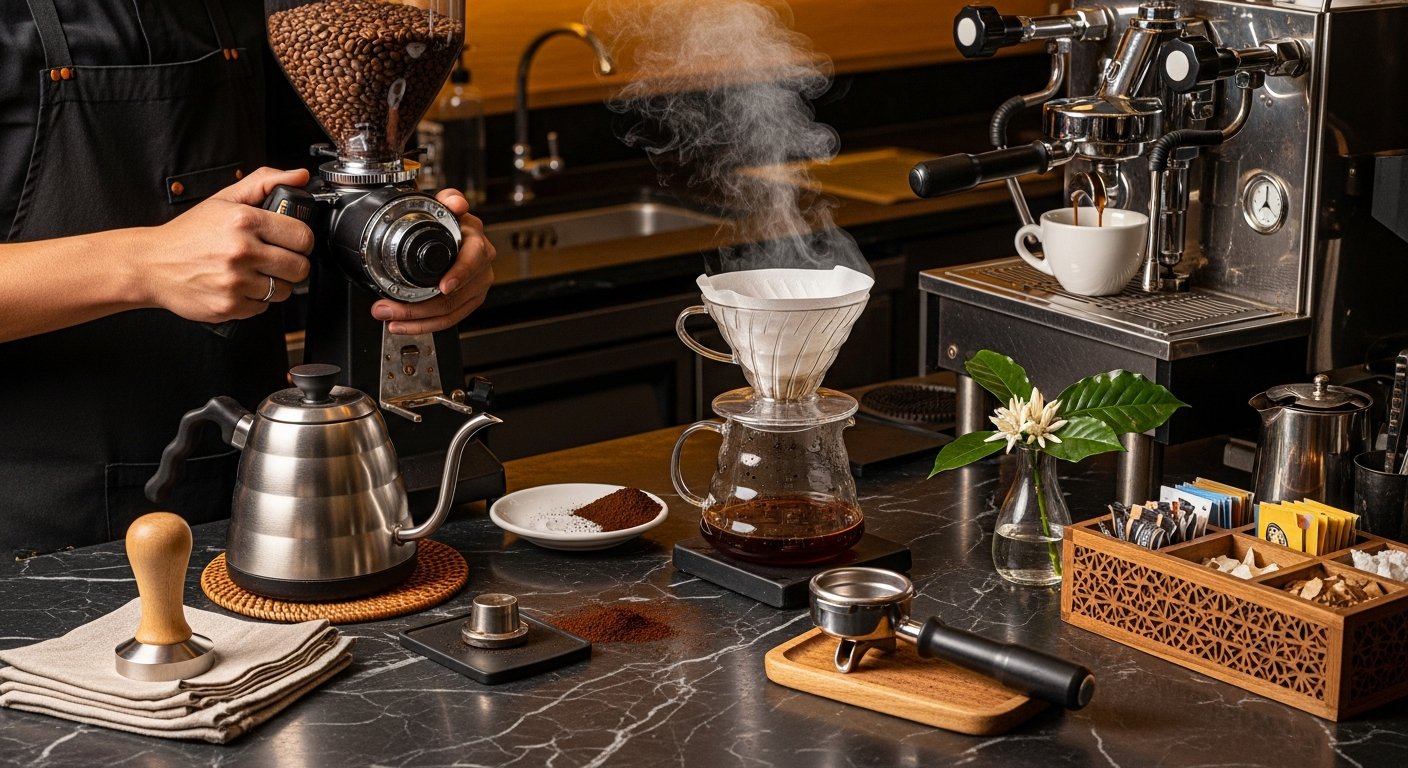
Choosing the right grinder can transform your morning ritual from a simple caffeine fix into a genuine sensory experience. When you invest in high-quality single origin beans, the grinder becomes the most critical tool in your arsenal. A blade grinder will crush those delicate beans unevenly, leaving you with a mix of dust and chunks that extracts poorly. A proper burr grinder, however, unlocks the full potential of your beans, giving you clarity in the cup and repeatability in your brew. Whether you pull shots of espresso or pour a slow, careful V60, the grinder you choose determines whether you taste the terroir or just bitterness.
Single origin coffees demand precision because they are often lighter roasted and more fragile than blends. The nuances of a washed Ethiopian or a naturally processed Colombian can disappear under uneven extraction. This is why finding the best coffee grinder for single origin espresso pour over is not just a matter of convenience, it is a matter of respect for the bean. In this guide, we break down the key features, the top models, and the specific adjustments you need to make for each brew method. We also explore how your grinder choice connects to the broader world of coffee origins, as discussed in our guide on Papua New Guinea Coffee: Single Origin Flavor Profile, where we explain how altitude and processing affect flavor.
Why Grind Quality Matters for Single Origin Beans
Single origin coffees are grown in a specific region, often on a single farm or cooperative. Their flavor is shaped by soil, climate, and processing methods. To taste those delicate notes of jasmine, bergamot, or dark chocolate, your extraction must be even. If your grind is inconsistent, some particles will over-extract and become bitter, while others will under-extract and taste sour. The result is a muddled cup that hides the very qualities you paid for.
Pour over methods like the Hario V60 or Chemex require a medium-fine grind with uniform particle size. Espresso demands a fine, powdery grind that can withstand high pressure. Switching between these two methods often means adjusting your grinder multiple times per day. A grinder with stepless adjustment or fine micro-steps makes this transition smooth and repeatable. Without that precision, you will waste expensive beans dialing in your shot or your pour over ratio.
Key Features to Look For in a Dual-Purpose Grinder
Not every grinder can handle both espresso and pour over well. You need a machine that offers a wide enough range of grind settings and enough torque to grind through hard, light-roasted beans without stalling. Below are the essential features to consider when searching for the best coffee grinder for single origin espresso pour over.
Burr Type: Flat vs. Conical
Flat burrs produce a very uniform particle distribution with fewer fines. This is excellent for espresso because it promotes even extraction under pressure. Conical burrs tend to produce slightly more fines, which can add body to a pour over but may cause channeling in espresso. For a dual-purpose grinder, many baristas prefer conical burrs for their versatility, but high-end flat burr grinders with wide range adjustments are also excellent. Look for hardened steel or titanium-coated burrs, as they stay sharp longer and handle light roasts without overheating the beans.
Adjustment Mechanism: Stepped vs. Stepless
Stepped grinders click into preset positions. They are easy to use and repeatable for pour over, but the steps may be too wide to fine-tune espresso. Stepless grinders use a threaded collar or friction adjustment, allowing infinite precision. This is ideal for dialing in single origin espresso, where a tiny turn can change extraction time by several seconds. For a grinder that serves both methods, a stepless design or a stepped design with very fine increments (30 or more steps) is recommended.
Motor Speed and Torque
High-speed grinders can heat the beans during grinding, which degrades volatile aromatics. Low-speed, high-torque motors (often called direct drive or gear reduction) keep the burrs cool and preserve flavor. Look for a grinder with a motor speed around 400 to 800 RPM for optimal temperature control. This is especially important for single origin beans, where delicate floral and fruity notes are the first to disappear when overheated.
Dosing and Workflow
If you brew both espresso and pour over, consider a grinder that offers single-dosing capabilities. Single-dosing means you weigh your beans before grinding, avoiding stale grounds sitting in the hopper. This is ideal for single origin coffee because you can switch between different beans without wasting or mixing them. Some grinders also include a bellows system to push out retained grounds, ensuring you get every gram you put in.
- Burr material: Choose hardened steel or titanium for durability and heat resistance.
- Adjustment range: Ensure the grinder covers everything from fine Turkish to coarse French press.
- Retention: Low retention (under 0.5g) is critical for single dosing and switching origins.
- Noise level: Quiet operation matters if you brew early in the morning.
- Build quality: Metal construction with a stable base reduces vibration and ensures consistent grind.
Each of these features contributes to your ability to extract the best from each bean. A grinder that scores high on all five will serve you well for years. Remember that you can upgrade other parts of your setup, but the grinder is the one piece that has the biggest impact on flavor.
Top Grinders for Single Origin Espresso and Pour Over
After testing dozens of models across different price points, we have narrowed the field to three standout options. Each excels in both espresso and pour over, though they differ in workflow, speed, and price. The best coffee grinder for single origin espresso pour over depends on your budget and how much time you want to spend dialing in.
Option 1: Fellow Ode Gen 2
The Fellow Ode Gen 2 is designed primarily for pour over but has become a favorite among home baristas who also dabble in espresso. It features flat burrs that produce an exceptionally uniform particle size, ideal for light-roast single origins. The grind adjustment is stepless, with a magnetic catch cup that makes single-dosing easy. However, it struggles with very fine espresso grinds. If you drink espresso occasionally and pour over daily, this is a strong choice. It is quiet, fast, and beautiful on the counter.
Option 2: DF64 Gen 2
The DF64 Gen 2 is a flat-burr grinder that offers incredible value. It uses 64mm flat burrs, which are common in commercial espresso grinders, giving you professional-grade uniformity at a home-friendly price. The stepless adjustment is smooth and repeatable. It comes with a bellows system that reduces retention to near zero. This grinder handles espresso and pour over equally well, making it the best coffee grinder for single origin espresso pour over for most home baristas. The motor is low-speed and runs cool, preserving aromatics.
Option 3: Baratza Sette 270Wi
The Baratza Sette 270Wi uses conical burrs and a unique vertical design that minimizes retention. It is one of the fastest grinders in its class and weighs the grounds by weight, not time, for extreme accuracy. The 270 steps of adjustment give you plenty of fine control for espresso. For pour over, you will need to set it to a coarser range, but the stepped design makes it easy to return to your espresso setting. It is louder than the other options, but the speed and precision make up for the noise.
How to Dial In Single Origin Coffee for Pour Over
Dialing in pour over with a new single origin bean follows a simple process. Start with a medium-fine grind and a 1:16 coffee-to-water ratio. Use water at 205 degrees Fahrenheit (96 Celsius). Pour 50 grams of water for a 30-second bloom, then add the rest in slow, concentric circles. Taste the result. If it tastes sour or weak, grind finer. If it tastes bitter or hollow, grind coarser. Adjust by one or two clicks on your grinder and try again. Keep notes on the grind setting so you can repeat the perfect cup.
Single origin beans from different regions require different approaches. A dense Ethiopian bean may need a finer grind and higher water temperature to extract its fruity acids. A washed Brazilian bean may be more forgiving and taste best with a slightly coarser grind. The grinder settings you use for one origin may not work for another, which is why a grinder with fine adjustment is essential. Write down the grind setting for each origin so you can switch back and forth without guessing.
How to Dial In Single Origin Coffee for Espresso
Espresso with single origin beans is more demanding because the margin for error is smaller. Start with a dose of 18 grams in a double basket. Use a grind setting that produces a 30-gram shot in 28 to 32 seconds. If the shot runs too fast, grind finer. If it runs too slowly or chokes, grind coarser. Single origin light roasts often require a slightly finer grind and a longer ratio, such as 1:2.5 or 1:3, to balance acidity and sweetness.
Temperature also matters. Light-roast single origins often benefit from a higher brew temperature, around 200 to 205 degrees Fahrenheit. Darker roasts can be brewed at 195 to 200 degrees. If your espresso machine allows you to adjust temperature, experiment within that range. The grinder setting and temperature work together. A change of one degree can mean a difference of several seconds in extraction time. Keep a log of your settings for each origin so you can replicate great shots.
Maintaining Your Grinder for Consistent Performance
A grinder is a precision tool, and it requires regular maintenance. Coffee oils build up on burrs over time, causing retention and stale flavors. Clean your burrs every two to four weeks, depending on how often you grind. Use a brush and a vacuum to remove loose grounds. For deep cleaning, use a commercial grinder cleaner like Grindz or a small amount of uncooked rice, then brush thoroughly. Re-season the burrs by grinding a few grams of coffee that you discard before your next brew.
Burrs also wear down after 500 to 1000 pounds of coffee. When you notice your grind becoming inconsistent or your shots running faster than usual, it may be time to replace the burrs. High-quality steel burrs last longer than ceramic ones, but all burrs eventually dull. Replacing burrs is cheaper than buying a new grinder and restores performance to like-new condition. For single origin enthusiasts who grind multiple times a day, annual burr inspection is wise.
Finally, calibrate your grinder if it offers that option. Some grinders allow you to zero the burrs for a consistent starting point. This is especially useful if you remove burrs for cleaning or replacement. A calibrated grinder ensures that your notch 10 on one day means the same grind size as notch 10 on another day, which is critical for repeatability with different single origins.
Matching Grinder Settings to Brew Method
Many home baristas struggle because they use the same grinder setting for every brew method. That approach rarely works. The best coffee grinder for single origin espresso pour over gives you the range to go from a fine, flour-like powder for espresso to a coarse, sea-salt texture for pour over. Here is a quick reference for typical grind sizes:
- Espresso: Fine, like powdered sugar. Extracts under 9 bars of pressure in 25-35 seconds.
- Pour over (V60, Chemex): Medium-fine, like table salt. Extracts in 2.5 to 4 minutes with a steady pour.
- Aeropress: Medium, like sand. Extracts in 1 to 2 minutes with pressure.
- French press: Coarse, like kosher salt. Extracts in 4 minutes with immersion.
These are starting points. Adjust based on your bean’s roast level, density, and your personal taste. A light-roast single origin may need a finer grind than a medium-roast blend to achieve the same extraction. Trust your palate over the clock. If the coffee tastes good, the grind is right.
The connection between grind quality and flavor becomes even clearer when you explore specific origins. For example, the high-altitude beans from Papua New Guinea often produce a winey acidity that needs a precise grind to balance. In our article on Papua New Guinea Coffee: Single Origin Flavor Profile, we detail how the volcanic soil and washed processing create a complex cup that rewards careful grinding. The same principles apply to Kenyan, Ethiopian, and Colombian single origins. Each origin tells a story, and your grinder is the instrument that reads it.
Investing in the right grinder is the single best decision you can make for your coffee routine. It elevates every cup, reduces waste, and makes your morning ritual more rewarding. Whether you choose a Fellow, DF64, Baratza, or another model, focus on burr quality, adjustment range, and low retention. Those three factors will define your experience with single origin espresso and pour over. Taste the difference, and you will never look back.