Coffee Certifications: Organic, Rainforest Alliance, Fairtrade
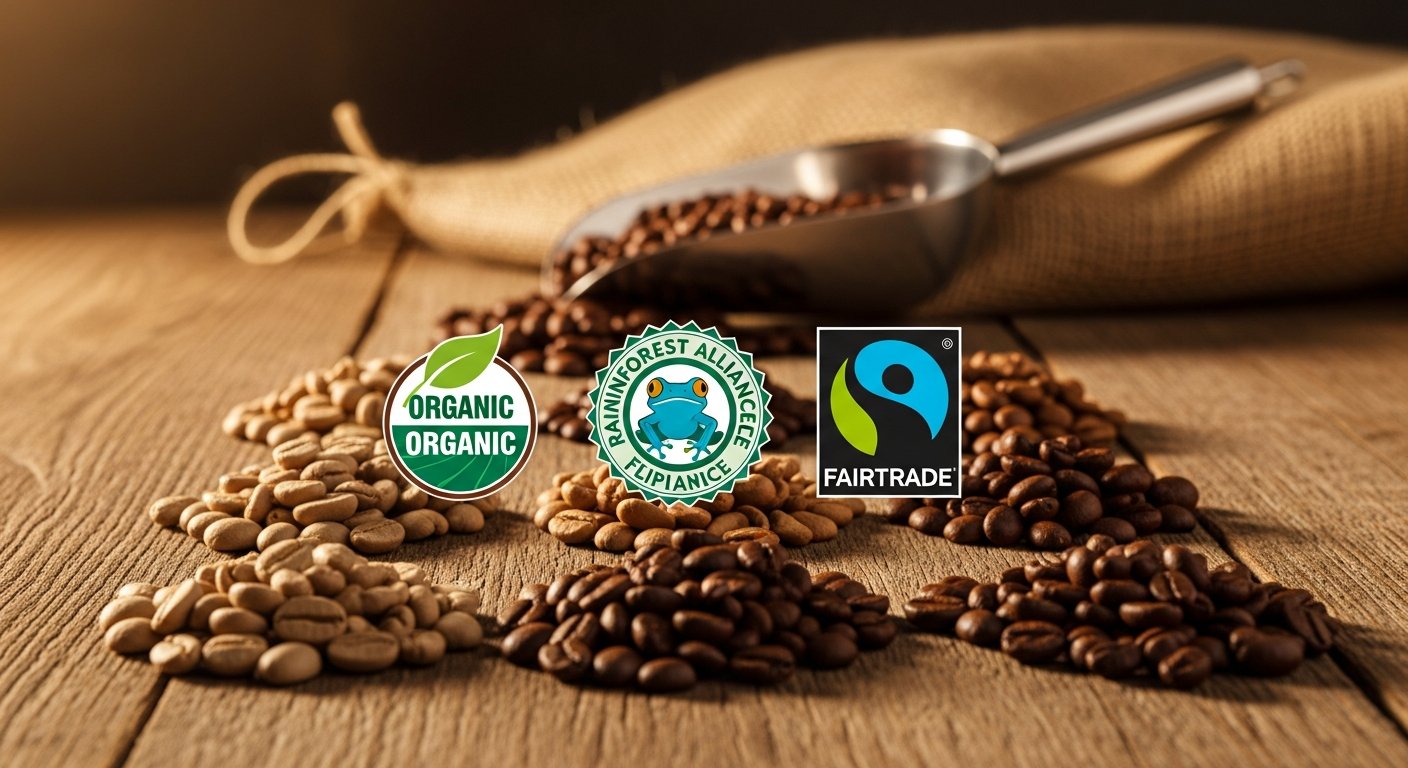
When you stand in the coffee aisle or browse an online roastery, the bags often display a cluster of seals: a green leaf, a blue frog, a black-and-white logo. These marks represent coffee certifications organic Rainforest Alliance Fairtrade and others. They promise something beyond a good cup. But what exactly do they guarantee? And which one matters most for your values and your palate? This article breaks down the major certifications, what they cost, what they deliver, and how to choose with confidence.
What Are Coffee Certifications?
Coffee certifications are third-party audits that verify a farm or cooperative meets specific environmental, social, or economic standards. They exist because coffee supply chains are long and opaque. A farmer in Ethiopia or Colombia may never meet the roaster or the drinker. Certifications act as a shorthand for trust. They tell you that the beans were grown without certain synthetic pesticides, that workers received a minimum price, or that forests were protected.
However, certifications are not one-size-fits-all. Some focus on the environment (organic, Rainforest Alliance), others on farmer income (Fairtrade), and others on relationships (Direct Trade). Many coffees carry multiple seals. Understanding the overlap and the gaps helps you decode the label and support the practices you care about most.
Organic Certification: No Synthetics, Third-Party Verified
The USDA Organic seal is the most recognized organic certification in the United States. For coffee, it means the farm has not used most synthetic fertilizers, pesticides, or herbicides for at least three years. The farm must also have a buffer zone to prevent drift from neighboring conventional farms. An accredited certifying agent inspects the farm annually.
Organic certification is demanding. Smallholder farmers often lack the resources to pay for inspection fees or maintain the paperwork. That is why many organic farms are not certified even if they farm organically. The certification adds a cost that can be passed down the supply chain, sometimes resulting in a higher retail price. But for consumers who want to avoid synthetic chemicals, organic is the clearest guarantee.
Key Benefits of Organic Coffee
- No synthetic pesticides or fertilizers used on the farm.
- Soil health is maintained through composting, cover crops, and natural methods.
- Biodiversity is often higher because chemical inputs are absent.
- Farmers avoid long-term health risks associated with agrochemical exposure.
Organic certification does not guarantee fair wages or conservation of wildlife habitat. It focuses solely on agricultural inputs and soil management. A coffee can be organic and still be grown on a large monoculture farm with low wages. That is why many buyers look for organic combined with a social certification like Fairtrade.
Rainforest Alliance Certification: People and Nature Together
The Rainforest Alliance seal features a green frog. It is one of the most comprehensive certifications because it covers environmental, social, and economic criteria. Farms must protect forests, waterways, and wildlife. They must also treat workers fairly, provide safe working conditions, and prohibit child labor. The certification is built on the Sustainable Agriculture Network (SAN) standard.
Rainforest Alliance certified coffee is grown on farms that have been audited for criteria such as water conservation, waste management, and ecosystem preservation. The certification also requires that farmers receive a premium (a price above the market average) to invest in sustainable practices. However, the premium is not as strictly defined as Fairtrade’s minimum price. The Rainforest Alliance focuses on continuous improvement rather than a fixed price floor.
What the Rainforest Alliance Seal Does and Does Not Mean
- Forests and natural ecosystems are protected or restored.
- Workers have access to protective equipment, clean water, and fair treatment.
- Farms are not allowed to destroy primary forests for coffee expansion.
- It does not guarantee organic farming (though many certified farms also use organic methods).
The Rainforest Alliance certification is a strong choice if you care about biodiversity and ecosystem health. It is also a good middle ground for those who want social responsibility without the strict price floor of Fairtrade. Many large roasters carry Rainforest Alliance certified coffee because it is scalable and widely recognized.
Fairtrade Certification: A Price Floor and Community Investment
Fairtrade certification focuses on economic justice. The Fairtrade Minimum Price ensures that farmers receive at least a set amount per pound, even when the global coffee market crashes. When the market price rises above the minimum, farmers get the higher price plus a Fairtrade Premium. This premium is an extra sum that the cooperative or farmer organization decides how to spend, often on community projects like schools, healthcare, or infrastructure.
Fairtrade also requires democratic decision-making within cooperatives, transparency in transactions, and no forced or child labor. The certification is strongest for smallholder farmers who organize into cooperatives. It is less common for large estates because Fairtrade prioritizes small producers.
Strengths and Limitations of Fairtrade
- Guarantees a minimum price that covers the cost of sustainable production.
- Provides a premium for community investment.
- Requires democratic governance in cooperatives.
- Does not require organic farming (though many Fairtrade farms also pursue organic certification).
- Critics argue the minimum price can still be too low in high-cost regions.
Fairtrade is ideal if you want to ensure that farmers receive a stable income and have a say in how premiums are used. It is less focused on environmental practices than Rainforest Alliance or organic, but many Fairtrade cooperatives also adopt organic methods to reduce costs and access premium markets.
Comparing Organic, Rainforest Alliance, and Fairtrade
Each certification emphasizes a different aspect of sustainability. Organic is about what goes into the soil. Rainforest Alliance is about the ecosystem and worker welfare. Fairtrade is about farmer income and community power. A coffee can hold one, two, or all three seals. In practice, many specialty roasters seek coffee that is both organic and Fairtrade, or organic and Rainforest Alliance, to cover multiple bases.
When you see a bag with multiple certifications, you are looking at a coffee that has undergone multiple audits. That adds cost and complexity, but it also signals a serious commitment. The price you pay often reflects the premiums that went back to the farmer, the certifier, and the roaster. For a deeper look at how direct trade compares to these models, see our guide on Direct Trade vs Fair Trade: Sustainable Coffee Sourcing which explains the differences in transparency and farmer relationship.
Other Important Certifications: Bird Friendly, Direct Trade, and UTZ
Beyond the big three, there are other labels worth knowing. Bird Friendly certification, managed by the Smithsonian Migratory Bird Center, requires organic farming plus shade cover that mimics native forest. It is the gold standard for bird habitat conservation. Direct Trade is not a formal certification but a purchasing model where roasters buy directly from farmers, often paying above Fairtrade prices. UTZ (now part of Rainforest Alliance) was a separate program focused on traceability and good agricultural practices.
Each label has its own strengths. Bird Friendly is best for bird lovers. Direct Trade offers the highest potential farmer income if the roaster is ethical. UTZ was common for mainstream brands. Today, many UTZ farms are transitioning to the Rainforest Alliance seal.
How to Choose the Right Certification for You
Start by asking what matters most to you. If your top concern is avoiding synthetic chemicals, look for USDA Organic or an equivalent certification like EU Organic. If you want to protect forests and wildlife, Rainforest Alliance or Bird Friendly are strong choices. If you care about farmer income and community development, Fairtrade is your best bet. Many specialty roasters now offer transparency reports that go beyond seals, showing exactly how much they paid per pound.
Do not assume that a single seal tells the whole story. A coffee can be organic but grown on a deforested plot. A coffee can be Fairtrade but use pesticides. The best approach is to buy from roasters who explain their sourcing philosophy and who visit their producer partners. Certifications are tools, not guarantees of perfection. They are part of a larger effort to make coffee more sustainable.
What Certifications Cost and Who Pays
Certifications add costs. Farmers pay for annual audits, paperwork, and sometimes for group certification fees. Roasters pay for certified beans, which cost more because of the premiums. Consumers pay a higher retail price. Estimates vary, but certified coffee often costs $1 to $3 more per pound at retail than conventional coffee. For a 12-ounce bag, that is a difference of about $1 to $2.
However, the price increase is not purely a markup. Part of that money goes back to the farmer as a premium. Part covers the certifier’s costs. Part funds the roaster’s overhead. The key is to ask your roaster how much of the premium actually reaches the farmer. Some roasters publish this data. Others do not. Transparency is becoming a competitive advantage in the specialty coffee market.
The Future of Coffee Certifications
The certification landscape is evolving. Climate change is threatening coffee production, and certifications are adapting. New standards for carbon sequestration, water use, and regenerative agriculture are emerging. Some roasters are moving beyond third-party seals to create their own direct trade programs with verified impact. The trend is toward more data, more transparency, and more collaboration between roasters and farmers.
At the same time, consolidation is happening. UTZ merged with Rainforest Alliance. Fairtrade USA split from Fairtrade International. These changes affect which seals you see and what they mean. Staying informed helps you make better choices. For now, the most meaningful step is to buy certified coffee from a roaster you trust, and to pay a price that reflects the true cost of sustainable production.
Certifications are not a perfect system. They can be expensive, bureaucratic, and sometimes gamed. But they are a powerful tool for improving conditions in the coffee supply chain. When you buy coffee with the organic, Rainforest Alliance, or Fairtrade seal, you are voting with your wallet for a different kind of agriculture. That vote matters, one cup at a time.