Direct Trade Coffee Partnerships vs Certifications
For coffee lovers and industry professionals alike, the journey from bean to cup involves complex choices about sourcing ethics and quality. Two dominant models have emerged in specialty coffee: direct trade coffee partnerships vs certifications like Fair Trade and Rainforest Alliance. While both aim to improve producer livelihoods and environmental stewardship, they operate on fundamentally different principles. Understanding these differences is essential for roasters, retailers, and consumers who want to make informed decisions that align with their values.
Direct trade coffee partnerships represent a relationship-based approach where roasters buy directly from producers, often visiting farms and negotiating prices face-to-face. Certifications, by contrast, rely on third-party audits and standardized criteria to verify ethical practices. Each model has distinct strengths and weaknesses, and the choice between them can significantly impact farmers, quality, and sustainability outcomes.
What Are Direct Trade Coffee Partnerships?
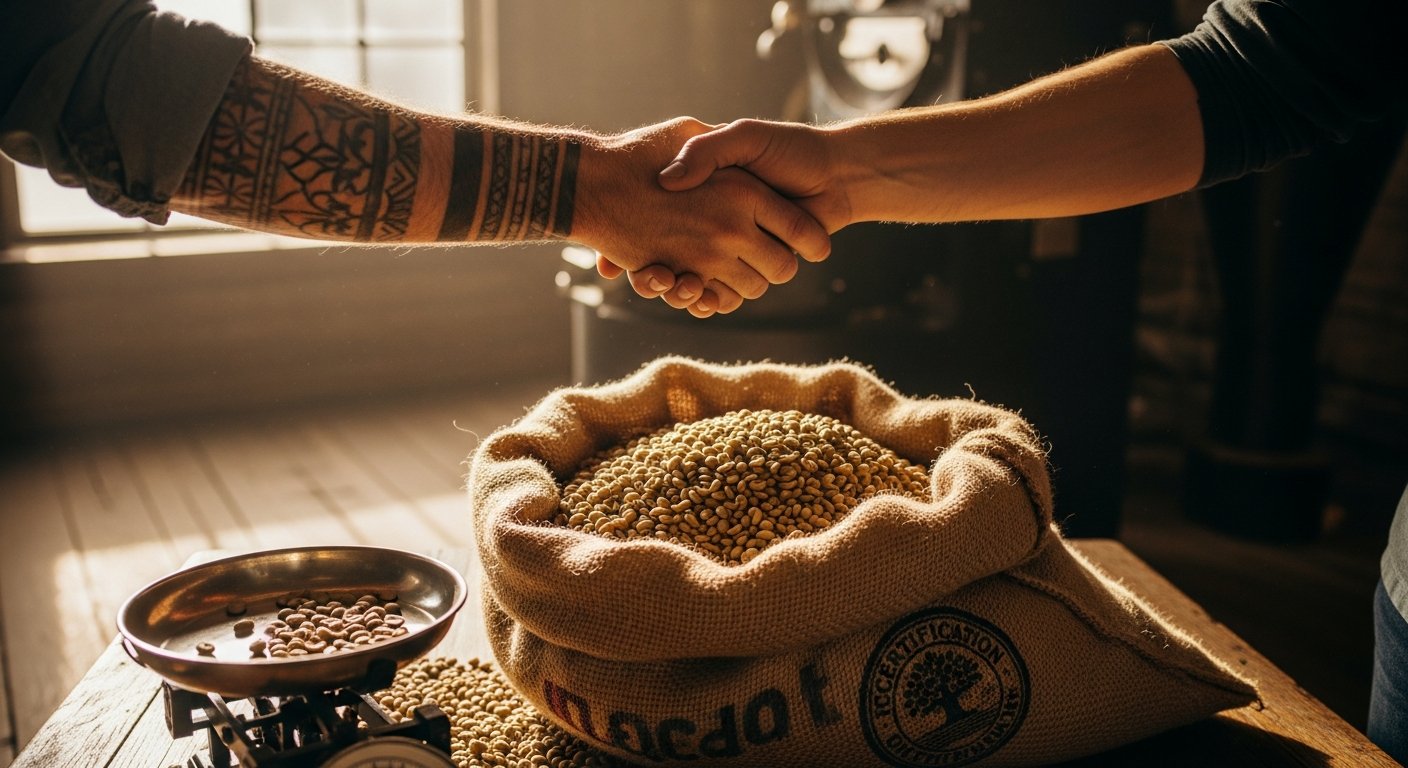
Direct trade coffee partnerships are informal agreements between roasters and coffee producers that bypass traditional commodity markets and intermediaries. Roasters travel to origin countries, build personal relationships with farmers, and agree on prices based on quality and shared values rather than global market prices. This model emerged in the early 2000s as specialty roasters sought greater transparency and higher quality beans.
In a direct trade arrangement, the roaster typically pays a premium above Fair Trade or commodity prices, often 25 to 50 percent higher. The roaster also invests in quality improvements, such as providing equipment, training in processing techniques, or funding infrastructure projects. In return, the roaster secures exclusive access to top-tier lots and builds a consistent supply chain. For example, a roaster might work with a single cooperative in Ethiopia, visiting annually to cup samples and plan the next harvest together.
Key Characteristics of Direct Trade
Direct trade is not a formal certification but a set of practices that vary by roaster. Common features include:
- Long-term relationships: Roasters commit to buying from the same producers year after year, providing financial stability.
- Price transparency: Both parties agree on a price that reflects quality and production costs, often with a premium for exceptional beans.
- Quality focus: Roasters prioritize traceability and flavor, often sourcing microlots from single farms or small producer groups.
- Direct communication: Roasters interact directly with farmers, bypassing exporters and importers.
These characteristics create a feedback loop where quality and price reinforce each other. Farmers receive higher income for better beans, which incentivizes investment in sustainable practices. However, direct trade requires significant time, travel, and financial resources from roasters, making it less accessible for smaller companies.
What Are Coffee Certifications?
Coffee certifications are third-party verification systems that set minimum standards for social, environmental, and economic practices. The most recognized certifications include Fair Trade, Rainforest Alliance, Organic, and Bird Friendly. Each certification has specific criteria, auditing processes, and labels that consumers can look for when purchasing coffee.
Certifications aim to create a baseline for ethical production. For instance, Fair Trade guarantees a minimum price for farmers, often with a social premium for community projects. Rainforest Alliance focuses on biodiversity conservation and worker rights, while Organic certification prohibits synthetic pesticides and fertilizers. These labels provide a shorthand for consumers who want to support responsible sourcing without deep knowledge of supply chains.
Common Certification Requirements
Each certification has distinct requirements, but they share common elements:
- Minimum price floors: Fair Trade sets a base price per pound to protect farmers from market crashes.
- Environmental standards: Restrictions on deforestation, water use, and chemical inputs.
- Labor protections: Prohibitions on child labor, forced labor, and unsafe working conditions.
- Third-party audits: Independent inspectors verify compliance annually or biannually.
Certifications provide a scalable solution for large-scale ethical sourcing. They allow roasters to offer verified ethical products without the need for direct relationships with every farm. However, critics argue that certifications can be costly for smallholders, and the minimum price may not always reflect the true cost of sustainable production.
Direct Trade Coffee Partnerships vs Certifications: Core Differences
When comparing direct trade coffee partnerships vs certifications, the most significant difference lies in how value is created and distributed. Direct trade emphasizes relationship quality and price negotiation, while certifications focus on minimum standards and third-party verification. Here is a breakdown of the key distinctions:
First, price mechanisms differ. In direct trade, prices are negotiated based on cup quality and mutual agreement, often resulting in higher payments to farmers. Certifications set a floor price but do not incentivize quality beyond the minimum. For example, a farmer producing a 90-point coffee under Fair Trade receives the same base price as a farmer producing an 85-point coffee, unless the roaster voluntarily pays more.
Second, transparency levels vary. Direct trade roasters often publish their pricing and sourcing details, allowing consumers to see exactly how much farmers receive. Certifications provide a label but less visibility into individual transactions. A bag of Rainforest Alliance coffee tells you the farm met environmental standards but not what the farmer was paid.
Third, scalability and accessibility differ. Certifications work well for large roasters and commodity-grade coffee, where direct relationships are impractical. Direct trade is better suited for specialty roasters who value exclusivity and are willing to invest in relationships. A roaster sourcing 20 containers of coffee annually may rely on certifications, while a micro-roaster buying 5 bags from a single farm can use direct trade.
Benefits of Direct Trade Coffee Partnerships
Direct trade coffee partnerships offer several advantages that appeal to specialty roasters and conscientious consumers. The most notable benefit is higher farmer income. Because prices are tied to quality, farmers who invest in better processing and cultivation can earn significantly more than certification minimums. Some direct trade agreements pay three to four times the Fair Trade price for exceptional lots.
Another benefit is traceability. Direct trade allows roasters to know the exact farm, varietal, and processing method of their coffee. This transparency enables storytelling that resonates with consumers. A roaster can share the farmer’s name, the altitude of the farm, and the specific drying technique used, creating a connection that certification labels cannot replicate.
Direct trade also fosters innovation. Roasters and farmers collaborate on experimental processing methods, such as anaerobic fermentation or extended maceration, which can produce unique flavor profiles. This partnership model drives quality improvements that benefit both parties. For example, a roaster might fund a washing station upgrade that reduces defects, resulting in a higher cupping score and a premium price.
However, direct trade has limitations. It requires significant resources from roasters, including travel, time, and financial commitment. Smaller roasters may struggle to build and maintain these relationships. Additionally, direct trade is not standardized, so consumers must trust the roaster’s claims. There is no external verification that the farmer received the premium price.
Benefits of Coffee Certifications
Coffee certifications provide structure and accountability that direct trade lacks. The primary benefit is standardization. Certifications create a universal baseline for ethical practices, making it easier for consumers to identify responsible products. A Fair Trade label means the coffee meets specific social and economic criteria, regardless of the roaster’s marketing claims.
Certifications also offer economies of scale. Large roasters can source certified beans from multiple origins without needing direct relationships with every producer. This scalability makes ethical sourcing accessible for mass-market brands. For instance, a supermarket chain can stock Rainforest Alliance coffee across thousands of stores, knowing that each bag meets environmental standards.
Another advantage is third-party auditing. Independent certifiers inspect farms and supply chains to ensure compliance, reducing the risk of greenwashing. This oversight provides credibility that direct trade claims often lack. When a roaster says they pay above-market prices, there is no impartial verification; a certification label, by contrast, has been audited by an external organization.
Certifications also support community development. Fair Trade premiums, for example, are pooled into funds that farmers collectively decide how to spend, such as building schools or health clinics. This democratic process empowers producer organizations and addresses systemic issues beyond individual farm income.
Challenges and Criticisms of Both Models
Both direct trade and certifications face valid criticisms. For direct trade, the lack of standardization means that some roasters may claim direct trade without truly benefiting farmers. A roaster might visit a farm once, pay a modest premium, and market the coffee as direct trade, while the farmer receives only a marginal increase over commodity prices. Without external verification, consumers cannot distinguish genuine partnerships from marketing tactics.
Certifications also have drawbacks. The cost of certification can be prohibitive for smallholder farmers, who may pay hundreds or thousands of dollars for audits and paperwork. For a farmer with a few acres of coffee, this expense can outweigh the benefits of the premium. Additionally, certification minimum prices may not keep pace with inflation or rising production costs. In some years, the Fair Trade minimum has been below the market price, providing no additional income.
Another criticism is that certifications prioritize compliance over continuous improvement. A farm that meets the minimum standards receives the same label as a farm that goes far beyond them. This system does not reward exceptional environmental or social practices. In contrast, direct trade can incentivize ongoing progress through price premiums tied to quality and sustainability metrics.
Furthermore, certifications can be slow to adapt. Changing certification criteria requires bureaucratic processes that may not keep up with evolving challenges like climate change or new labor issues. Direct trade relationships, being informal, can adjust quickly to local conditions and farmer needs.
Choosing Between Direct Trade and Certifications
The decision between direct trade coffee partnerships vs certifications depends on your priorities as a roaster, retailer, or consumer. For roasters focused on quality and exclusivity, direct trade offers the best path to exceptional beans and compelling stories. For those seeking scalable, verifiable ethical sourcing, certifications provide a reliable framework.
Many roasters use both models. They might source 80 percent of their coffee through certifications for consistency and scale, while reserving 20 percent for direct trade relationships that showcase their highest quality lots. This hybrid approach balances transparency, cost, and impact. For example, a roaster might offer a Rainforest Alliance espresso blend for daily drinking and a direct trade microlot from a single farm for special releases.
Consumers can also combine approaches. Look for roasters that publish their sourcing practices and pricing. If a roaster claims direct trade, ask for details about how they define it and what premiums they pay. If a certification label is present, research the certifier’s standards to ensure they align with your values. In our guide on Direct Trade vs Fair Trade: Sustainable Coffee Sourcing, we explore how these models compare in practice.
Ultimately, the most important factor is impact on the ground. A direct trade relationship that pays farmers 50 percent above market and invests in community projects can be more transformative than a certification that only meets minimum standards. Conversely, a certification program that reaches thousands of smallholders and funds schools can have broader systemic effects than a handful of exclusive direct trade partnerships.
The future of ethical coffee sourcing likely involves convergence. Some certifiers are incorporating direct trade principles, such as price transparency and relationship building, into their standards. Meanwhile, direct trade roasters are adopting third-party verification for aspects like organic certification. This blending of models may offer the best of both worlds: the flexibility and quality focus of direct trade with the accountability and scale of certifications.
When evaluating your options, consider the specific context of the producer. A large cooperative with existing certification infrastructure may benefit more from Fair Trade premiums. A small, innovative farm may thrive under a direct trade partnership that rewards experimentation. The best choice is the one that meets the unique needs of the people growing your coffee.
In conclusion, direct trade coffee partnerships vs certifications are not mutually exclusive. They represent different tools for achieving similar goals. By understanding their strengths and weaknesses, you can make sourcing decisions that support both quality and ethics. Whether you choose direct trade, certifications, or a combination, the key is to stay informed, ask questions, and prioritize the well-being of coffee producers worldwide.