Direct Trade vs Fair Trade: Sustainable Coffee Sourcing
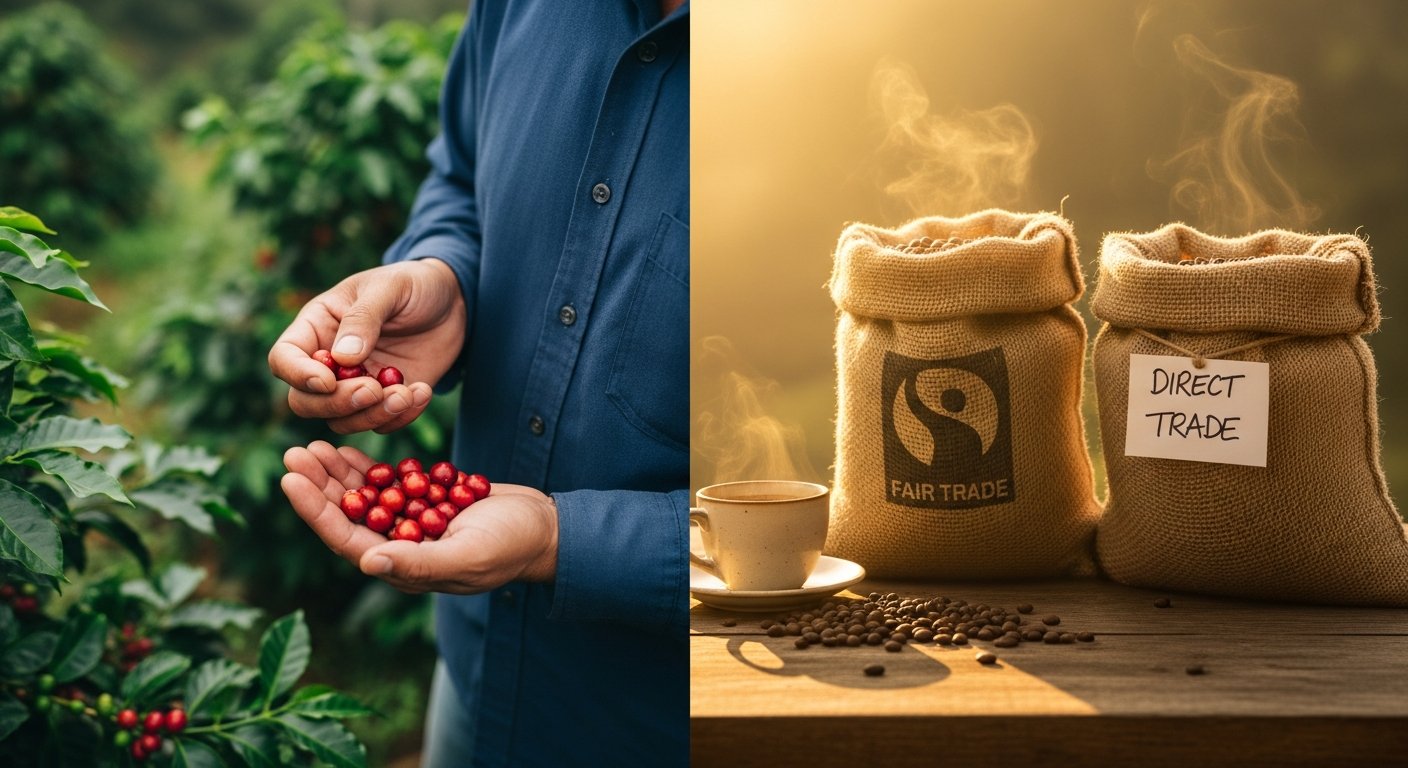
When you buy a bag of coffee labeled as ethical, you are likely choosing between two major certification models: Fair Trade and Direct Trade. Both promise better outcomes for farmers and the environment, but they operate very differently. Understanding the distinction between sustainable coffee sourcing direct trade vs fair trade is essential for anyone who wants their morning cup to reflect their values. This article breaks down the mechanics, benefits, and trade-offs of each approach so you can make an informed choice.
What Is Fair Trade Coffee?
Fair Trade is a certification system that sets minimum price floors and social standards for coffee producers. It was created in the late 1980s to protect smallholder farmers from volatile commodity markets. The core promise is that farmers receive a fair price, often above the market rate, plus a premium for community development projects.
To earn Fair Trade certification, cooperatives must meet criteria including democratic governance, no child labor, and environmental protections. The system is third-party audited, which provides a layer of accountability. For many consumers, the Fair Trade label is the most recognizable symbol of ethical sourcing.
However, Fair Trade has limitations. The minimum price is often only slightly above the cost of production, and the premium can be diluted across large cooperatives. Critics argue that the system does not always incentivize quality improvement, because farmers are paid based on volume rather than bean quality. Additionally, the certification process can be expensive for small producers, creating a barrier to entry.
What Is Direct Trade Coffee?
Direct Trade is not a formal certification but a sourcing philosophy where roasters buy directly from growers, bypassing middlemen and commodity markets. The term was popularized by specialty roasters like Intelligentsia and Stumptown in the early 2000s. In a direct trade relationship, the roaster visits the farm, negotiates prices based on cup quality, and often pays significantly above Fair Trade minimums.
The key difference is that direct trade agreements are relationship-based rather than rule-based. Roasters work with specific producers year after year, investing in quality improvement and sharing market knowledge. This model rewards farmers for producing exceptional coffee, because higher quality commands higher prices.
Direct trade is not without its drawbacks. Because there is no universal standard, the term can be misused. A roaster might claim direct trade while still buying through an importer, as long as they know the producer. Critics also note that direct trade can favor larger farms that can afford to host visitors and produce consistent lots, potentially excluding smaller growers.
Sustainable Coffee Sourcing Direct Trade vs Fair Trade: Key Differences
To compare these models effectively, consider four dimensions: price, quality, transparency, and scalability. Each dimension reveals a different strength.
Price and Economic Impact
Fair Trade guarantees a minimum price, which was $1.40 per pound for conventional coffee and $1.70 for organic as of 2023, plus a $0.20 premium. Direct trade prices vary widely but often exceed $3.00 per pound for specialty grades. In a direct trade relationship, the price is tied to cup score, so a 90-point coffee might fetch $5.00 or more. This creates a stronger incentive for quality, but it also means that farmers producing commodity-grade coffee may not benefit.
The Fair Trade premium is pooled by the cooperative and used for community projects like schools or healthcare. Direct trade payments go directly to the farmer, which can be more impactful for individual households but may not address community-wide needs.
Quality and Flavor
Direct trade is inherently quality-driven. Roasters seek out exceptional lots, often single-origin microlots with traceable flavor profiles. This model has been a major driver of the third wave coffee movement, which prizes distinctiveness over consistency. Fair Trade coffee, by contrast, is often blended into mass-market products. While Fair Trade quality has improved, the system does not prioritize cupping scores.
For consumers who value tasting notes and origin stories, direct trade offers a richer experience. For those who prioritize affordability and broad availability, Fair Trade remains a solid choice.
Transparency and Trust
Direct trade relationships are built on direct communication. Roasters can share photos of the farm, the name of the producer, and the exact price paid. This level of transparency is rare in Fair Trade, where the cooperative structure can obscure which farmer grew which beans. However, direct trade relies on the roaster’s integrity. Without third-party audits, a company could use the term loosely.
Fair Trade’s certification provides a standardized assurance. When you see the Fair Trade label, you know the product meets specific criteria, even if you do not know the farmer’s name. For many consumers, this institutional trust is more valuable than anecdotal transparency.
Scalability and Accessibility
Fair Trade is designed for scale. Large cooperatives can certify thousands of farmers, making certified coffee available in supermarkets worldwide. Direct trade is inherently small-scale. A roaster can only maintain meaningful relationships with a limited number of producers. This makes direct trade coffee more expensive and harder to find.
For smallholder farmers, Fair Trade offers a path to market that direct trade may not. A farmer who produces 10 bags of 84-point coffee might not attract a direct trade buyer, but they can sell through a Fair Trade cooperative. Conversely, a farmer with exceptional coffee can earn far more through direct trade than Fair Trade would allow.
Which Model Is More Sustainable?
Sustainability in coffee encompasses environmental stewardship, economic viability, and social equity. Both models contribute, but they address sustainability differently.
Environmental Sustainability
Fair Trade requires adherence to environmental standards, including banning certain pesticides and encouraging shade-grown practices. Organic certification is separate but often paired with Fair Trade. Direct trade does not have mandatory environmental criteria, but many direct trade roasters prioritize organic or regenerative methods because their customers demand it. In practice, both models can support environmental goals, but Fair Trade provides a formal framework while direct trade relies on individual relationships.
A 2022 study by the Specialty Coffee Association found that direct trade farms were more likely to invest in soil health and water conservation, likely because the higher prices give farmers resources to invest. However, the study also noted that Fair Trade farms had better access to sustainability training through cooperative networks.
Economic Sustainability
Economic sustainability means farmers can earn a living wage and reinvest in their farms. Fair Trade’s price floor helps stabilize income during market crashes, but it may not cover the true cost of production in high-cost regions. Direct trade prices are higher but less predictable, because they depend on quality and market demand.
Many experts argue that a hybrid approach is ideal. A farmer might sell some coffee through direct trade for high quality lots and the rest through Fair Trade for stable income. This diversification can buffer against both market volatility and crop variability.
Social Equity
Fair Trade’s cooperative model promotes democratic decision-making and collective bargaining. This can empower women and marginalized groups within farming communities. Direct trade’s focus on individual producers can bypass these structures, potentially reinforcing existing power dynamics. However, some direct trade roasters actively work with women-led farms and invest in social programs directly.
There is no clear winner in social equity. The best approach depends on the specific context of the farming community and the roaster’s commitment to ethical practices beyond the label.
How to Choose Between Direct Trade and Fair Trade
Your choice depends on your priorities as a consumer. Use the following criteria to guide your decision.
- Budget: If price is your primary concern, Fair Trade coffee is more affordable and widely available. Direct trade coffee typically costs 20-40% more.
- Quality: If you value unique flavors and high cupping scores, direct trade offers a direct line to exceptional beans. Look for roasters that publish their sourcing details.
- Transparency: If you want to know the farmer’s name and the exact price paid, choose direct trade. If you prefer a standardized guarantee, look for Fair Trade certification.
- Impact Scale: If you want to support community-wide development, Fair Trade’s cooperative premium funds schools and clinics. If you want to maximize individual farmer income, direct trade pays more per pound.
Many roasters now use both models, offering a blend of certified and direct trade coffees. This allows consumers to choose based on their values for each purchase.
Practical Steps for Sourcing Sustainable Coffee
Whether you are a home brewer or a café owner, these steps will help you source coffee that aligns with your values.
Research Roasters’ Sourcing Practices
Look for roasters that publish transparency reports. Some companies, like Counter Culture and Onyx Coffee Lab, disclose the price paid for each lot and the producer’s share. If a roaster uses the term direct trade, ask what it means to them. A reputable roaster will be happy to explain their relationships.
For Fair Trade, verify that the certification is from a recognized body like Fair Trade USA or Fairtrade International. Some labels, like Rainforest Alliance, offer similar but distinct certifications.
Understand the True Cost of Coffee
Specialty coffee is expensive for a reason. A $15 bag of coffee might seem pricey, but consider that the farmer may receive less than $1.00 from that sale after processing, shipping, and roaster margins. Paying $20 or more ensures that a larger share goes to the producer. Sustainable coffee sourcing direct trade vs fair trade is not just about labels; it is about recognizing that ethical coffee costs more to produce.
Support Roasters Who Invest in Relationships
The most sustainable sourcing involves long-term partnerships. Look for roasters who visit their producers regularly, offer multi-year contracts, and provide technical assistance. These relationships are the gold standard, whether they are called direct trade or something else.
For example, a roaster might work with a cooperative in Ethiopia, paying above Fair Trade prices and funding a washing station upgrade. That is sustainable sourcing in practice, even if it does not fit neatly into one category.
The Future of Sustainable Coffee Sourcing
The debate over sustainable coffee sourcing direct trade vs fair trade is evolving. New models are emerging that combine the strengths of both. One example is the relationship coffee model used by companies like Keurig Dr Pepper’s Green Mountain Coffee, which blends direct relationships with third-party verification. Another is the direct-to-consumer model used by subscription services like Trade Coffee, which connects consumers directly with roasters’ sourcing stories.
Technology is also playing a role. Blockchain-based traceability systems allow consumers to scan a QR code on a bag of coffee and see the entire supply chain. This could make direct trade more transparent and Fair Trade more traceable. As consumer demand for ethical coffee grows, the industry will likely converge on standards that combine price fairness, quality incentives, and verifiable impact.
In the meantime, the best choice is to stay informed. Read roasters’ sustainability reports, ask questions at your local café, and be willing to pay a premium for coffee that supports producers. Whether you choose Fair Trade, direct trade, or a combination, your awareness is the most powerful tool for driving change in the coffee industry.
Sustainable coffee sourcing is not a simple choice between two labels. It is a commitment to understanding where your coffee comes from and ensuring that everyone in the supply chain benefits. By learning the nuances of direct trade and Fair Trade, you can make decisions that align with your values and support a more equitable coffee future. The next time you brew a cup, take a moment to consider the journey those beans took to reach you. That awareness is the first step toward truly sustainable consumption.