
Home Barista Essential Tools for Consistent Organic Espresso
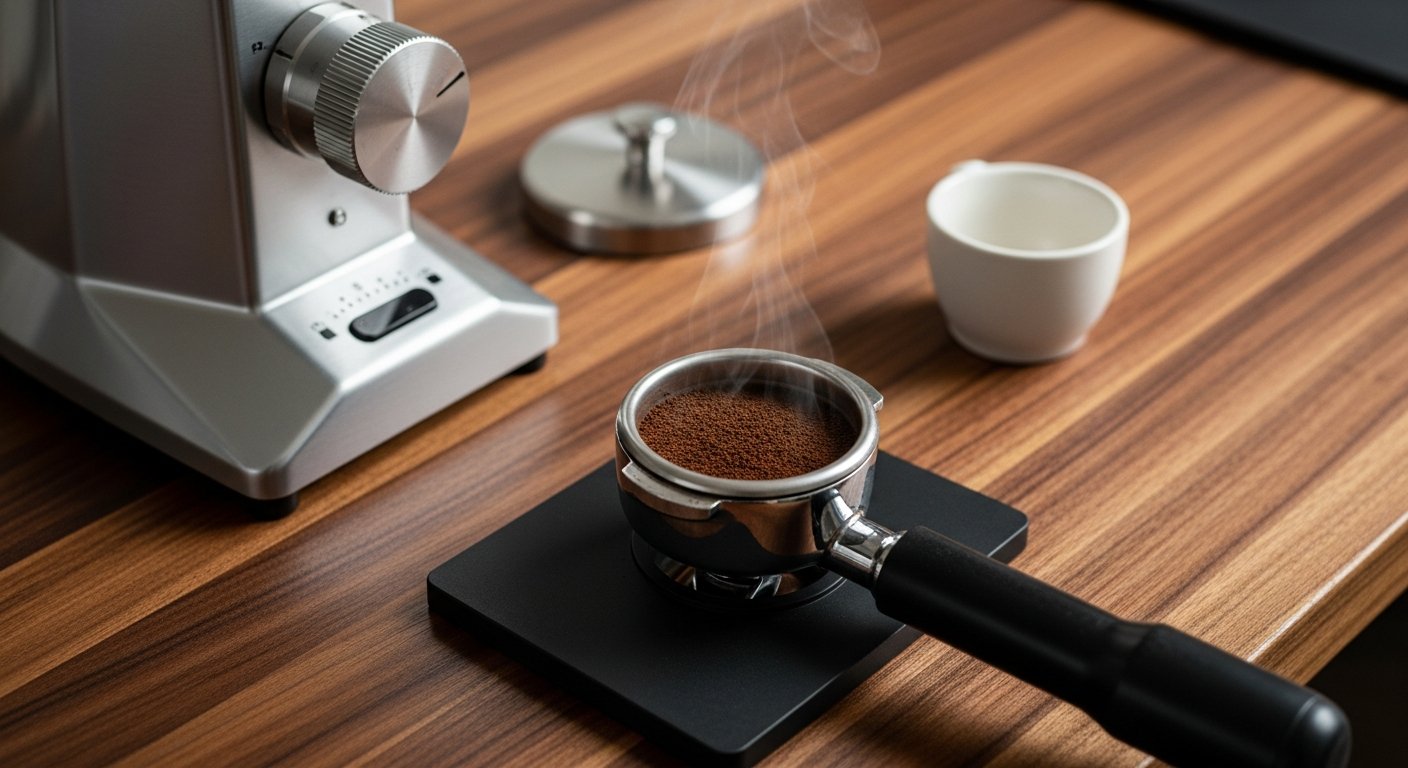
Pulling a flawless shot of organic espresso at home is a pursuit that rewards patience, precision, and the right gear. Without the consistency of a commercial cafe environment, home baristas must rely on a curated set of tools to compensate for variables like temperature fluctuation, grind inconsistency, and pressure instability. Organic beans, often grown with less chemical intervention, can be more sensitive to these variables, making a disciplined workflow even more critical. This guide walks through the non-negotiable equipment and techniques that transform an occasional good shot into a reliably excellent one, morning after morning.
The Grinder: Your Most Important Investment
For organic espresso, the grinder is the single most influential tool in your arsenal. Organic beans tend to have a slightly different density and moisture content compared to conventionally grown counterparts, which can affect how they grind and extract. A blade grinder, which chops beans unevenly, produces a mix of fine powder and coarse boulders. This leads to channeling, where water finds the path of least resistance through the puck, resulting in sour or bitter shots. A burr grinder, on the other hand, crushes beans between two revolving surfaces into uniform particles.
The key specification to look for is stepless grind adjustment. Most entry-level grinders use stepped adjustments, which may not offer the fine-tuning necessary to dial in a delicate organic single-origin. Stepless adjustment allows you to make micro-changes that can shift your shot time by a second or two, which is often the difference between a balanced extraction and a flawed one. Consider a grinder with a low-retention design, as stale grounds from previous doses can contaminate a fresh batch of organic beans.
Here are the critical features to prioritize when selecting a grinder for organic espresso:
- Burr type: Choose flat or conical burrs made of hardened steel or ceramic for longevity and particle uniformity.
- Stepless adjustment: Essential for dialing in the precise grind size required by organic beans.
- Low retention: Internal designs that purge less than 1 gram of grounds reduce waste and staleness.
- Dosing accuracy: A timer or manual single-dose capability ensures each shot starts with the same weight.
After upgrading to a quality burr grinder, you will notice that your organic espresso has a cleaner flavor profile, with more clarity in the fruit and floral notes that specialty organic roasters work so hard to preserve. The grinder does not just affect taste; it directly impacts consistency, which is the foundation of a repeatable morning ritual.
Precision Scales and Timers
Volume-based measuring (scoops or eyeballing) is the enemy of consistent organic espresso. Organic beans, because they are often processed with minimal intervention, can vary in density from batch to batch. A scale with 0.1-gram resolution is the only reliable way to control your dose and yield. A 0.5-gram error in your dose can shift extraction by several seconds, dragging undesirable flavors into your cup.
Pair your scale with a dedicated shot timer. Many espresso machines include a built-in timer, but a separate, compact timer that fits under your portafilter is more accurate and easier to read. The standard recipe for espresso is a 1:2 ratio (18 grams of coffee in, 36 grams of liquid out) in 25-30 seconds. However, organic espressos often respond better to a slightly longer ratio, such as 1:2.5 or even 1:3, to fully extract their complex sugars. Without a scale and timer, you are guessing.
A scale also helps with puck prep. Weighing your grounds after grinding confirms that your grinder is dispensing accurately. Weighing the liquid output as it flows into your cup allows you to stop the shot at the exact yield, regardless of how the extraction behaves. This feedback loop is how you learn to predict how a particular organic bean will behave on a given day, accounting for humidity and bean age.
Temperature Management: PID and Group Head Stability
Water temperature is a silent variable that can ruin an otherwise perfect shot. Organic espresso beans, especially lighter roasts that preserve more of the bean’s origin characteristics, require precise temperature control. A machine with a PID (Proportional-Integral-Derivative) controller maintains water temperature within a narrow range, usually plus or minus 1 degree Fahrenheit. This stability is crucial because a drop of even a few degrees can under-extract the coffee, leaving it sour and thin.
If your machine lacks a PID, you can still improve temperature consistency with a few techniques. Flush the group head with water for a few seconds before locking in the portafilter to stabilize the temperature. Use a thermocouple device to measure the water temperature at the group head, and adjust your flushing routine accordingly. For a deeper understanding of how PID technology transforms home espresso, refer to our guide on PID Temperature Control for Home Barista Espresso Machines.
Beyond the machine, the temperature of your portafilter and basket matters. A cold portafilter can steal heat from the water as it enters the basket, dropping the brewing temperature by several degrees. Always warm your portafilter by locking it into the group head while the machine heats up, or by running a blank shot through it. This small habit pays dividends in shot consistency, particularly with delicate organic varietals.
Distribution and Tamping Tools
Uneven distribution of coffee grounds in the basket is a primary cause of channeling. With organic espresso, which can be more prone to clumping due to its processing, a simple tap on the side of the portafilter is rarely enough. A distribution tool, often called a WDT (Weiss Distribution Technique) tool, uses thin needles to break up clumps and level the grounds before tamping. This tool costs very little but dramatically improves extraction uniformity.
After distribution, tamping must be level and consistent. A calibrated tamper that compresses the puck with the same force every time removes one more variable. While many baristas argue that tamping pressure matters less than distribution, a consistent tamp ensures that the puck density is uniform across its surface. Look for a tamper that matches your basket size exactly (usually 58.4mm for standard commercial baskets) to avoid uneven compaction at the edges.
The workflow for puck prep should follow this sequence for best results:
- Grind directly into the portafilter basket, using a dosing funnel to prevent spillage.
- Use a WDT tool to stir the grounds, breaking up any clumps and leveling the surface.
- Tap the portafilter gently on the counter to settle the grounds.
- Tamp with a level, calibrated pressure, then give a slight twist to polish the puck.
This routine takes less than 30 seconds once it becomes habit. The payoff is a puck that resists channeling, allowing water to flow evenly through the entire bed of organic coffee. You will see a cleaner bottom of the basket after the shot, with no dark spots or dry patches that indicate uneven extraction.
Water Quality and Filtration
Espresso is 90% water, so the quality of your water directly impacts the taste of your organic espresso. Tap water often contains chlorine, minerals, or dissolved solids that can mask the subtle flavors of organic beans or cause scale buildup in your machine. A simple carbon filter pitcher removes chlorine and improves taste without stripping all minerals, which are necessary for proper extraction.
For the most consistent results, use water with a total dissolved solids (TDS) level between 100 and 150 ppm. This range provides enough mineral content for flavor extraction without causing scaling. Specialty coffee associations have published water recipes that mimic the mineral profile of famous coffee regions. You can create your own by adding precise amounts of magnesium sulfate (Epsom salt) and sodium bicarbonate to distilled water. While this sounds complex, it is a one-time setup that guarantees the same water chemistry for every shot.
If you prefer simplicity, bottled spring water with a TDS in the recommended range is a reliable alternative. Avoid distilled or reverse osmosis water without remineralization, as it will under-extract the coffee and produce flat-tasting shots. Consistent water quality is a hidden tool that many home baristas overlook, but it can elevate an organic espresso from good to exceptional.
The Organic Bean: Sourcing and Storage
No tool can compensate for stale or poorly stored beans. Organic espresso beans should be used within 2 to 4 weeks of their roast date. Buy from a roaster that prints the roast date on the bag, and purchase only what you will use in that window. Store beans in an airtight, opaque container at room temperature. Avoid the refrigerator or freezer unless you are storing beans for more than two weeks, in which case freeze them in single-dose portions to avoid moisture damage.
When dialing in a new bag of organic espresso, start with the same grind setting you used for the previous bag, then adjust based on taste. Organic beans from different origins (Ethiopia vs. Brazil, for example) will require different grind sizes and ratios. Keep a notebook or a digital log of your settings for each bag. This practice turns the dial-in process from a frustrating guessing game into a repeatable experiment.
Consider the processing method of your organic beans. Washed process organic beans tend to be cleaner and more acidic, requiring a slightly finer grind and higher temperature. Natural or honey-processed organic beans are denser and fruitier, often needing a coarser grind and lower temperature to avoid bitterness. Understanding these nuances is part of the home barista journey, and the tools you use simply make it possible to apply that knowledge consistently.
The pursuit of consistent organic espresso at home is not about owning the most expensive equipment. It is about understanding how each tool reduces variables and allows the quality of the bean to shine. A grinder with stepless adjustment, a precise scale, temperature management, proper puck preparation tools, and consistent water quality form the foundation. With these tools, the ritual of pulling a shot becomes a reliable source of joy, rather than a daily gamble. Your organic beans deserve that level of care, and your palate will thank you.