
Perfect Pour Over Technique for Light Roast Coffee
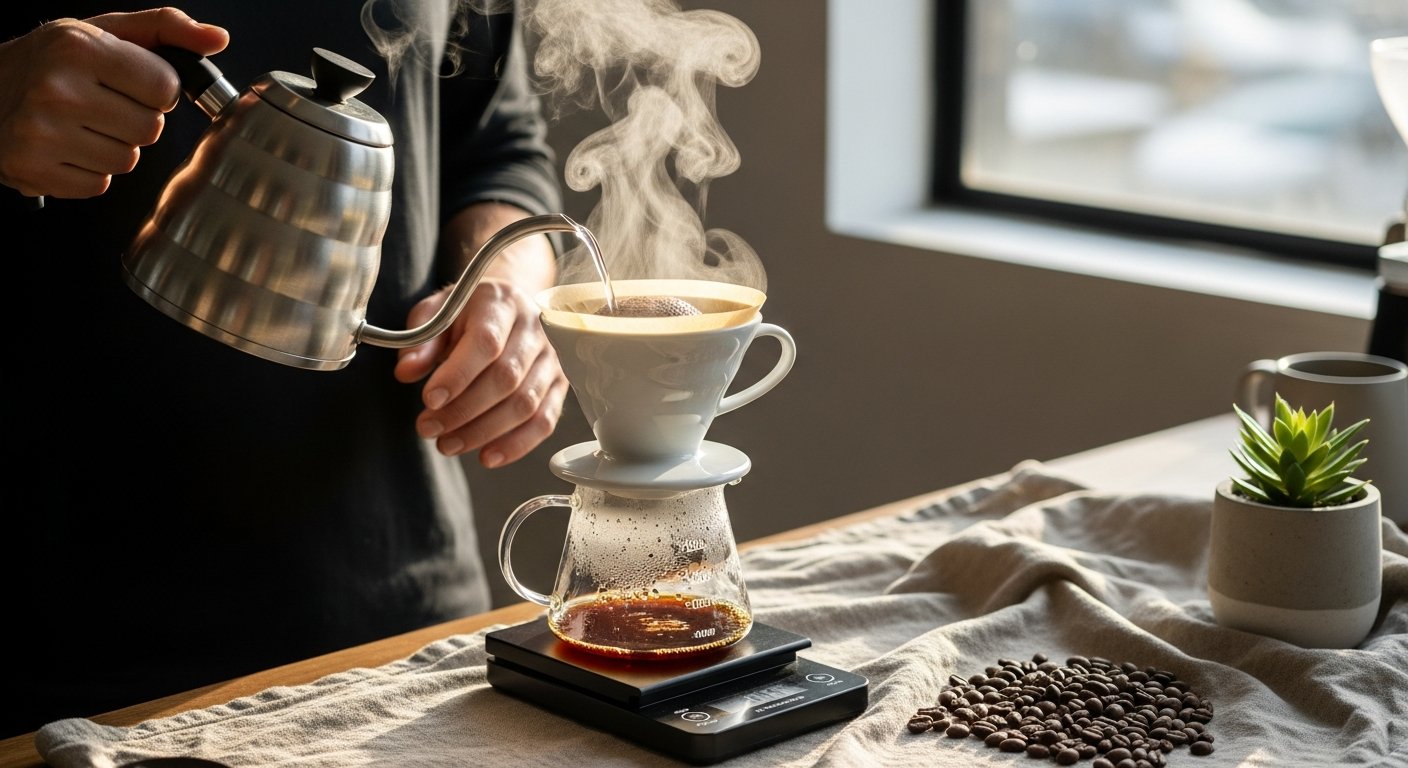
There is a moment every coffee lover remembers: the first time a single origin organic light roast revealed its true potential. The aroma of jasmine, the brightness of bergamot, the clean finish that lingers like a promise. That moment does not happen by accident. It happens when the pour over technique for single origin organic light roast is executed with precision, patience, and understanding. Light roasts are delicate. They hold the unique flavors of their origin more than any other roast level, but they also demand a gentler hand. This article will walk you through the exact steps, tools, and variables that make that extraordinary cup possible.
Why Light Roasts Need a Different Pour Over Approach
Light roasted coffee is roasted to an internal temperature that stops just after first crack. The beans retain more of their original moisture, density, and soluble compounds. This means the cellular structure is harder and less porous than a medium or dark roast. Water has a tougher time extracting flavor from a light roast, so the pour over technique must compensate with higher temperature, finer grind, and extended contact time.
Organic certification adds another layer. Organic beans are grown without synthetic fertilizers or pesticides, which can affect the way the bean develops during roasting. Many organic light roasts have a slightly higher density and a cleaner flavor profile. When you pair that with a single origin bean from Ethiopia, Colombia, or Kenya, you get a coffee that can taste like a fruit tea or a floral bouquet. But only if you extract it correctly. A poor pour over technique will mute those delicate notes or, worse, make the coffee taste sour and weak.
The Essential Tools for Pour Over Success
Before you brew, gather the right equipment. The pour over technique for single origin organic light roast is only as good as the tools you use. Here is what you need.
- Gooseneck kettle: Precision pouring is critical. A gooseneck spout gives you control over flow rate and water distribution. Temperature-controlled models are ideal.
- Burr grinder: Blade grinders produce uneven particles that lead to under-extraction and over-extraction in the same brew. A burr grinder creates a uniform grind size, which is essential for light roasts.
- Digital scale: Volume measurements are not accurate enough. You need a scale that measures in 0.1 gram increments for consistent brew ratios.
- Pour over dripper: The Hario V60 is the most popular choice for light roasts because its cone shape and spiral ridges promote even extraction and clarity. A Chemex or Kalita Wave also works well.
- Filtered water: Tap water with high mineral content can mask or clash with the subtle flavors of an organic light roast. Use filtered or spring water.
Each tool plays a specific role in the extraction process. The gooseneck kettle allows you to pour in a controlled spiral, the burr grinder ensures even particle size, and the scale guarantees repeatability. Without these, you are guessing. With them, you are engineering a precise brew.
Step by Step: The Pour Over Technique for Single Origin Organic Light Roast
Now we get to the heart of the process. This method is adapted from the standard Hario V60 technique but optimized for the density and solubility of organic light roasts. Follow these steps carefully.
Step 1: Heat the Water to 205-210 Degrees Fahrenheit
Light roasts need higher water temperature than darker roasts because the beans are denser. Start with water just off the boil, between 205 and 210 degrees Fahrenheit. If you do not have a thermometer, bring the water to a full boil and let it sit for 10 seconds. That will put you in the right range. Pour a small amount of hot water through the paper filter to rinse it and preheat the dripper and mug. Discard that water.
Step 2: Measure and Grind the Coffee
Use a ratio of 15 grams of water to 1 gram of coffee. For a single cup, that means 15 grams of coffee and 240 grams of water. Grind the coffee to a medium-fine consistency, similar to table salt. Light roasts require a slightly finer grind than medium roasts to increase the surface area and improve extraction. If your coffee tastes sour, grind finer. If it tastes bitter or astringent, grind coarser.
Step 3: The Bloom Phase
Place the filter in the dripper and add the ground coffee. Level the bed. Start your timer. Pour 45 grams of water in a slow, concentric spiral starting from the center and moving outward. Make sure all the grounds are wet. This is the bloom phase, and it releases trapped carbon dioxide. Let the coffee bloom for 30 to 45 seconds. If you see bubbles and the coffee expands, you are on the right track. A weak or absent bloom indicates stale coffee or water that is too cool.
Step 4: The Main Pour
After the bloom, pour the remaining water in two or three stages. Pour slowly in a steady spiral, keeping the water level consistent. Do not pour directly onto the filter paper; keep the water on the coffee bed. Aim to finish the total pour by 1 minute and 30 seconds. The total brew time should be between 2 minutes and 30 seconds and 3 minutes. If it finishes faster than 2 minutes, your grind is too coarse. If it takes longer than 3 minutes and 30 seconds, your grind is too fine.
Step 5: Swirl and Serve
When the water has drained through, give the carafe a gentle swirl to mix the layers of extraction. This ensures a balanced cup. Pour immediately and enjoy. Do not let the coffee sit on the heat source or in the dripper after brewing, as it will continue to extract and become bitter.
Understanding the Variables: Grind, Temperature, and Time
The pour over technique for single origin organic light roast is not a single recipe. It is a system of variables that you can adjust based on the specific coffee you are using. Here is how each variable affects the final cup.
Grind size: Finer grinds increase extraction but can also cause clogging and over-extraction if taken too far. For light roasts, start at a medium-fine setting. If the coffee tastes hollow or sour, your grind is too coarse. If it tastes bitter or dry, your grind is too fine. A good burr grinder allows you to make small adjustments.
Water temperature: Higher temperatures extract more solubles. Light roasts need the extra heat. If you brew at 200 degrees or lower, you will under-extract and get a sour, weak cup. If you go above 212 degrees, you risk scalding the grounds and creating bitterness. The sweet spot is 205-210 degrees.
Brew time: Total contact time should be between 2:30 and 3:30 for a 15-gram dose. If you are brewing a larger batch, the time will increase proportionally. The goal is to extract enough flavor without pulling out the harsh compounds that appear late in extraction. Use your timer every time.
These three variables interact. A finer grind needs a shorter brew time. A coarser grind needs a longer brew time. Higher temperature can compensate for a slightly coarser grind. Keep a notebook and record your parameters. Over time, you will develop an intuition for how each coffee behaves.
Why Single Origin and Organic Matter for Light Roasts
The term single origin means the coffee comes from one farm, cooperative, or region. This gives the coffee a distinct flavor profile that reflects its terroir: the soil, altitude, climate, and processing method. An Ethiopian Yirgacheffe light roast can taste like blueberry and lemon. A Colombian light roast from Huila can taste like red apple and caramel. These flavors are fragile. They survive only in light roasts and only when extracted with care.
Organic certification adds another dimension. Organic farming practices improve soil health and biodiversity, which can lead to more complex flavor development in the bean. Many specialty coffee roasters, including those who supply fresh roast coffee for home baristas, prioritize organic single origin lots because they offer the cleanest expression of origin character. When you buy an organic light roast, you are supporting sustainable agriculture and getting a coffee that has not been masked by chemical residues.
For a deeper look at how temperature affects extraction in organic single origin beans, read our Organic Single Origin Espresso Dial In Temperature Guide. While that guide focuses on espresso, the principles of temperature adjustment apply directly to pour over as well.
Common Mistakes and How to Fix Them
Even experienced brewers make errors with light roasts. Here are the most common problems and their solutions.
Sour or thin coffee: This is under-extraction. The water did not pull enough flavor from the grounds. Fix it by grinding finer, increasing water temperature, or extending the brew time. Try one change at a time.
Bitter or flat coffee: This is over-extraction. You pulled too many compounds, including harsh tannins. Fix it by grinding coarser, lowering the water temperature, or shortening the brew time. Again, change only one variable.
Uneven extraction: If some parts of the coffee bed are darker than others after brewing, your pour was uneven. Fix it by pouring in a consistent spiral and keeping the water level steady. Do not pour in one spot for too long.
Stalling or slow drawdown: If the water stops flowing before the brew time is complete, your grind is too fine or you have channeling. Fix it by grinding slightly coarser and making sure the coffee bed is level before you pour.
Each mistake is a learning opportunity. Keep a log of your brews, note the problem, and adjust one variable. Within a few sessions, you will dial in the perfect pour over technique for that specific coffee.
Choosing the Right Organic Light Roast for Pour Over
Not all light roasts are created equal. When shopping for a single origin organic light roast, look for beans roasted within the past two weeks. Freshness is critical for light roasts because the volatile aromatic compounds degrade quickly. Buy from a roaster that prints the roast date on the bag, not just a best-by date.
Consider the processing method. Washed or wet-processed coffees tend to have cleaner, brighter flavors that shine in pour over. Natural or dry-processed coffees have more body and fruitiness but can be harder to extract evenly. Experiment with both to see which style you prefer.
Ethiopian and Kenyan light roasts are classic choices for pour over because of their acidity and floral notes. Central American light roasts from Costa Rica or Guatemala offer a more balanced profile with chocolate and nut undertones. Each origin responds slightly differently to the pour over technique, so be prepared to adjust your grind and temperature.
We roast coffee to order at our facility, ensuring that every bag of organic single origin light roast reaches you at peak freshness. Whether you prefer a bright Ethiopian or a balanced Colombian, the freshness of the roast will make a noticeable difference in your cup.
Final Thoughts
The pour over technique for single origin organic light roast rewards patience and precision. It is not a complicated process, but it demands attention to detail. Start with the right tools, use a consistent ratio, and adjust based on taste. Over time, you will develop a feel for how each coffee wants to be brewed. The result is a cup of coffee that tastes exactly like the place it came from: clean, vibrant, and unforgettable.