
Regenerative Organic Coffee Farming Boosts Soil Health
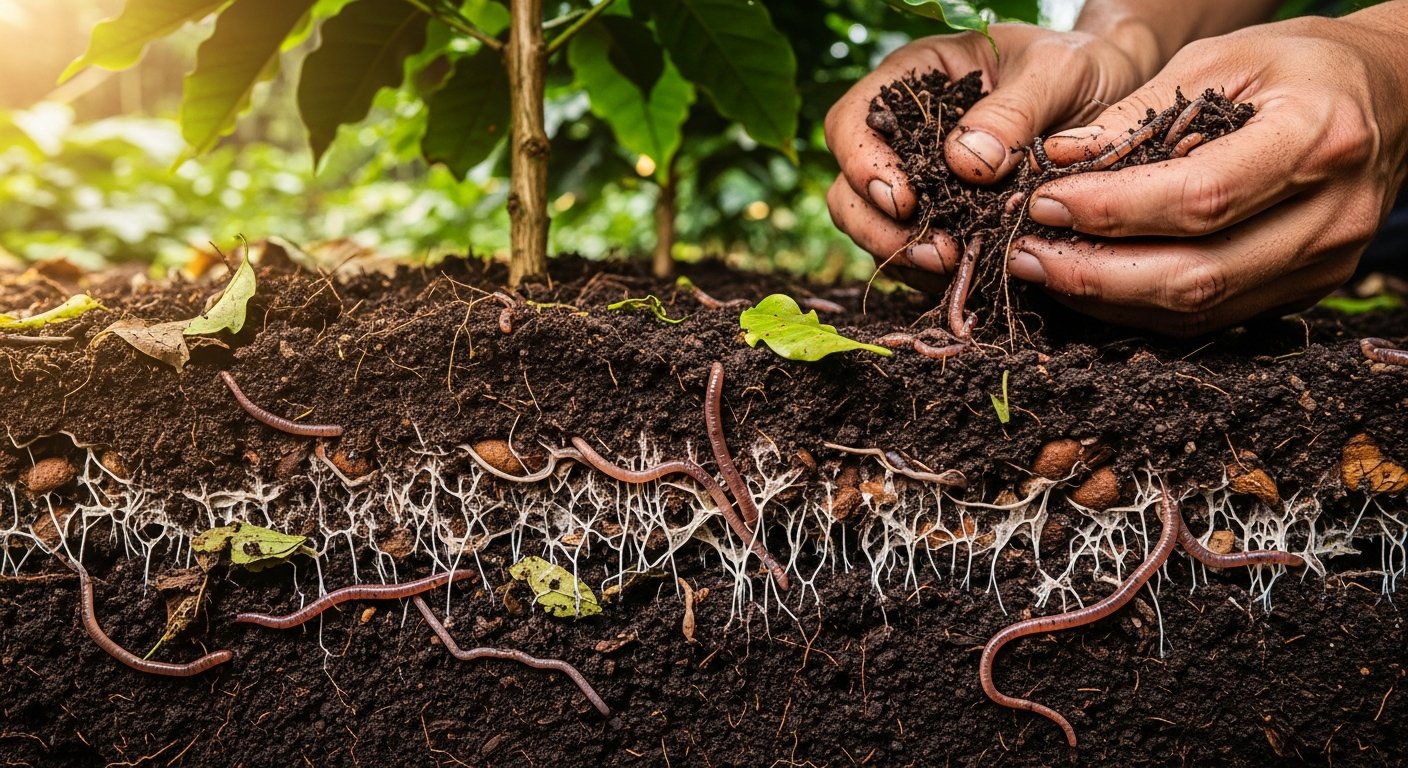
Every cup of coffee tells a story, but the most compelling narratives begin beneath the surface. In the soil beneath coffee plants, a complex web of microorganisms, fungi, and organic matter determines not only the quality of the beans but the long-term viability of the farm itself. For decades, conventional coffee farming has relied on synthetic inputs that degrade this living system. But a growing movement is proving that coffee production can actually restore the land. This is the promise of regenerative organic coffee farming practices soil health improvement, a holistic approach that transforms coffee farms from carbon sources into carbon sinks while producing exceptional beans.
Regenerative organic agriculture goes beyond simply avoiding synthetic chemicals. It actively rebuilds soil organic matter, enhances biodiversity, and improves water cycles. When applied to coffee farming, these principles create a resilient system that withstands drought, pests, and market volatility. Farmers who adopt these methods report not only healthier soil but higher quality cherries, more consistent yields, and reduced input costs over time. The shift from extractive to regenerative farming represents one of the most powerful tools we have for addressing climate change while securing the future of specialty coffee.
What Makes Coffee Farming Regenerative and Organic?
Regenerative organic coffee farming is distinct from conventional organic certification alone. While organic standards prohibit synthetic pesticides and fertilizers, regenerative practices actively restore ecological function. The key difference lies in intent: organic farming avoids harm, while regenerative farming seeks to heal. This distinction matters enormously for soil health, because simply removing chemicals does not automatically rebuild degraded soil structure.
At its core, regenerative organic coffee farming practices soil health through five foundational principles. First, farmers minimize soil disturbance by avoiding tillage that destroys fungal networks and releases stored carbon. Second, they maintain living roots in the soil year-round through cover cropping and intercropping. Third, they keep the soil surface covered with mulch, leaf litter, or companion plants to prevent erosion and regulate temperature. Fourth, they maximize biodiversity by integrating shade trees, nitrogen-fixing plants, and beneficial insect habitats. Fifth, they integrate livestock where possible, using animals to cycle nutrients naturally.
These principles work synergistically. For example, shade trees like Inga provide nitrogen to coffee plants while their fallen leaves create a natural mulch that feeds soil organisms. In turn, healthy fungal networks help coffee roots access water and nutrients more efficiently. This integrated system reduces the need for external inputs and builds resilience against climate shocks.
How Regenerative Practices Transform Soil Biology
Healthy soil is alive. A single teaspoon of regenerative coffee farm soil can contain billions of bacteria, miles of fungal hyphae, and thousands of protozoa. These organisms perform critical functions: they decompose organic matter, make nutrients available to plants, suppress pathogens, and build soil structure. Regenerative organic coffee farming practices soil health by directly feeding this biological community.
One of the most important indicators of soil health is organic matter content. In conventional coffee farms, soil organic matter often declines over time due to erosion, chemical inputs, and lack of cover. Regenerative farms, by contrast, can increase organic matter by 1-2 percent per year through compost applications, mulching, and cover cropping. This might sound modest, but each 1 percent increase in organic matter allows the soil to hold an additional 20,000 gallons of water per acre. For coffee farms facing longer dry seasons, this water-holding capacity is a critical buffer.
Another key metric is the ratio of fungi to bacteria in the soil. Coffee plants form symbiotic relationships with arbuscular mycorrhizal fungi, which extend the plant’s root system and improve phosphorus uptake. Conventional farming with synthetic fertilizers and fungicides disrupts this relationship. Regenerative practices encourage fungal dominance by providing consistent organic matter inputs and avoiding biocides. Farmers who measure soil biology often report dramatic increases in fungal biomass within two to three years of switching to regenerative methods.
The Role of Compost and Biochar
Compost is the cornerstone of regenerative soil management. Well-made compost provides a stable source of nutrients, introduces beneficial microorganisms, and improves soil structure. Coffee farmers can produce compost from coffee pulp, cherry husks, and pruning waste, turning a waste product into a valuable soil amendment. When applied at rates of 5-10 tons per hectare annually, compost can significantly boost soil carbon levels and cation exchange capacity.
Biochar, a charcoal-like substance produced by burning organic material in low-oxygen conditions, offers additional benefits. When charged with compost or worm castings, biochar creates a habitat for soil microbes and can persist in the soil for centuries. Some regenerative coffee farms are experimenting with biochar additions to lock carbon underground while improving nutrient retention in tropical soils that are often highly leached.
Shade-Grown Coffee and Carbon Sequestration
Shade trees are perhaps the most visible element of regenerative coffee farms. In traditional sun-grown systems, farmers strip the landscape of trees to maximize coffee production, leaving soil exposed and vulnerable. Regenerative organic coffee farming practices soil health by restoring a multi-story canopy that mimics natural forest structure. This approach has profound implications for carbon sequestration.
Research from the Smithsonian Migratory Bird Center shows that shade coffee farms can store up to 50 percent more carbon than sun-grown systems. The coffee plants themselves store carbon, but the real impact comes from the trees. A mature Inga tree can sequester several hundred kilograms of carbon dioxide over its lifetime. When combined with soil carbon accumulation, a well-managed regenerative coffee farm can become carbon negative, meaning it removes more carbon from the atmosphere than it emits.
Beyond carbon, shade trees provide critical ecosystem services. They moderate temperature extremes, reduce water evaporation from soil, and provide habitat for birds that control coffee berry borer and other pests. Many farmers report reduced pesticide needs after establishing diverse shade canopies, as natural predator populations keep pest outbreaks in check.
Water Management and Watershed Health
Coffee farms often occupy steep hillsides where water management is particularly challenging. Conventional farming on slopes leads to rapid runoff, erosion, and sedimentation of streams. Regenerative organic coffee farming practices soil health by building soil structure that absorbs and filters water effectively. The combination of high organic matter, mulched surfaces, and deep tree roots creates a sponge-like soil that captures rainfall and releases it slowly.
Farmers using regenerative methods often construct swales on contour to capture runoff and allow it to infiltrate. These simple earthworks, combined with cover crops and terraces, can reduce erosion by 90 percent compared to bare soil. Over time, the water table rises, springs that had dried up begin flowing again, and downstream communities benefit from more consistent water availability.
Water quality also improves. Without synthetic fertilizers and pesticides, runoff from regenerative farms carries no chemical pollutants. The buffering effect of healthy soil means that nutrients stay in the root zone rather than leaching into waterways. This is particularly important in coffee-growing regions where streams provide drinking water for local communities.
In our guide on organic coffee health benefits for gut and brain, we explain how the absence of synthetic residues in organic coffee supports both personal and environmental health. The same farming practices that protect watersheds also produce cleaner beans.
Economic Viability for Farmers
Skeptics sometimes argue that regenerative organic farming is economically impractical for smallholder farmers who struggle to make ends meet. The evidence suggests otherwise. While the transition period can be challenging, farmers who fully adopt regenerative organic coffee farming practices soil health improvements often see significant financial benefits within three to five years.
Key economic advantages include:
- Reduced input costs: No synthetic fertilizers, pesticides, or herbicides to purchase each season.
- Premium prices: Specialty coffee buyers actively seek regeneratively grown beans and often pay 20-40 percent above commodity prices.
- Yield stability: Regenerative farms produce more consistent yields during drought years compared to conventional farms.
- Longer productive lifespan: Coffee plants in healthy soil remain productive for 30-40 years versus 15-20 years in degraded soil.
- Diversified income: Shade trees provide fruit, timber, and firewood that supplement farm revenue.
These benefits compound over time. A farmer who invests in soil health during the first five years may see input costs drop by half while yields increase by 10-20 percent. The premium for certified organic and regeneratively grown coffee further improves margins. Organizations like the Specialty Coffee Association are developing verification programs for regenerative practices, which will help farmers capture value in the marketplace.
Transitioning from Conventional to Regenerative
Moving from conventional or even organic-certified farming to full regenerative management requires a mindset shift. Farmers must learn to see their soil as a living system rather than an inert medium for holding plants. The transition typically follows a phased approach.
In the first year, farmers stop using synthetic inputs and begin building organic matter through compost and mulch. They establish cover crops between coffee rows and plant leguminous trees for shade. Soil testing provides a baseline for organic matter, microbial activity, and nutrient levels. Many farmers report that yields drop slightly during this initial phase as the soil biology adjusts.
Years two and three focus on optimizing the system. Farmers fine-tune their compost recipes, adjust shade levels for their specific microclimate, and introduce beneficial insects for pest control. Soil health indicators begin improving: earthworm populations increase, aggregate stability improves, and organic matter rises. Yields typically recover and may exceed previous levels by year four.
Long-term management involves continuous observation and adjustment. Regenerative farming is not a set of rigid rules but a dynamic approach that responds to changing conditions. Farmers learn to read their soil, plants, and ecosystem to make decisions about pruning, mulching, and nutrient cycling. This adaptive management is what makes the system resilient.
The Future of Coffee Depends on Soil
The coffee industry faces existential threats from climate change. Rising temperatures are pushing coffee cultivation to higher altitudes, unpredictable rainfall patterns disrupt flowering and fruiting, and pests like the coffee berry borer are expanding their range. Regenerative organic coffee farming practices soil health improvements offer a path forward that addresses these challenges at their root.
By rebuilding soil organic matter, farmers increase water retention and reduce vulnerability to drought. By diversifying shade canopies, they create microclimates that buffer temperature extremes. By fostering soil biology, they make nutrients more available without synthetic fertilizers. These practices do not just sustain the farm; they regenerate it, creating a system that grows more resilient with each passing year.
For coffee drinkers, choosing regeneratively grown coffee is a direct investment in this future. Every purchase supports farmers who are healing the land, sequestering carbon, and producing beans of extraordinary quality. The connection between soil health and cup quality is increasingly clear: complex, vibrant flavors emerge from healthy, biodiverse soils. The next time you brew a cup, consider the soil beneath the coffee trees. It is alive, and it is working to sustain us all.